


-
摘要: 分子表示学习是利用人工智能加速药物发现的基石. 随着对复杂分子结构建模需求的不断提升, 基于图神经网络的分子表示学习方法凭借对分子结构的适配, 日益受到研究人员的关注. 与传统依赖人工设计的分子表示学习方法相比, 基于图神经网络的分子表示学习能够天然契合分子图结构, 自动捕捉拓扑关联与局部化学环境, 从而提高分子表示在相关任务上的准确性. 然而, 现有多数方法仍以单模态建模为主, 难以充分融合分子在不同表示空间中的互补信息. 随着多源异构数据的不断积累, 多模态分子表示学习逐渐成为提升模型表达能力的重要方向. 基于此, 本文在系统梳理单模态方法的同时, 亦专门整理多模态分子表示学习的代表性研究工作. 首先, 根据分子表示范式的不同, 将分子表示学习方法分为基于序列结构、图结构以及多模态三种类别; 其次, 对不同类别方法在分子性质预测、药物-靶标亲和力预测以及药物-药物相互作用预测等任务中的性能表现进行分析与比较; 最后, 对现有的研究方法进行全面总结, 并结合当前分子表示学习领域面临的关键挑战, 展望未来的研究方向与发展趋势.
-
关键词:
- 图神经网络 /
- 分子表示学习 /
- Transformer /
- 多模态 /
- 分子性质预测
Abstract: Molecular representation learning is the cornerstone for accelerating drug discovery through artificial intelligence. With the increasing demand for modeling complex molecular structures, the graph neural network-based molecular representation learning method, which adapts to molecular structures, has received growing attention from researchers. Compared with traditional molecular representation learning methods that rely on manual design, the graph neural network-based molecular representation learning can naturally fit the molecular graph structure, automatically capture topological correlations and local chemical environments, thereby improving the accuracy of molecular representations in related tasks. However, most existing methods still mainly focus on single-modal modeling, making it difficult to fully integrate the complementary information of molecules in different representation spaces. With the continuous accumulation of multi-source heterogeneous data, multimodal molecular representation learning has gradually become an important direction for improving model expressiveness. Based on this, this paper systematically reviews single-modal methods while also specifically organizing representative research works on multimodal molecular representation learning. Firstly, based on the differences in molecular representation paradigms, molecular representation learning methods are categorized into three types: Sequence-based structure, graph-based structure, and multimodal; Secondly, the performance of different category methods in tasks such as molecular property prediction, drug-target affinity prediction, and drug–drug interaction prediction is analyzed and compared; Finally, a comprehensive summary of the existing research methods is provided, and in light of the key challenges currently faced in the field of molecular representation learning, the future research directions and development trends are proactively envisioned. -
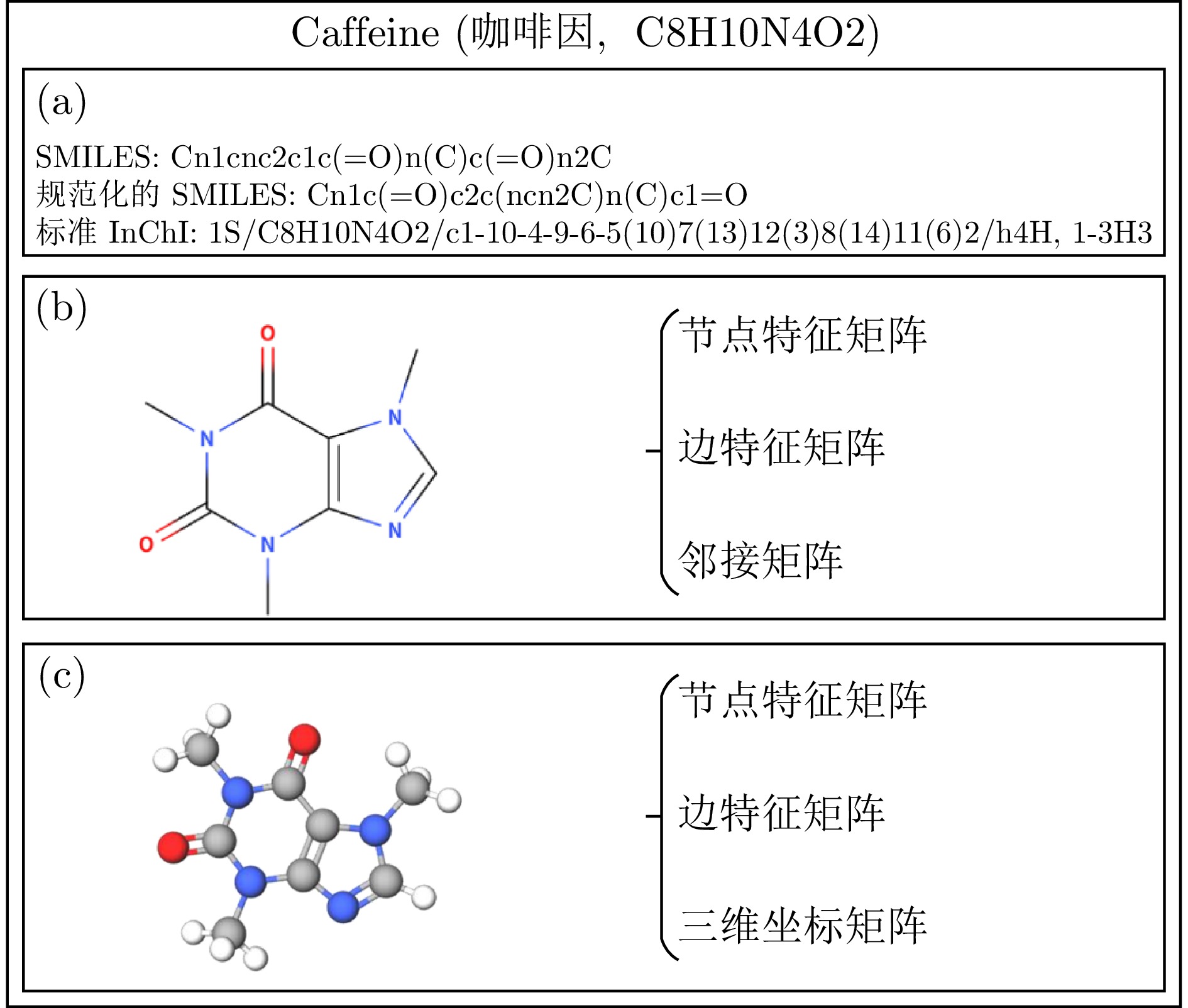
图 2 咖啡因的1维、2维和3维的表示((a) 一维序列表示; (b) 二维分子图表示; (c) 三维分子图表示)
Fig. 2 1D, 2D and 3D representations of Caffeine ((a) 1D sequence representation; (b) 2D molecular graph representation; (c) 3D molecular graph representation)
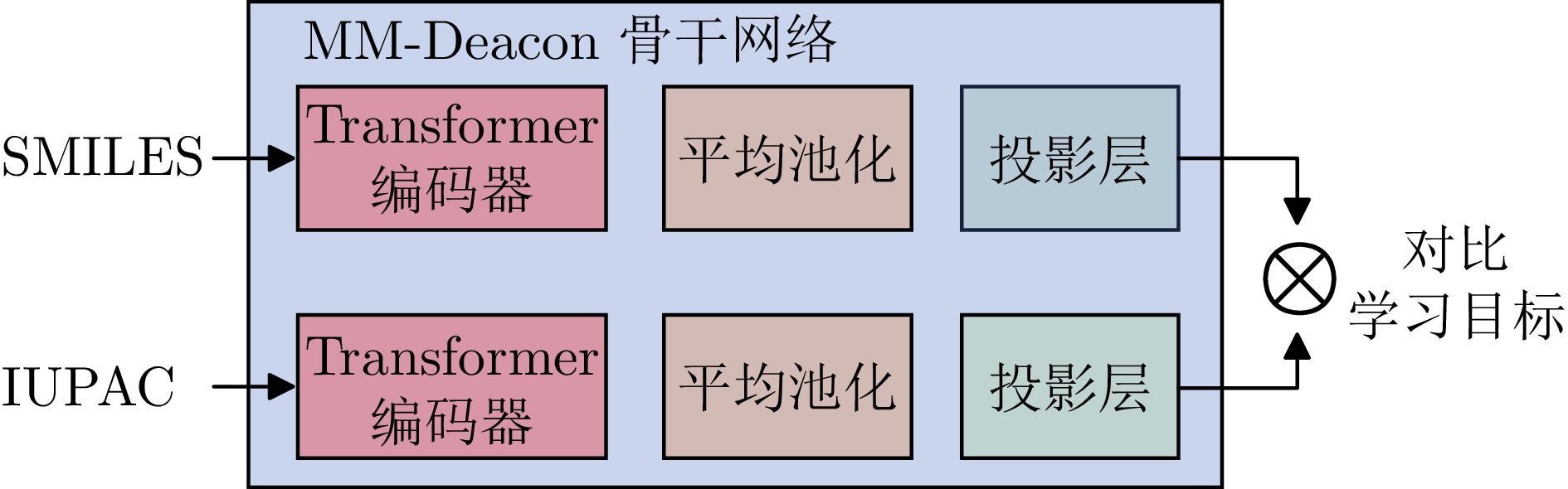
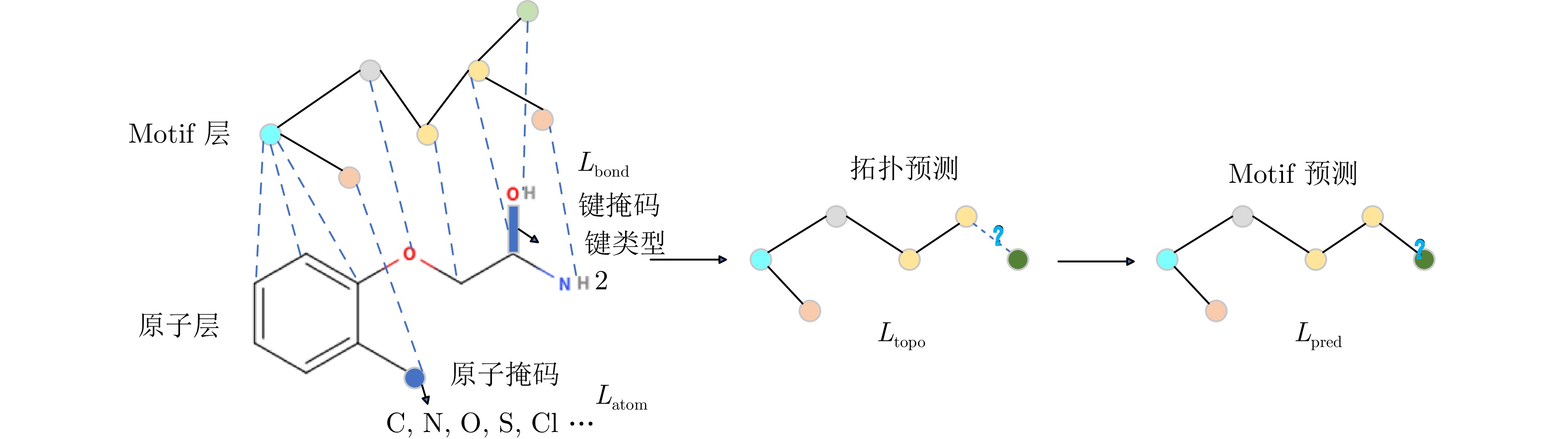
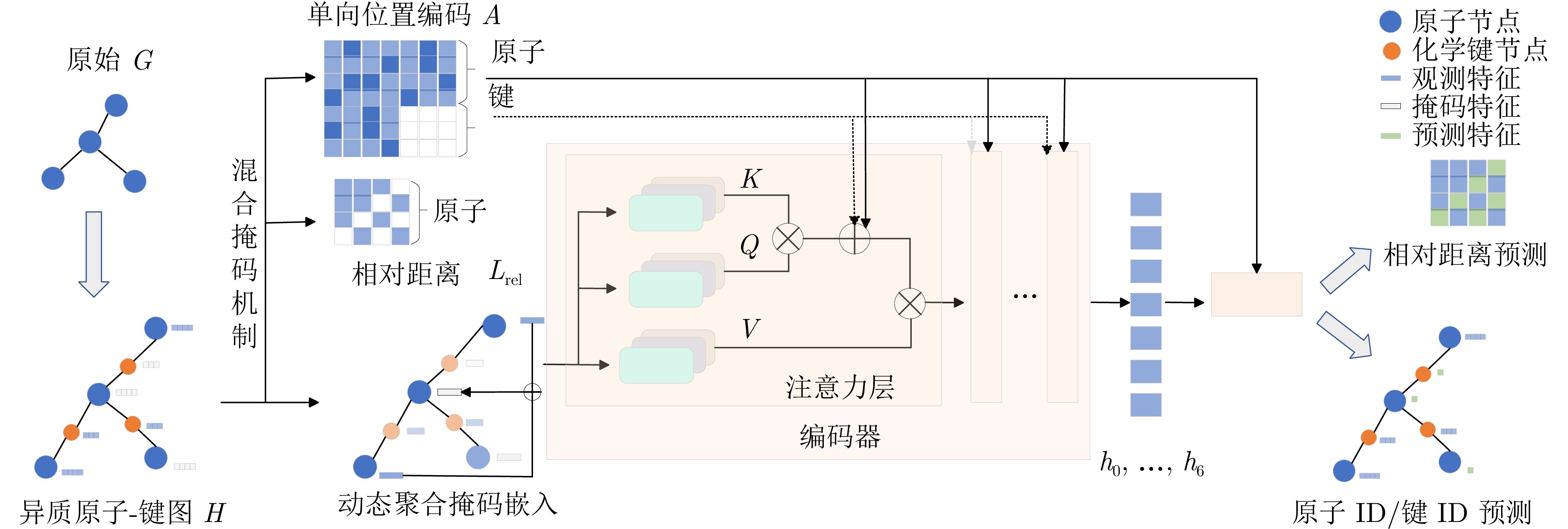
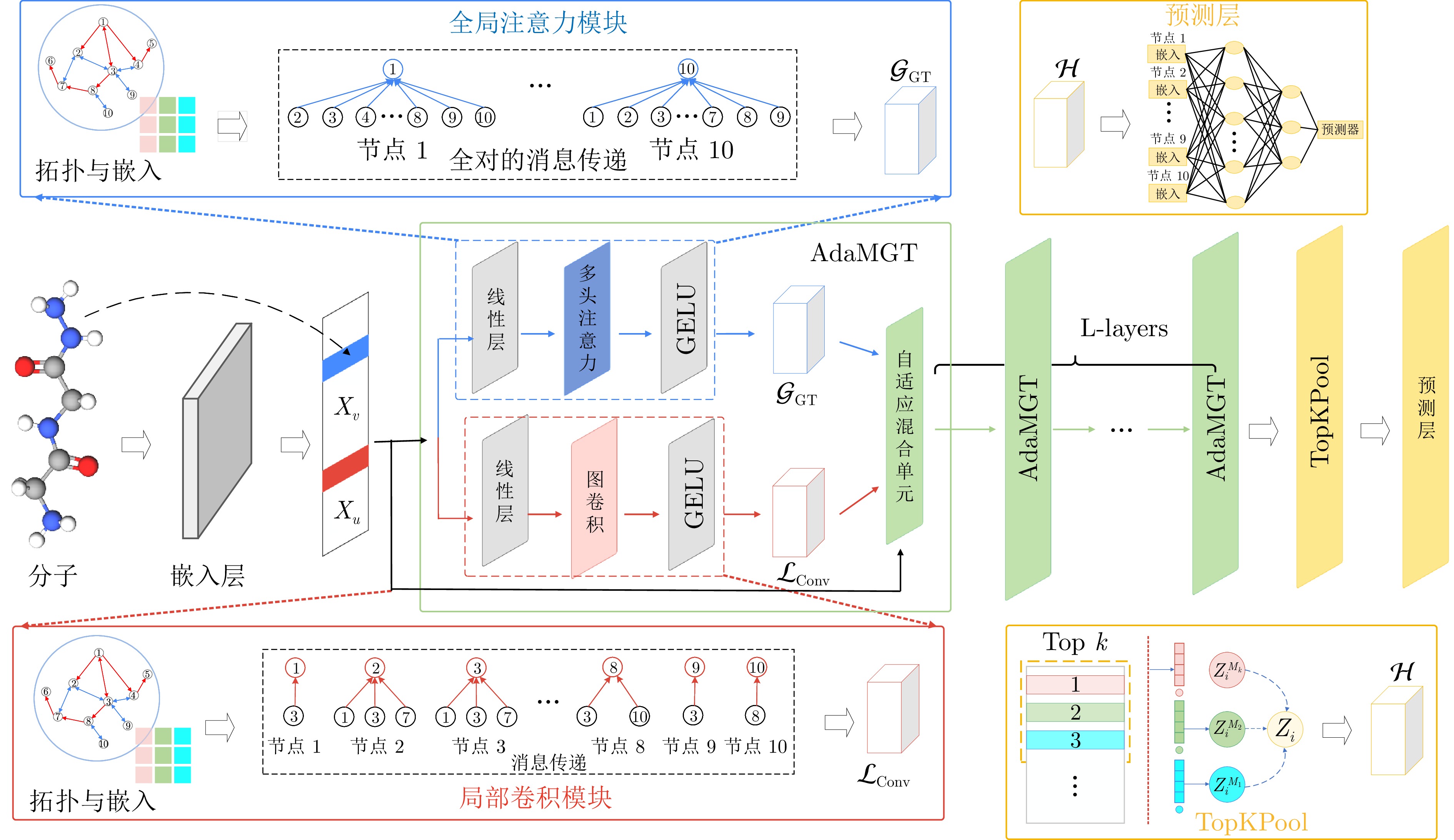
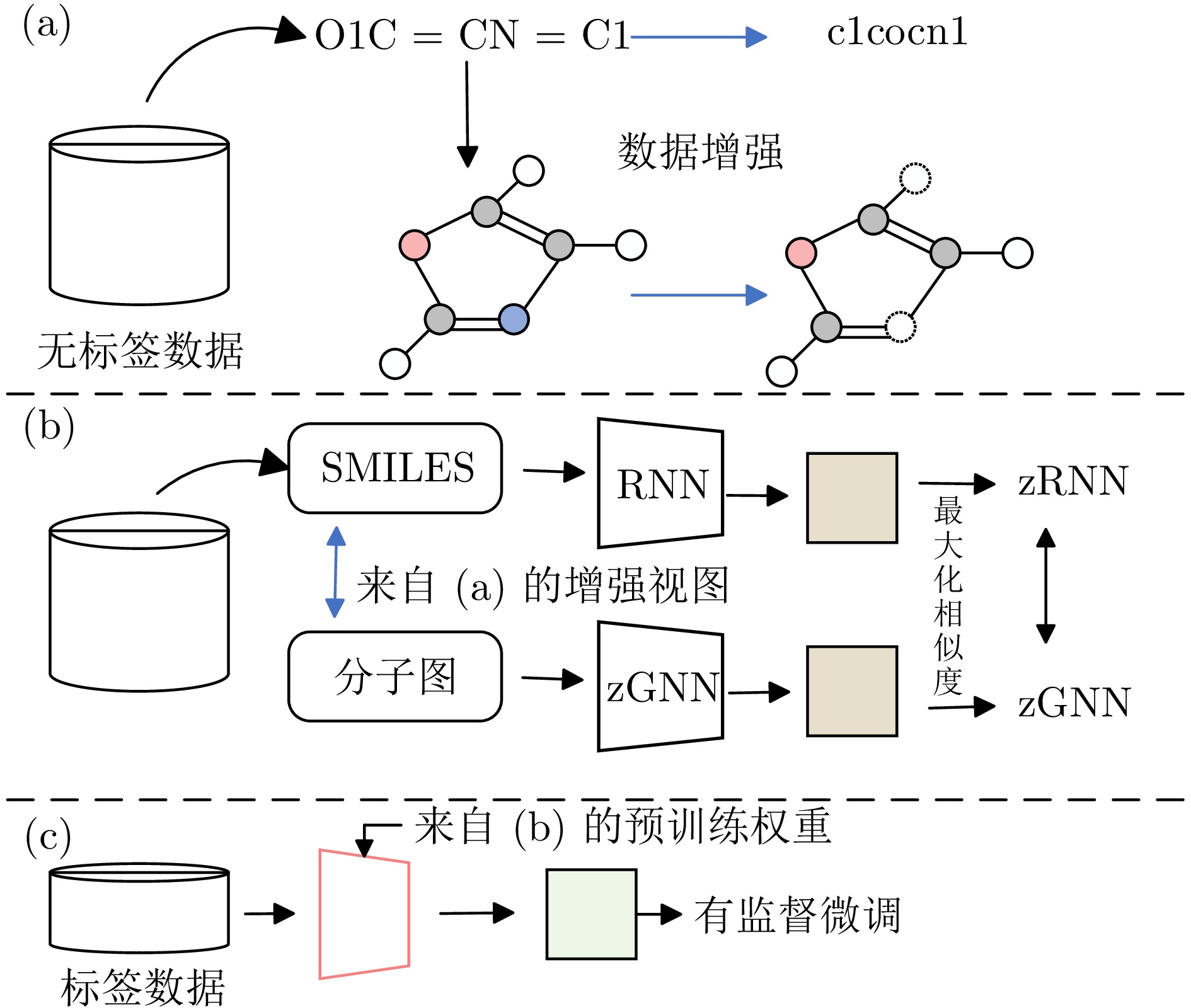
图 10 (a) 分子多模态数据增强[25], 经许可转载自文献[25], ©ACS, 2022; (b) 跨模态对比预训练[25], 经许可转载自文献[25], ©ACS, 2022; (c) 有监督微调[25], 经许可转载自文献[25], ©ACS, 2022
Fig. 10 (a) molecular multi-modal augmentation[25], reproduced with permission from reference [25], ©ACS, 2022; (b) cross-modal contrastive pre-training[25], reproduced with permission from reference [25], ©ACS, 2022; (c) supervised fine-tuning[25], reproduced with permission from reference [25], ©ACS, 2022
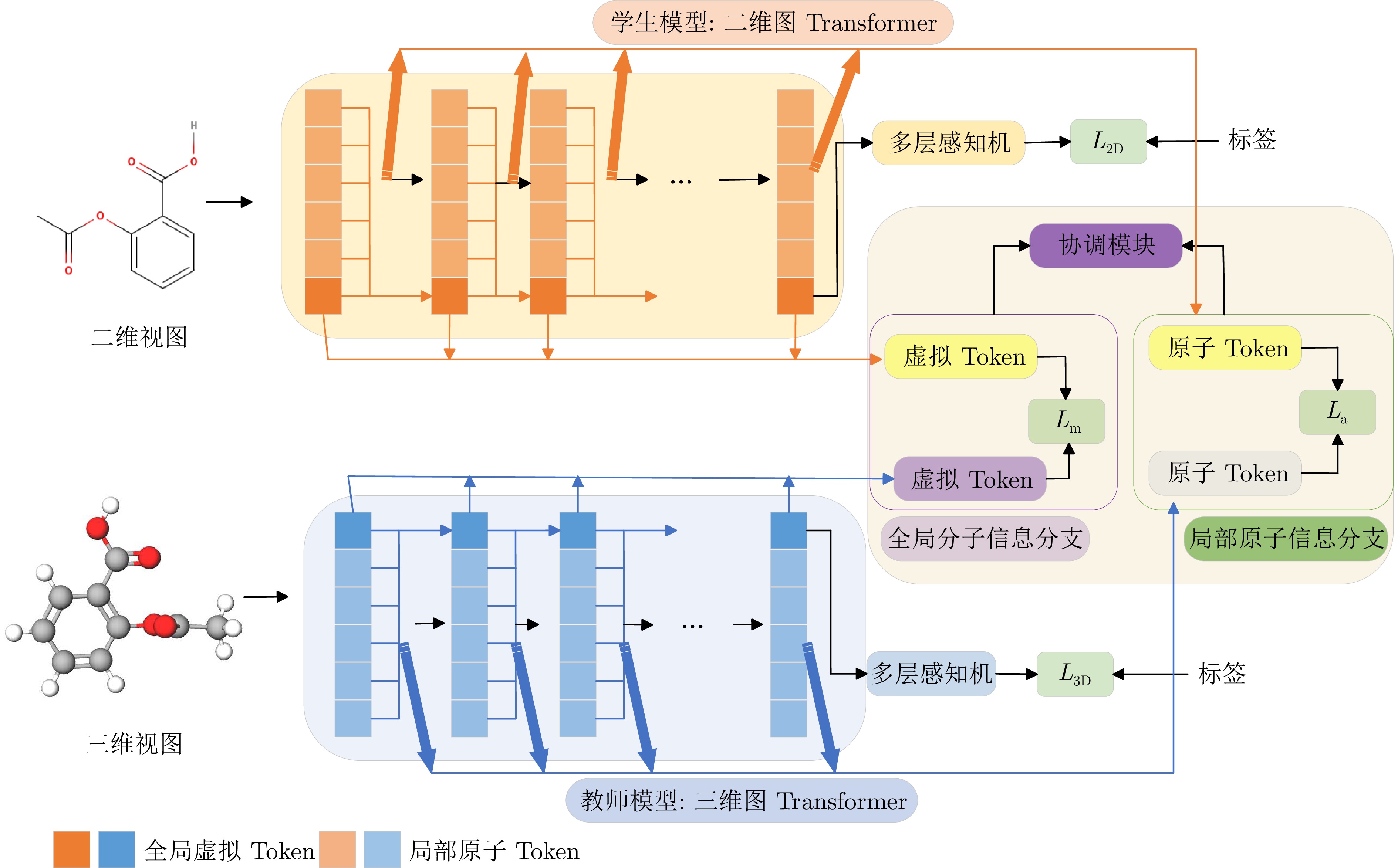
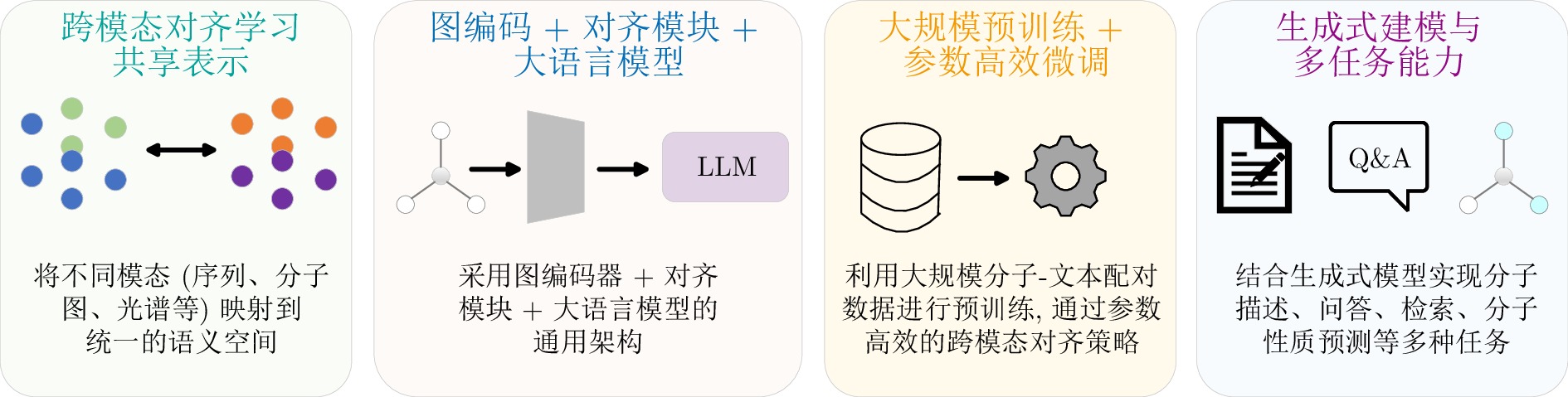
图 12 分子结构与外部模态的共同点
Fig. 12 Commonalities between molecular structures and external modalities
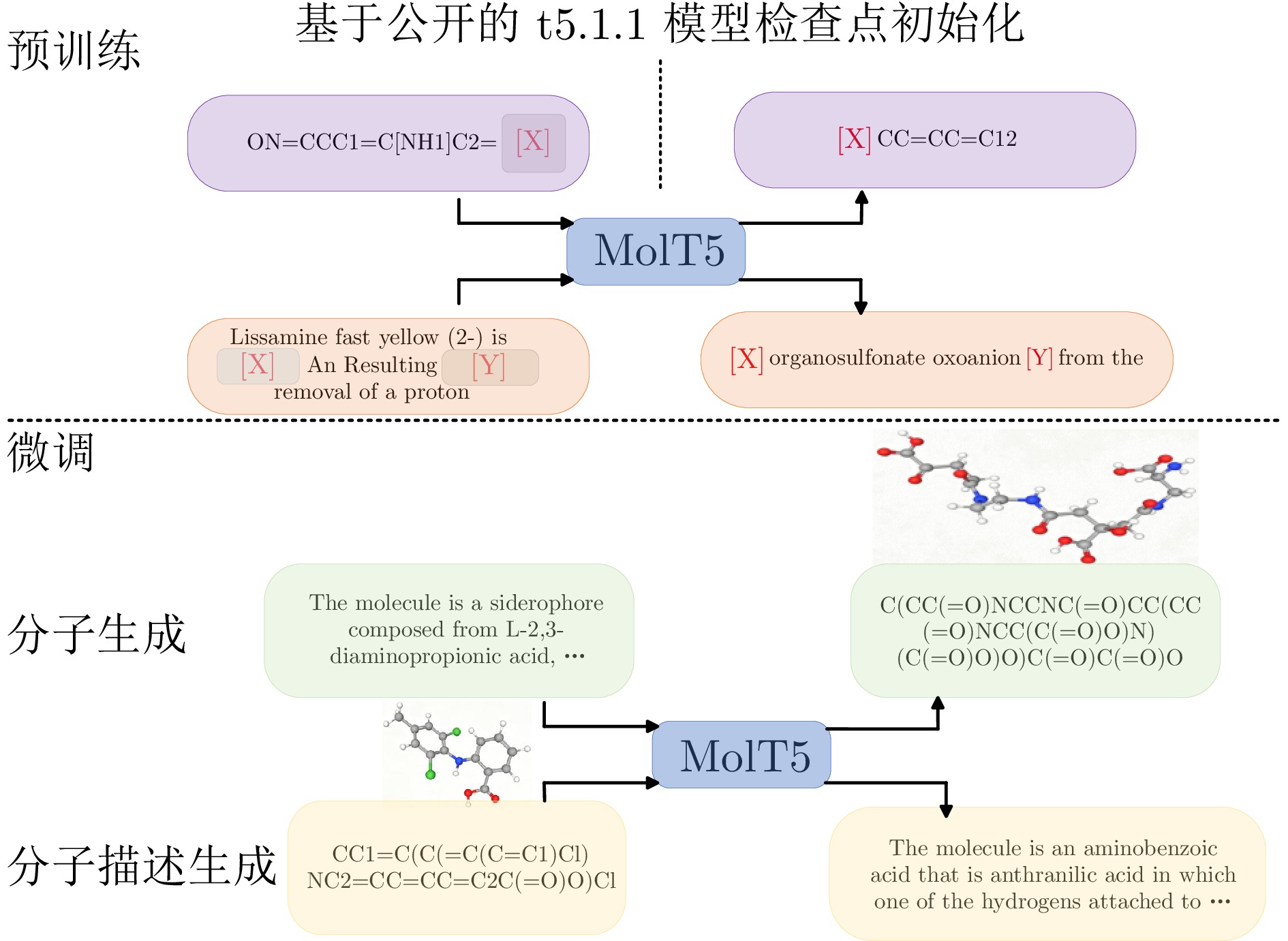
表 1 分子性质预测数据集概述
Table 1 Overview of molecular property prediction datasets
数据集 划分
方式分子
数量平均
原子数平均
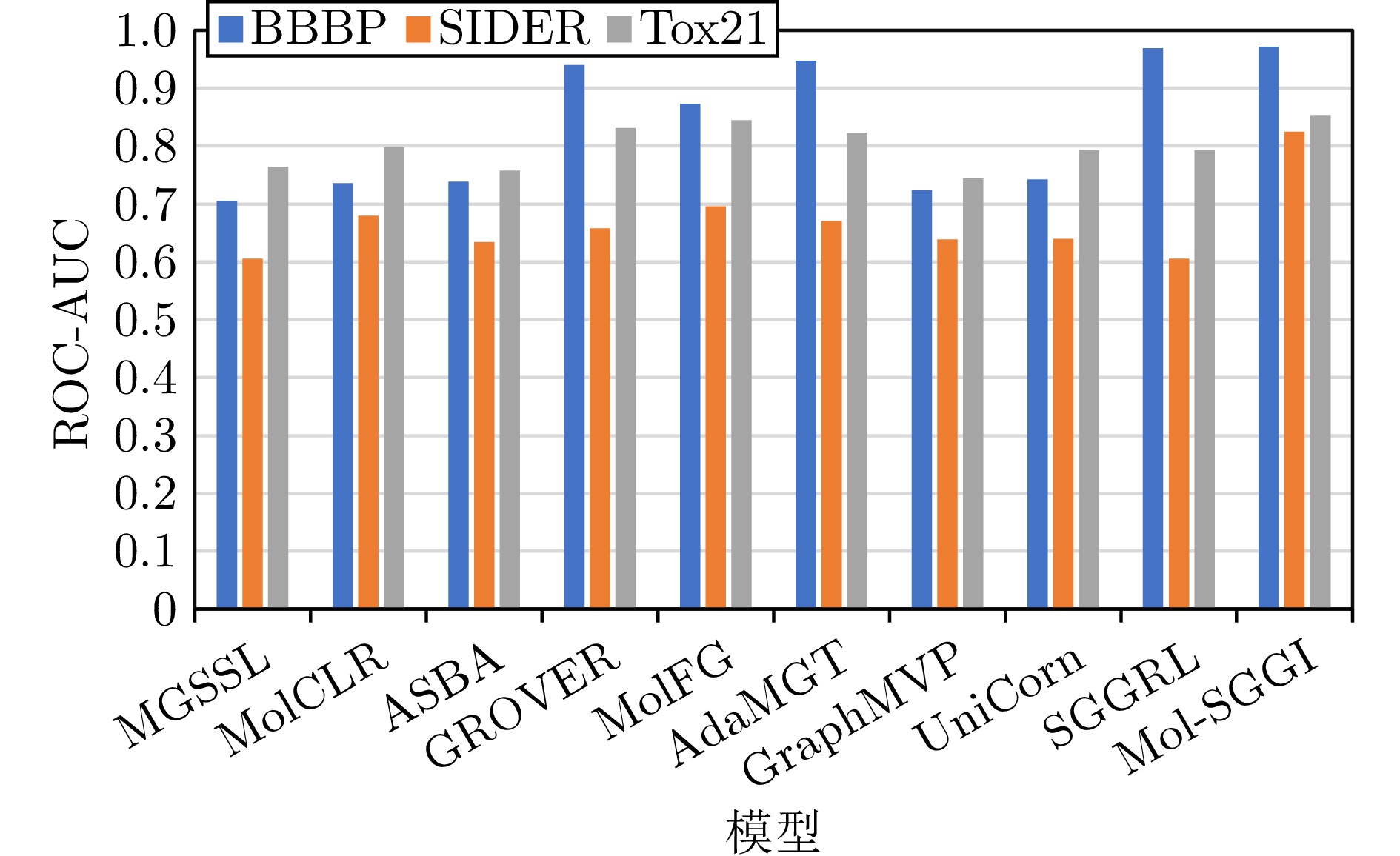
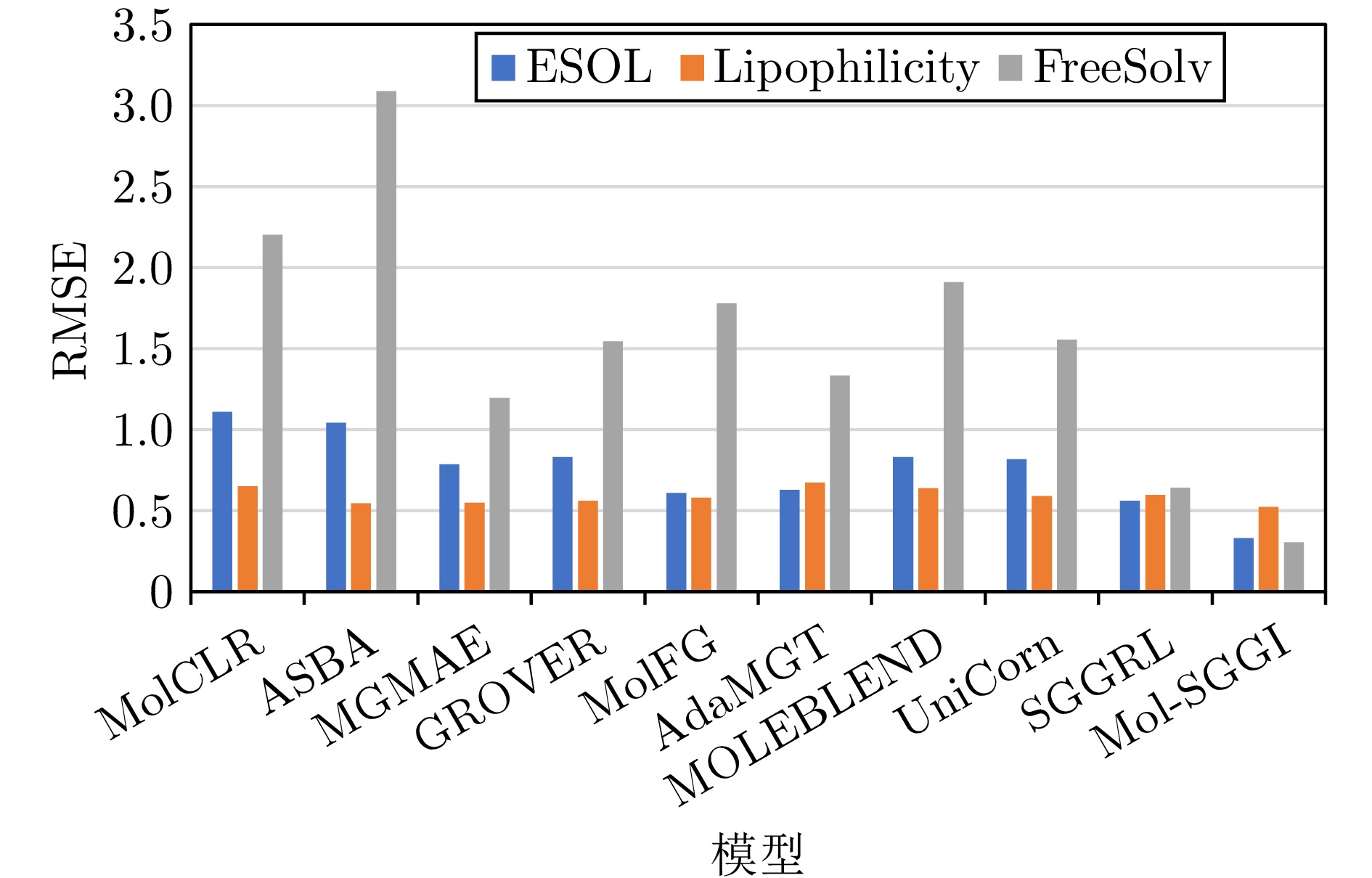
化学键数任务数 任务类型 BBBP 骨架 2 053 24.1 26.0 1 分类 SIDER 随机 1 427 33.6 35.4 27 分类 Tox21 随机 7 831 18.6 19.3 12 分类 ESOL 随机 1 128 13.3 13.7 1 回归 FreeSolv 随机 642 8.7 8.4 1 回归 Lipophilicity 随机 4 200 27.0 29.5 1 回归  下载: 导出CSV
表 2 模型在分类数据集上的ROC-AUC的均值$ \pm $标准差
Table 2 Mean $ \pm $ standard deviation of ROC-AUC of models on classification datasets
模型 BBBP SIDER Tox21 MGSSL[34] $ 0.705\pm0.011 $ $ 0.605\pm0.007 $ $ 0.764\pm0.004 $ MolCLR[39] $ 0.736\pm0.005 $ $ 0.680\pm0.011 $ $ 0.798\pm0.007 $ ASBA[36] $ 0.739\pm0.004 $ $ 0.634\pm0.004 $ $ 0.758\pm0.003 $ GROVER[45] $ 0.940\pm0.019 $ $ 0.658\pm0.023 $ $ 0.831\pm0.025 $ MolFG[49] $ 0.873\pm0.011 $ $ 0.696\pm0.012 $ $ 0.845\pm0.008 $ AdaMGT[50] $ 0.947\pm0.011 $ $ 0.671\pm0.017 $ $ 0.823\pm0.021 $ GraphMVP[70] $ 0.724\pm0.016 $ $ 0.639\pm0.012 $ $ 0.744\pm0.002 $ UniCorn[72] $ 0.742\pm0.011 $ $ 0.640\pm0.018 $ $ 0.793\pm0.005 $ SGGRL[76] $ 0.969\pm0.008 $ $ 0.605\pm0.014 $ $ 0.793\pm0.024 $ Mol-SGGI[78] $ {{\boldsymbol{0.972}}{\boldsymbol{\pm}}{\boldsymbol{0.008}}} $ $ {{\boldsymbol{0.825}}{\boldsymbol{\pm}}{\boldsymbol{0.009}}} $ $ {{\boldsymbol{0.854}}{\boldsymbol{\pm}}{\boldsymbol{0.008}}} $
下载: 导出CSV
表 3 模型在回归数据集上的RMSE的均值$ \pm $标准差
Table 3 Mean $ \pm $ standard deviation of RMSE of models on regression datasets
模型 ESOL Lipophilicity FreeSolv MolCLR[39] $ 1.110\pm0.010 $ $ 0.650\pm0.080 $ $ 2.200\pm0.200 $ ASBA[36] $ 1.042\pm0.106 $ $ 0.546\pm0.001 $ $ 3.089\pm0.841 $ MGMAE[46] $ 0.784\pm0.030 $ $ 0.547\pm0.032 $ $ 1.194\pm0.026 $ GROVER[45] $ 0.831\pm0.120 $ $ 0.560\pm0.035 $ $ 1.544\pm0.397 $ MolFG[49] $ 0.610\pm0.030 $ $ 0.580\pm0.050 $ $ 1.780\pm0.710 $ AdaMGT[50] $ 0.629\pm0.112 $ $ 0.672\pm0.018 $ $ 1.332\pm0.253 $ MOLEBLEND[27] $ 0.831\pm0.026 $ $ 0.638\pm0.004 $ $ 1.910\pm0.163 $ UniCorn[72] $ 0.817\pm0.034 $ $ 0.591\pm0.016 $ $ 1.555\pm0.075 $ SGGRL[76] $ 0.561\pm0.047 $ $ 0.596\pm0.021 $ $ 0.640\pm0.104 $ Mol-SGGI[78] $ {{\boldsymbol{0.331\pm0.027}}} $ $ {{\boldsymbol{0.521\pm0.019}}} $ $ {{\boldsymbol{0.305\pm0.043}}} $
下载: 导出CSV
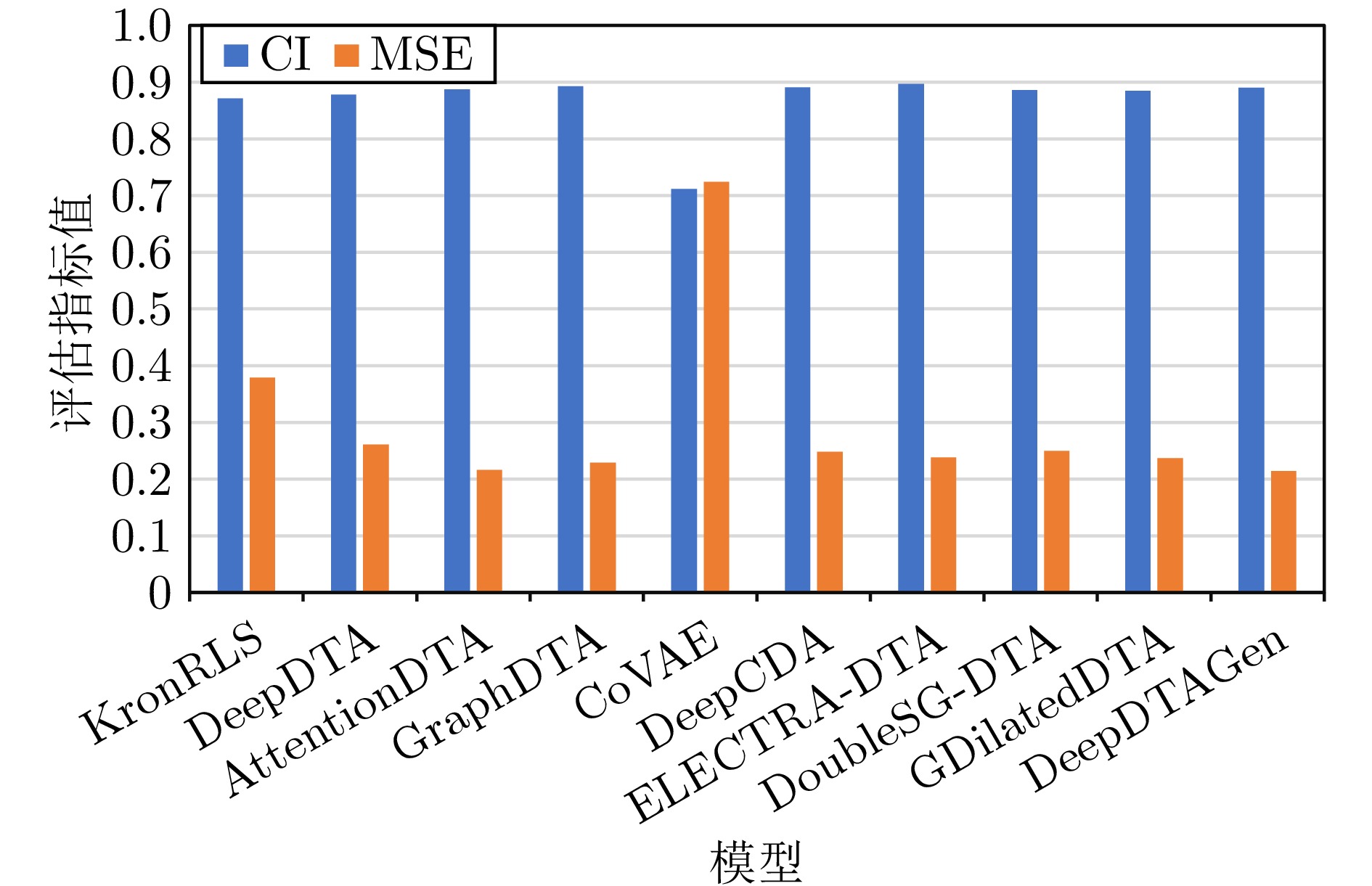
表 6 模型在DAVIS数据集上的CI和MSE的均值$ \pm $标准差
Table 6 Mean $ \pm $ standard deviation of CI and MSE of models on the DAVIS dataset
模型 CI MSE KronRLS[94] $ 0.871\pm0.000 8 $ $ 0.379\pm0 $ DeepDTA[95] $ 0.878\pm0.004 0 $ $ 0.261\pm0 $ AttentionDTA[96] $ 0.887\pm0.005 0 $ $ 0.216\pm0.019 0 $ GraphDTA[97] $ 0.893\pm0 $ $ 0.229\pm0 $ CoVAE[98] $ 0.712\pm0.063 0 $ $ 0.724\pm0.096 0 $ DeepCDA[99] $ 0.891\pm0.003 0 $ $ 0.248\pm0 $ ELECTRA-DTA[100] $ {\boldsymbol{{0.897\pm0.003 0}}} $ $ 0.238\pm0 $ DoubleSG-DTA[101] $ 0.886\pm0.003 0 $ $ 0.250\pm0 $ GDilatedDTA[102] $ 0.885\pm0 $ $ 0.237\pm0 $ DeepDTAGen[103] $ 0.890\pm0.004 0 $ $ {\boldsymbol{{0.214\pm0.006 0}}} $
下载: 导出CSV
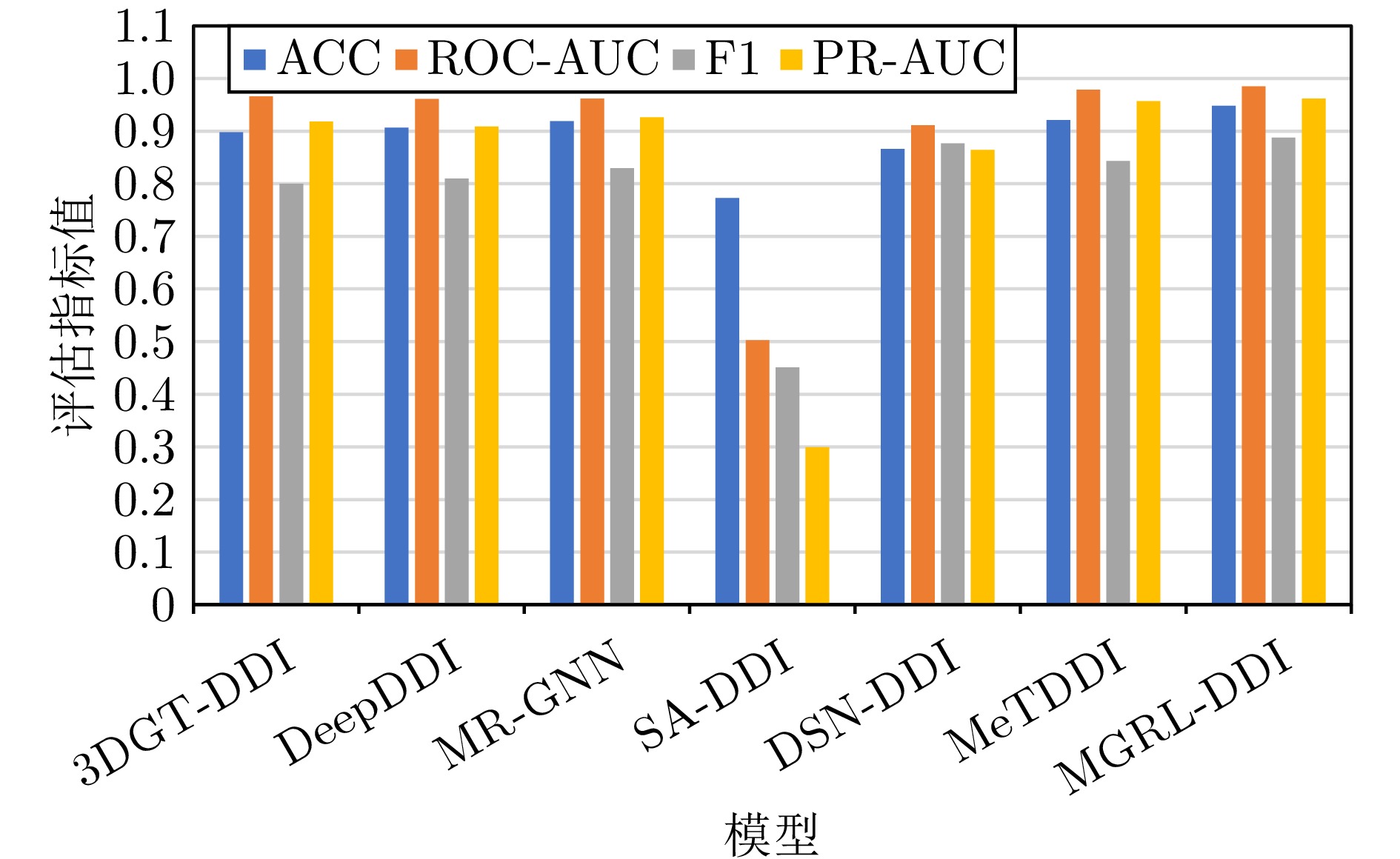
表 11 模型在ZhangDDI数据集上的ACC、ROC-AUC、F1及PR-AUC的均值
Table 11 Mean values of ACC, ROC-AUC, F1 and PR-AUC of models on the ZhangDDI dataset
模型 ACC ROC-AUC F1 PR-AUC 3DGT-DDI[109] $ 0.898 0 $ $ 0.966 3 $ $ 0.800 2 $ $ 0.918 0 $ DeepDDI[110] $ 0.906 9 $ $ 0.961 4 $ $ 0.809 5 $ $ 0.908 7 $ MR-GNN[111] $ 0.919 0 $ $ 0.961 8 $ $ 0.829 3 $ $ 0.926 3 $ SA-DDI[112] $ 0.773 1 $ $ 0.502 6 $ $ 0.450 6 $ $ 0.299 7 $ DSN-DDI[113] $ 0.866 5 $ $ 0.911 3 $ $ 0.876 8 $ $ 0.864 2 $ MeTDDI[114] $ 0.920 8 $ $ 0.979 2 $ $ 0.843 1 $ $ 0.956 9 $ MGRL-DDI[115] $ \mathbf{0.948 4} $ $ \mathbf{0.985 0} $ $ \mathbf{0.887 6} $ $ \mathbf{0.961 8} $
下载: 导出CSV
表 15 基于图结构的方法总结
Table 15 Summary of graph-based structure methods
方法 优点 局限性 计算复杂度 资源消耗 多层次结构建模的方法 MGSSL[34] 将化学逆合成领域的BRICS算法与自定义规则结合, 突破传统子图挖掘仅依赖结构计数的局限 motif提取依赖人工规则 中 中 ReLMole[35] 结合扩展连接指纹和官能团余弦相似生成伪标签, 避免传统对比学习随机增强破坏分子完整性 官能团提取规则固定 中 中 ASBA[36] 设计原子级与子图级双分支, 解决传统模型单层次特征的局限性 计算成本较高 中 中 KA-GNN[37] 节点嵌入用KAN融合原子与邻接键特征, 傅里叶KAN替换RBF 计算复杂度较高 中 中 GraSPNet[38] 通过node与fragment间多向消息传递, 实现跨层级语义交互 泛化性有限 中 中 低标注数据的方法 MolCLR[39] 设计原子掩码、键删除、子图移除三种图级增强, 有效生成正负样本对 缺乏通用性不足 中 中 HiMol[40] 在原子与子图间增设图级节点, 解决READOUT单向聚合的局限 局部细节丢失 中 中 GNN-SKAN[41] 将B样条函数替换为自适应RBF, 加快推理速度 预训练数据规模有限 中 中 DELID[42] 分解分子为子结构, 通过双扩散模型估计完整分子电子分布 计算成本高 中 中 图Transformer的方法 PAGTN[44] 将路径特征引入图Transformer, 解决GCN局部聚合无法捕捉长程依赖的问题 依赖标注数据 高 中 GROVER[45] 针对分子数据设计大规模自监督预训练, 解决标注数据稀缺问题 未引入外部知识 高 高 MGMAE[46] 构建异质原子−键图表示, 解决传统掩码自编码器仅重构原子导致的同分异构体问题 语义信息依赖motif 中 中 KPGT[47] 将外部化学知识融入预训练, 结合路径编码和距离编码, 精准捕捉化学键交互信息 预训练模型参数规模较大 中 中 MTS-Net[48] 分子图收缩为树结构, 通过哈希编码捕捉全局连通性, 解决传统模型全局结构丢失问题 依赖官能团收缩 高 高 MolFG[49] Transformer多注意力头捕捉全局信息, 虚拟节点传递局部信息 泛化性有限 中 中 AdaMGT[50] 设计自适应混合单元架构, 解决传统固定融合比例导致的信息失衡问题 层数敏感性高 $ \mathrm{o}(n) $ 低 三维几何结构建模的方法 SchNet[51] 引入连续滤波卷积, 突破传统CNN依赖规则网格的限制 忽略方向与角度信息 低 中 DimeNet[52] 定向消息替代节点嵌入, 联合利用原子间距离和键角信息, 解决分子难以区分的问题 计算复杂度高 高 高 ComENet[53] 将原子间距离、局部角度、方向角和旋转角统一构建成完整的三维几何表示 依赖人工设计的几何描述符 $ \mathrm{o}(nk) $ 低 GeoNGNN[54] 通过节点标记和嵌套图神经网络机制增强三维结构辨识能力 计算成本提升 高 高 EGNN[55] 无需球谐函数的轻量级等变消息传递框架 局部消息传递 低 中 GMN[56] 引入广义坐标表示, 利用正向运动学将几何约束隐式融入空间坐标生成过程 非通用分子表示学习任务 高 高 Frad[57] 显式扰动可旋转键二面角以及键长、键角参数, 模拟更符合真实分子分布的构象变化 面向小分子体系 高 高 PairReg[58] 在无需额外高阶特征的情况下能够缓解过平滑现象 依赖标注数据 高 高 SE(3)-Transformers[59] 将SE(3)群等变约束与自注意力相结合, 处理三维坐标的同时保持旋转−平移等变性 依赖球谐函数 高 高 Equiformer[60] 将Transformer与几何深度学习相结合, 设计新型等变图注意力机制 存在过平滑风险 高 高 Uni-mol[61] 输入加噪后的三维坐标, 让模型学习还原真实的三维结构, 在海量的数据上进行预训练 对构象表示能力有限 高 高 EPT[62] 在E(3)等变Transformer框架下引入Block-aware层次化表示和Block级旋转−平移去噪预训练策略 计算成本较高 高 高
下载: 导出CSV
表 4 药物−靶标亲和力预测数据集概述
Table 4 Overview of drug-target affinity prediction datasets
下载: 导出CSV
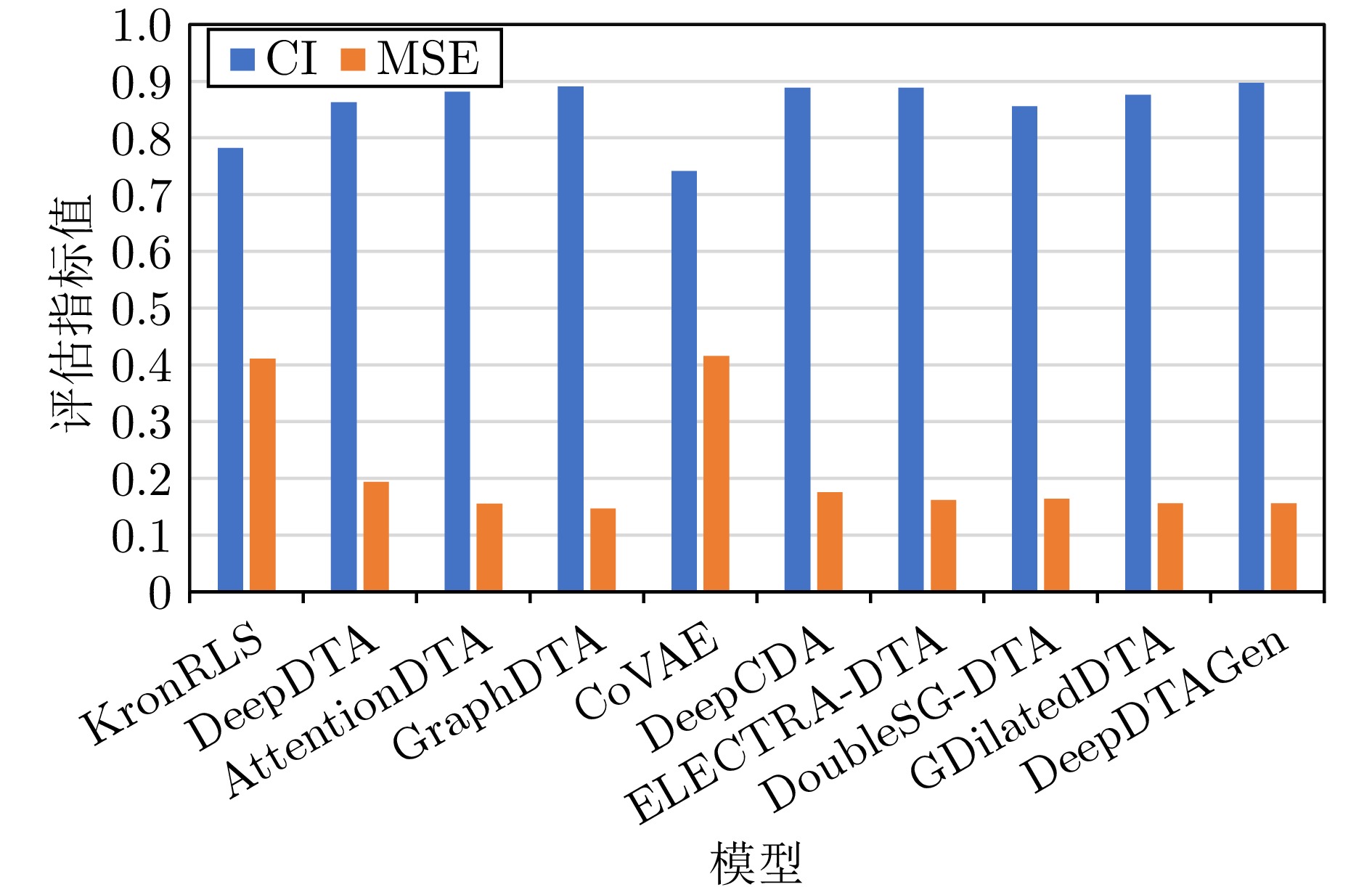
表 5 模型在KIBA数据集上的CI和MSE的均值$ \pm $标准差
Table 5 Mean $ \pm $ standard deviation of CI and MSE of models on the KIBA dataset
模型 CI MSE KronRLS[94 $ 0.782\pm0.000 9 $ $ 0.411\pm0 $ DeepDTA[95] $ 0.863\pm0.002 0 $ $ 0.194\pm0 $ AttentionDTA[96] $ 0.882\pm0.0040 $ $ 0.155\pm0.003 0 $ GraphDTA[97] $ 0.891\pm0 $ $ {\boldsymbol{{0.147\pm0}}} $ CoVAE[98] $ 0.742\pm0.011 0 $ $ 0.416\pm0.004 0 $ DeepCDA[99] $ 0.889\pm0.002 0 $ $ 0.176\pm0 $ ELECTRA-DTA[100] $ 0.889\pm0.002 0 $ $ 0.162\pm0 $ DoubleSG-DTA[101] $ 0.856\pm0.002 0 $ $ 0.164\pm0 $ GDilatedDTA[102] $ 0.876\pm0 $ $ 0.156\pm0 $ DeepDTAGen[103] $ {\boldsymbol{{0.897\pm0.003 0} }}$ $ 0.156\pm0.008 0 $
下载: 导出CSV
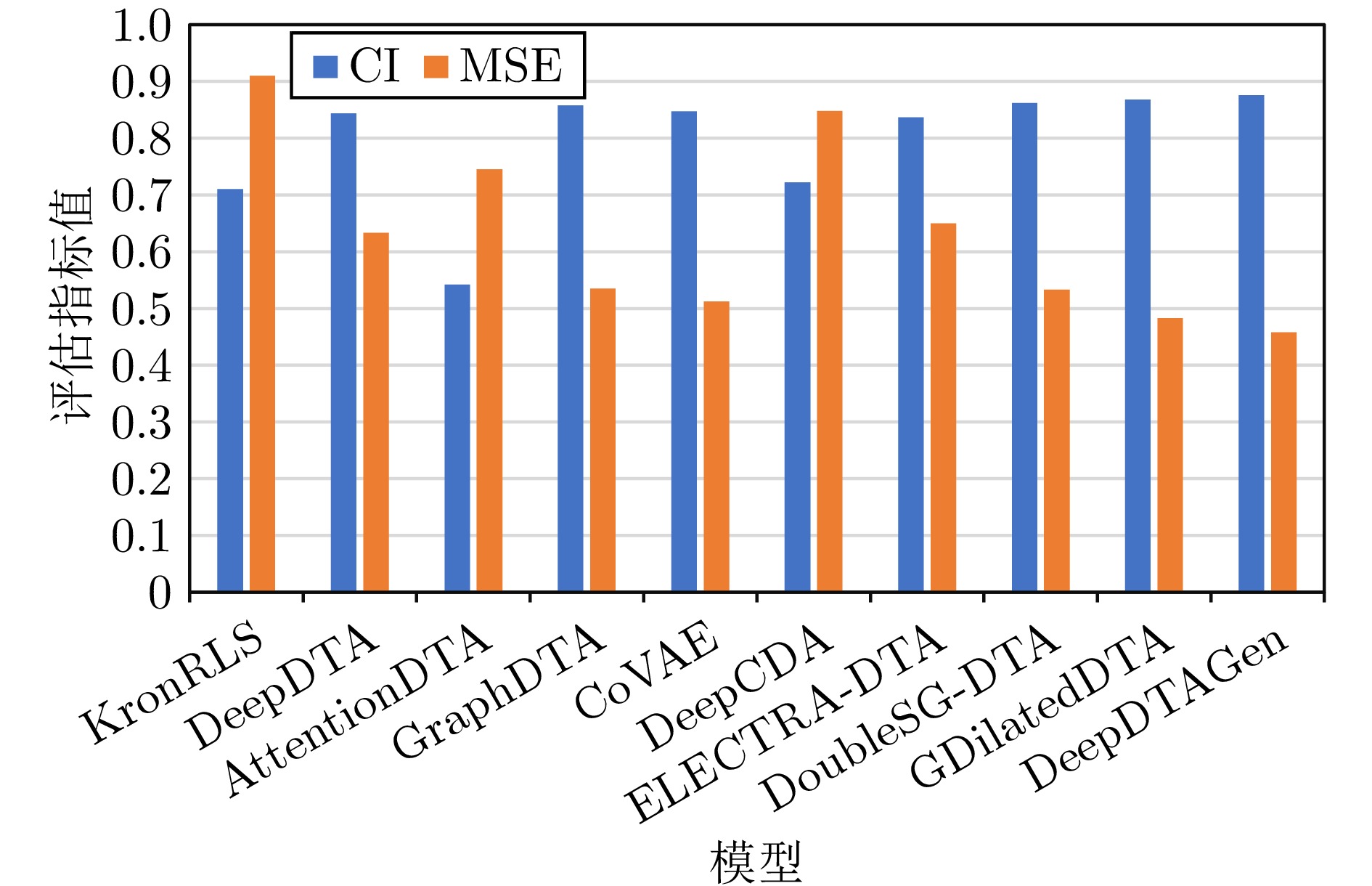
表 7 模型在BindingDB数据集上的CI和MSE的均值$ \pm $标准差
Table 7 Mean $ \pm $ standard deviation of CI and MSE of models on the BindingDB dataset
模型 CI MSE KronRLS[94] $ 0.710\pm0.000 40 $ $ 0.910\pm0.000 12 $ DeepDTA[95] $ 0.844\pm0.003 00 $ $ 0.633\pm0.000 20 $ AttentionDTA[96] $ 0.542\pm0.001 00 $ $ 0.745\pm0.000 80 $ GraphDTA[97] $ 0.858\pm0.004 00 $ $ 0.535\pm0.008 00 $ CoVAE[98] $ 0.847\pm0.000 12 $ $ 0.512\pm0.009 00 $ DeepCDA[99] $ 0.722\pm0.010 00 $ $ 0.848\pm0 $ ELECTRA-DTA[100] $ 0.837\pm0.004 00 $ $ 0.650\pm0 $ DoubleSG-DTA[101] $ 0.862\pm0.002 00 $ $ 0.533\pm0 $ GDilatedDTA[102] $ 0.868\pm0.001 00 $ $ 0.483\pm0.002 00 $ DeepDTAGen[103] $ {\boldsymbol{{0.876\pm0.004 00}}} $ $ {\boldsymbol{{0.458\pm0.002 00}}} $
下载: 导出CSV
表 9 混淆矩阵
Table 9 Confusion matrix
预测 正样本(P) 负样本(N) 实际 正样本(P) true positive (TP) false negative (FN) 负样本(N) false positive (FP) true negative (TN)
下载: 导出CSV
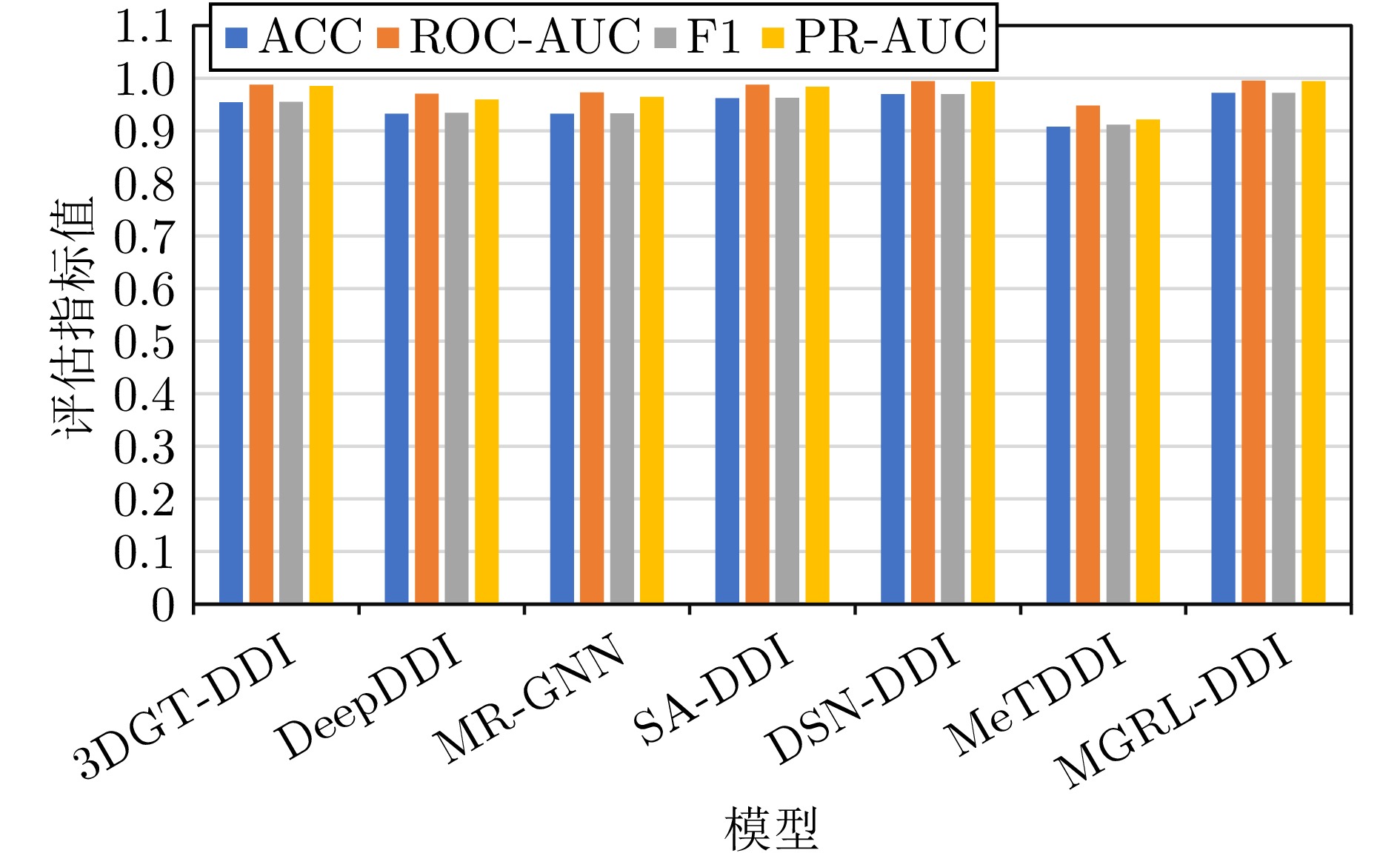
表 10 模型在DrugBank数据集上的ACC、ROC-AUC、F1及PR-AUC的均值
Table 10 Mean values of ACC, ROC-AUC, F1 and PR-AUC of models on the DrugBank dataset
模型 ACC ROC-AUC F1 PR-AUC 3DGT-DDI[109] $ 0.954 2 $ $ 0.987 6 $ $ 0.955 3 $ $ 0.985 1 $ DeepDDI[110] $ 0.932 1 $ $ 0.970 3 $ $ 0.933 7 $ $ 0.959 5 $ MR-GNN[111] $ 0.932 6 $ $ 0.972 6 $ $ 0.933 5 $ $ 0.964 5 $ SA-DDI[112] $ 0.962 1 $ $ 0.987 8 $ $ 0.962 7 $ $ 0.983 6 $ DSN-DDI[113] $ 0.969 4 $ $ 0.994 7 $ $ 0.969 3 $ $ 0.993 7 $ MeTDDI[114] $ 0.908 0 $ $ 0.947 6 $ $ 0.911 2 $ $ 0.921 3 $ MGRL-DDI[115] $ \mathbf{0.971 8} $ $ \mathbf{0.995 1} $ $ \mathbf{0.972 3} $ $ \mathbf{0.994 4} $
下载: 导出CSV
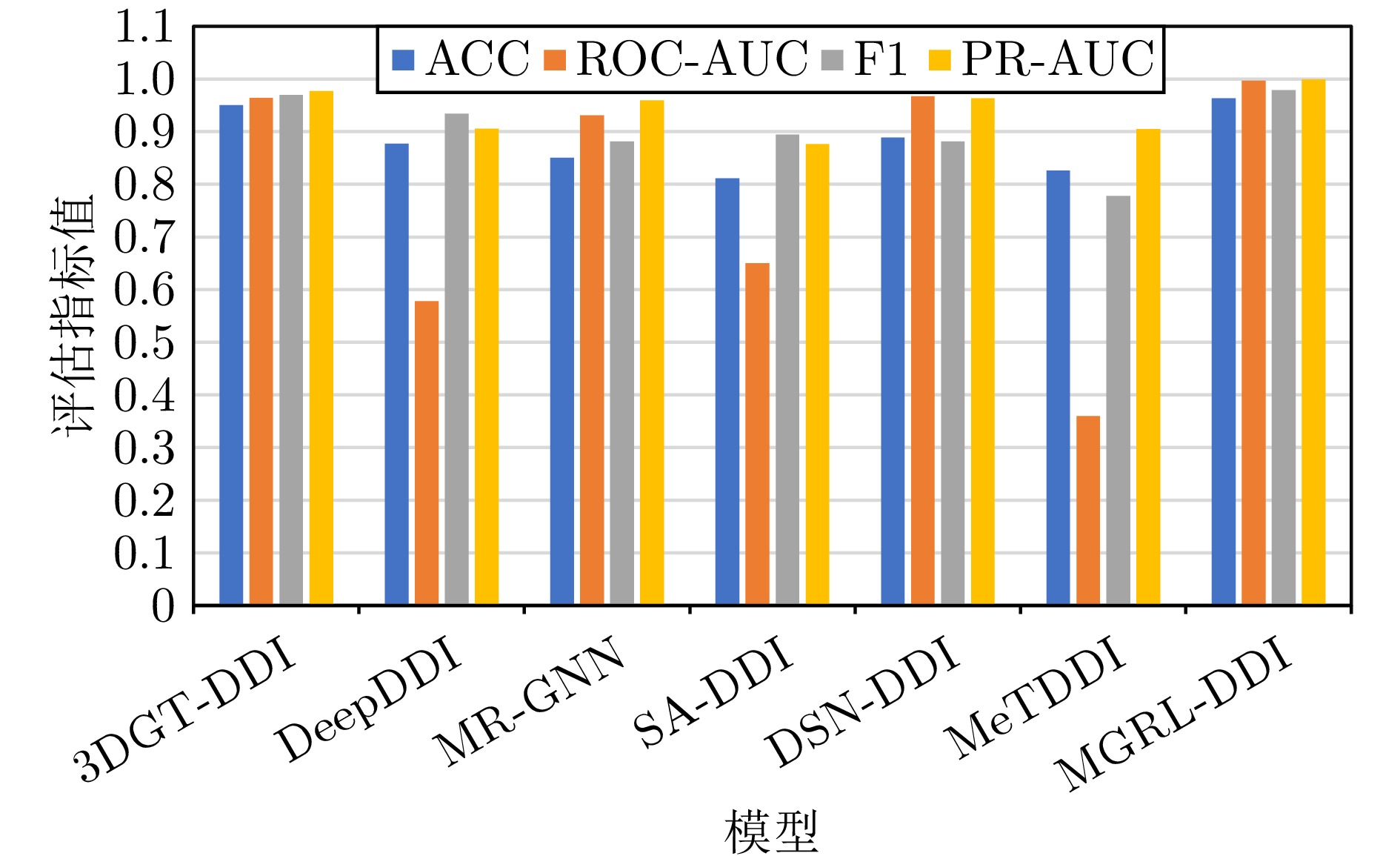
表 12 模型在ChCh-Miner数据集上的ACC、ROC-AUC、F1及PR-AUC的均值
Table 12 Mean values of ACC, ROC-AUC, F1 and PR-AUC of models on the ChCh-Miner dataset
模型 ACC ROC-AUC F1 PR-AUC 3DGT-DDI[109] $ 0.950 5 $ $ 0.964 0 $ $ 0.969 6 $ $ 0.977 1 $ DeepDDI[110] $ 0.877 0 $ $ 0.578 1 $ $ 0.934 2 $ $ 0.905 8 $ MR-GNN[111] $ 0.850 3 $ $ 0.931 1 $ $ 0.881 3 $ $ 0.959 5 $ SA-DDI[112] $ 0.811 2 $ $ 0.650 4 $ $ 0.894 4 $ $ 0.876 5 $ DSN-DDI[113] $ 0.888 9 $ $ 0.966 9 $ $ 0.881 2 $ $ 0.963 4 $ MeTDDI[114] $ 0.826 3 $ $ 0.359 9 $ $ 0.778 1 $ $ 0.904 9 $ MGRL-DDI[115] $ \mathbf{0.963 1} $ $ \mathbf{0.996 6} $ $ \mathbf{0.978 8} $ $ \mathbf{0.99 95} $
下载: 导出CSV
表 13 数据集汇总
Table 13 Summary of datasets
数据集 数据集规模 标注类型 任务类型 评价指标 BBBP[90] 2 053 分类 分子性质预测 ROC-AUC SIDER[90] 1 427 分类 分子性质预测 ROC-AUC Tox21[90] 7 831 分类 分子性质预测 ROC-AUC ESOL[90] 1 128 回归 分子性质预测 RMSE FreeSolv[90] 642 回归 分子性质预测 RMSE Lipophilicity[90] 4 200 回归 分子性质预测 RMSE KIBA[91] 118 254 回归 药物-靶标亲和力预测 MSE/CI Davis[92] 30 056 回归 药物-靶标亲和力预测 MSE/CI BindingDB[93] 56 525 回归 药物-靶标亲和力预测 MSE/CI DrugBank[106] 191 808 分类 药物-药物相互作用 ACC/ROC-AUC/F1/PR-AUC ZhangDDI[107] 48 548 分类 药物-药物相互作用 ACC/ROC-AUC/F1/PR-AUC ChCh-Miner[108] 48 514 分类 药物-药物相互作用 ACC/ROC-AUC/F1/PR-AUC
下载: 导出CSV
表 16 基于多模态的方法总结
Table 16 Summary of multimodal methods
方法 优点 局限性 计算
复杂度资源
消耗SMILES序列与二维分子图融合的方法 FP-GNN[64] FP-GNN融合分子图与多类分子指纹, 实现互补信息利用 依赖特定指纹组合 低 中 SMICLR[25] 基于对比学习框架, 设计多种数据增强策略, 提升模型鲁棒性 泛化性有限 中 中 PSGS[65] 提出伪孪生神经网络结构, 通过自监督任务最大化图与序列表示的相似度 适用范围有限 中 中 MMSG[66] 引入键级图表示作为Transformer的注意力偏置, 强化SMILES与图的特征对应性 未充分验证缺失标签数据 中 中 MMFDL[67] 通过Transformer编码器处理SMILES、BiGRU处理ECFP、GCN处理分子图 模型复杂度较高 中 中 TMRL-MTO[68] 整合SMILES、分子图像和图三视图, 通过对比学习对齐模态 依赖任务间相关性 高 高 MMPCS[69] 提出了依赖数据增强的策略, 利用自监督预训练来减少对标注数据的依赖 需大量分子数据 高 高 GraphMVP[70] 提出对比+生成双任务预训练框架, 实现更全面的模态融合 计算复杂度高 高 高 二维分子图与三维空间构象融合的方法 3D Infomax[71] 通过最大化二维GNN嵌入与三维表示的互信息, 使二维模型隐含三维几何知识 3D表示鲁棒性较差 高 高 MOLEBLEND[27] 将二维最短路径/键型与三维距离融合为统一关系矩阵, 实现细粒度模态对齐 关系矩阵稀疏 高 高 UniCorn[72] 从对比学习视角证明二维掩码、二维-三维对比、三维去噪本质是不同粒度视图聚类 权重需手动调整 高 高 MVMRL[73] 分层预训练策略全面: 原子级捕捉分子内关联, 分子级挖掘分子间关联 对比损失设计简单 高 高 MolMFD[74] 注入可学习噪声解耦模态特异性特征, 解决传统对齐方法丢失互补信息的问题 训练成本高 高 高 CCMD[79] 通过全局与局部蒸馏相结合的双层蒸馏, 实现对分子语义与局部几何信息的协同建模 依赖高质量的分子三维构象数据 高 高 D[80] 通过跨模态知识蒸馏将三维表示迁移至二维图编码器, 在无需三维输入的情况下学习隐式三维几何知识 依赖高质量的
三维构象高 高 SMILES序列、二维分子图与三维空间构象融合的方法 MEMO[75] 通过注意力网络自适应调整各视图权重, 采用多视图对比学习预训练, 缓解标注数据稀缺问题 融合机制未充分建模模态间复杂依赖关系 高 高 SGGRL[76] 引入全局注意力池化层, 聚焦关键信息并减少冗余 构象生成可能引入噪声 高 高 FTMMR[77] 采用三种专用编码器分别处理一维、二维和三维的表征, 确保各模态特征提取的专业性 计算成本较高 高 高 Mol-SGGI[78] 为四种表征设计专用注意力模块, 精准提取各模态核心特征 计算开销大 高 高 分子结构与外部模态融合的方法 MolT5[82] 将分子描述生成和文本引导分子生成统一为分子-语言双向翻译任务 侧重分子与文本双向生成 高 高 MoleculeSTM[83] 支持零样本分子-文本检索和文本驱动分子编辑等开放词汇任务 不具备复杂问答能力 高 高 DrugChat[84] 构建药物和多组问答对的指令微调数据集, 使模型能够围绕药物性质、作用机制等问题进行多轮问答与文本生成 主要面向对话任务 高 高 MolCA[85] 突破对话场景的限制, 将任务扩展到分子描述生成、IUPAC命名预测及分子-文本检索等任务上 对复杂化学推理任务支持有限 高 高 SMEN[86] 将红外光谱等实验数据作为新的外部模态引入分子表示学习 对复杂大分子处理有限 中 中 Mol-LLM[87] 通用的多模态分子大语言模型 训练成本高 高 高
下载: 导出CSV
-
[1] Hughes J P, Rees S, Kalindjian S B, Philpott K L. Principles of early drug discovery. British journal of pharmacology, 2011, 162(6): 1239−1249 doi: 10.1111/j.1476-5381.2010.01127.x [2] Li Z, Jiang M, Wang S, Zhang S. Deep learning methods for molecular representation and property prediction. Drug Discovery Today, 2022, 27(12): 103373 doi: 10.1016/j.drudis.2022.103373 [3] Song C M, Lim S J, Tong J C. Recent advances in computer-aided drug design. Briefings in bioinformatics, 2009, 10(5): 579−591 doi: 10.1093/bib/bbp023 [4] Hassan Baig M, Ahmad K, Roy S, Mohammad Ashraf J, Adil M, Haris Siddiqui M, et al. Computer aided drug design: success and limitations. Current pharmaceutical design, 2016, 22(5): 572−581 [5] Wang S, Zhang R, Li X, Cai F, Ma X, Tang Y, et al. Recent advances in molecular representation methods and their applications in scaffold hopping. npj Drug Discovery, 2025, 2(1): 1−4 doi: 10.1038/s44386-024-00003-0 [6] Guo Z, Guo K, Nan B, Tian Y, Iyer R G, Ma Y, et al. Graph-based molecular representation learning. arXiv preprint arXiv: 2207.04869, 2022. [7] Guo Z, Yu W, Zhang C, Jiang M, Chawla N V. GraSeq: graph and sequence fusion learning for molecular property prediction. In: Proceedings of the 29th ACM International Conference on Information & Knowledge Management. Virtual Event: ACM, 2020. 435–443 [8] Li M, Lu Z, Wu Y, Li Y. BACPI: a bi-directional attention neural network for compound-protein interaction and binding affinity prediction. Bioinformatics, 2022, 38(7): 1995−2002 doi: 10.1093/bioinformatics/btac035 [9] Zhang J, Zhang X, Dai Y, Shao X, Fan X. Transformer-based graphs for drug-drug interaction with chemical knowledge embedding. Briefings in Bioinformatics, 2026, 27(1): bbag039 doi: 10.1093/bib/bbag039 [10] Yang J, Cai Y, Zhao K, Xie H, Chen X. Concepts and applications of chemical fingerprint for hit and lead screening. Drug discovery today, 2022, 27(11): 103356 doi: 10.1016/j.drudis.2022.103356 [11] Todeschini R, Consonni V. Handbook of Molecular Descriptors. Hoboken: John Wiley & Sons, 2008. [12] Weininger D. SMILES, a chemical language and information system. 1. Introduction to methodology and encoding rules. Journal of chemical information and computer sciences, 1988, 28(1): 31−36 [13] Heller S R, McNaught A, Pletnev I, Stein S, Tchekhovskoi D. InChI, the IUPAC international chemical identifier. Journal of cheminformatics, 2015, 7(1): 23 doi: 10.1186/s13321-015-0068-4 [14] Krenn M, Häse F, Nigam A, Friederich P, Aspuru-Guzik A. Self-referencing embedded strings (SELFIES): A 100% robust molecular string representation. Machine Learning: Science and Technology, 2020, 1(4): 045024 doi: 10.1088/2632-2153/aba947 [15] Scarselli F, Gori M, Tsoi A C, Hagenbuchner M, Monfardini G. The graph neural network model. IEEE Transactions on Neural Networks, 2008, 20(1): 61−80 [16] Geppert H, Vogt M, Bajorath J. Current trends in ligand-based virtual screening: molecular representations, data mining methods, new application areas, and performance evaluation. Journal of chemical information and modeling, 2010, 50(2): 205−216 doi: 10.1021/ci900419k [17] Walters W P, Barzilay R. Applications of deep learning in molecule generation and molecular property prediction. Accounts of chemical research, 2020, 54(2): 263−270 [18] Do K, Tran T, Venkatesh S. Graph transformation policy network for chemical reaction prediction. In: Proceedings of the 25th ACM SIGKDD International Conference on Knowledge Discovery & Data Mining. Anchorage, AK, USA: ACM, 2019. 750–760 [19] Harnik Y, Specktor E, Cohen Y, Milo A, Pakman A. A Survey of Molecular Representation Learning: From Single Modalities to Foundation Models. 2025. [20] David L, Thakkar A, Mercado R, Engkvist O. Molecular representations in AI-driven drug discovery: a review and practical guide. Journal of cheminformatics, 2020, 12(1): 56 doi: 10.1186/s13321-020-00460-5 [21] O'Boyle N M. Towards a Universal SMILES representation-A standard method to generate canonical SMILES based on the InChI. Journal of cheminformatics, 2012, 4(1): 22 doi: 10.1186/1758-2946-4-22 [22] Daylight theory: smarts-a language for describing molecular patterns[Online], available: https://www.daylight.com/dayhtml/doc/theory/theory.smarts.html, Sep16, 2026 [23] 戴嘉欣, 付冬梅, 张达威, 马菱薇. 图模型在分子信息学中的研究综述与展望. 工程科学学报, 2025, 44(2): 1−19 doi: 10.13374/j.issn2095-9389.2025.03.02.002Dai Jia-Xin, Fu Dong-Mei, Zhang Da-Wei, Ma Ling-Wei. Research review and prospect of graph models in molecular informatics. Journal of University of Science and Technology Beijing, 2025, 44(2): 1−19 doi: 10.13374/j.issn2095-9389.2025.03.02.002 [24] Yu L, Su Y, Liu Y, Zeng X. Review of unsupervised pretraining strategies for molecules representation. Briefings in functional genomics, 2021, 20(5): 323−332 doi: 10.1093/bfgp/elab036 [25] Pinheiro G A, Da Silva J L, Quiles M G. SMICLR: Contrastive learning on multiple molecular representations for semisupervised and unsupervised representation learning. Journal of Chemical Information and Modeling, 2022, 62(17): 3948−3960 doi: 10.1021/acs.jcim.2c00521 [26] Cho S, Jeong D W, Ko S M, Kim J, Han S, Hong S, et al. 3d denoisers are good 2d teachers: molecular pretraining via denoising and cross-modal distillation. In: Proceedings of the Thirty-Ninth AAAI Conference on Artificial Intelligence. Philadelphia, Pennsylvania, USA: AAAI Press, 2025. 110–118 [27] Yu Q, Zhang Y, Ni Y, Feng S, Lan Y, Zhou H, et al. Multimodal molecular pretraining via modality blending. In: Proceedings of the International Conference on Learning Representations. Vienna, Austria, 2024. 13314–13332 [28] Vaswani A, Shazeer N, Parmar N, Uszkoreit J, Jones L, Gomez A N, et al. Attention is all you need. Advances in neural information processing systems. 2017, 30 [29] Dwivedi V P, Bresson X. A generalization of transformer networks to graphs. arXiv preprint arXiv: 2012.09699, 2020. [30] Honda S, Shi S, Ueda H R. Smiles transformer: Pre-trained molecular fingerprint for low data drug discovery. arXiv preprint arXiv: 1911.04738, 2019. [31] Guo Z, Sharma P, Martinez A, Du L, Abraham R. Multilingual molecular representation learning via contrastive pre-training. In: Proceedings of the 60th Annual Meeting of the Association for Computational Linguistics. Dublin, Ireland: ACL, 2022. 3441–3453 [32] Yüksel A, Ulusoy E, Ünlü A, Doğan T. SELFormer: Molecular representation learning via SELFIES language models. Machine Learning: Science and Technology, 2023, 4(2): 025035 doi: 10.1088/2632-2153/acdb30 [33] Mswahili M E, Hwang J, Jo K, Rajapakse J C, Kovács P, Jeong Y S. Entropy-based byte patching transformer for self-supervised pretraining of SMILES data. IScience, 2026, 29(2 [34] Zhang Z, Liu Q, Wang H, Lu C, Lee C K. Motif-based graph self-supervised learning for molecular property prediction. arXiv preprint arXiv: 2110.00987, 2021. [35] Ji Z, Shi R, Lu J, Li F, Yang Y. ReLMole: Molecular representation learning based on two-level graph similarities. Journal of Chemical Information and Modeling, 2022, 62(22): 5361−5372 doi: 10.1021/acs.jcim.2c00798 [36] Chen J, Liu Y, Li J, Su B, Wen J. Atomic and Subgraph-aware Bilateral Aggregation for Molecular Representation Learning. arXiv preprint arXiv: 2305.12618, 2023. [37] Li L, Zhang Y, Wang G, Xia K. Kolmogorov-Arnold graph neural networks for molecular property prediction. Nature Machine Intelligence, 2025, 7(8): 1346−1354 doi: 10.1038/s42256-025-01087-7 [38] Wu J, Ma H, Guo Z, Vo T V, Leong T Y. Hierarchical Molecular Representation Learning via Fragment-Based Self-Supervised Embedding Prediction. arXiv preprint arXiv: 2602.20344, 2026. [39] Wang Y, Wang J, Cao Z, Barati Farimani A. Molecular contrastive learning of representations via graph neural networks. Nature Machine Intelligence, 2022, 4(3): 279−287 doi: 10.1038/s42256-022-00447-x [40] Zang X, Zhao X, Tang B. Hierarchical molecular graph self-supervised learning for property prediction. Communications Chemistry, 2023, 6(1): 34 doi: 10.1038/s42004-023-00825-5 [41] Li R, Li M, Liu W, Chen H. Gnn-skan: Advancing molecular representation learning with swallowkan. In: Proceedings of the 31st ACM SIGKDD Conference on Knowledge Discovery and Data Mining. Toronto, Ontario, Canada: ACM, 2025. 1481–1492 [42] Na G S, Park C. Self-supervised diffusion models for electron-aware molecular representation learning. In: Proceedings of the International Conference on Learning Representations. Singapore, 2025. 67612–67634 [43] Degen J, Wegscheid-Gerlach C, Zaliani A, Rarey M. On the art of compiling and using'drug-like'chemical fragment spaces. ChemMedChem, 2008, 3(10): 1503 doi: 10.1002/cmdc.200800178 [44] Chen B, Barzilay R, Jaakkola T. Path-augmented graph transformer network. arXiv preprint arXiv: 1905.12712, 2019. [45] Rong Y, Bian Y, Xu T, Xie W, Wei Y, Huang W, et al. Self-supervised graph transformer on large-scale molecular data. Advances in neural information processing systems, 2020, 33: 12559−12571 [46] Feng J, Wang Z, Li Y, Ding B, Wei Z, Xu H. Mgmae: Molecular representation learning by reconstructing heterogeneous graphs with a high mask ratio. In: Proceedings of the 31st ACM International Conference on Information & Knowledge Management. Atlanta, Georgia, USA: ACM, 2022. 509–519 [47] Li H, Zhang R, Min Y, Ma D, Zhao D, Zeng J. A knowledge-guided pre-training framework for improving molecular representation learning. Nature Communications, 2023, 14(1): 7568 doi: 10.1038/s41467-023-43214-1 [48] Yang F, Zhou Q, Su R, Xiong W. MTS-Net: An enriched topology-aware architecture for molecular graph representation learning. Journal of Intelligent & Fuzzy Systems, 2024, 47(1-2): 99−110 doi: 10.3233/jifs-236788 [49] Liu Y, Zhang R, Li T, Jiang J, Ma J, Yuan Y, et al. Molecular representation contrastive learning via transformer embedding to graph neural networks. Applied Soft Computing, 2024, 164: 111970 doi: 10.1016/j.asoc.2024.111970 [50] Ding C, Yan Z, Ma L, Cao B, Cao L. AdaMGT: Molecular representation learning via adaptive mixture of GCN-Transformer. Knowledge-Based Systems, 2025, 311: 113131 doi: 10.1016/j.knosys.2025.113131 [51] Schütt K, Kindermans P J, Sauceda Felix H E, Chmiela S, Tkatchenko A, Müller K R. Schnet: A continuous-filter convolutional neural network for modeling quantum interactions. Advances in neural information processing systems, 2017, 30 [52] Gasteiger J, Groß J, Günnemann S. Directional message passing for molecular graphs. arXiv preprint arXiv: 2003.03123, 2020. [53] Wang L, Liu Y, Lin Y, Liu H, Ji S. ComENet: Towards complete and efficient message passing for 3D molecular graphs. Advances in Neural Information Processing Systems, 2022, 35: 650−64 [54] Li Z, Wang X, Kang S, Zhang M. On the completeness of invariant geometric deep learning models. In: Proceedings of the International Conference on Learning Representations. Singapore, 2025. 47980–48022 [55] Satorras V G, Hoogeboom E, Welling M. E(n) equivariant graph neural networks. In: Proceedings of the International Conference on Machine Learning. Virtual Event: PMLR, 2021. 9323–9332 [56] Huang W, Han J, Rong Y, Xu T, Sun F, Huang J. Equivariant graph mechanics networks with constraints. arXiv preprint arXiv: 2203.06442, 2022. [57] Ni Y, Feng S, Hong X, Sun Y, Ma W Y, Ma Z M, et al. Pre-training with fractional denoising to enhance molecular property prediction. Nature Machine Intelligence, 2024, 6(10): 1169−1178 doi: 10.1038/s42256-024-00900-z [58] Ren Z, Liu Y, Zhang S. PairReg: A method for enhancing the learning of molecular structure representation in equivariant graph neural networks. PLoS One, 2025, 20(7): e0328501 doi: 10.1371/journal.pone.0328501 [59] Fuchs F, Worrall D, Fischer V, et al. Se (3)-transformers: 3d roto-translation equivariant attention networks. Advances in neural information processing systems, 2020, 33: 1970−1981 [60] Liao Y L, Smidt T. Equiformer: Equivariant graph attention transformer for 3d atomistic graphs. arXiv preprint arXiv: 2206.11990, 2022. [61] Zhou G, Gao Z, Ding Q, Zheng H, Xu H, Wei Z, et al. Uni-mol: a universal 3d molecular representation learning framework. In: Proceedings of the Eleventh International Conference on Learning Representations. Kigali, Rwanda, 2023. [62] Jiao R, Kong X, Zhang L, Yu Z, Ren F, Tan W, et al. An equivariant pretrained transformer for unified 3D molecular representation learning. Nature Communications, 2026, 17(1): 2606 doi: 10.1038/s41467-026-69185-7 [63] Han J, Cen J, Wu L, Li Z, Kong X, Jiao R, et al. A survey of geometric graph neural networks: Data structures, models and applications. Frontiers of Computer Science, 2025, 19(11): 1911375 doi: 10.1007/s11704-025-41426-w [64] Cai H, Zhang H, Zhao D, Wu J, Wang L. FP-GNN: a versatile deep learning architecture for enhanced molecular property prediction. Briefings in bioinformatics, 2022, 23(6 [65] Zhang C, Yan X, Liu Y. Pseudo-siamese neural network based graph and sequence representation learning for molecular property prediction. In: Proceedings of the 2022 IEEE International Conference on Bioinformatics and Biomedicine. Las Vegas, Nevada, USA: IEEE, 2022. 3911–3913 [66] Wu T, Tang Y, Sun Q, Xiong L. Molecular joint representation learning via multi-modal information of smiles and graphs. IEEE/ACM Transactions on Computational Biology and Bioinformatics, 2023, 20(5): 3044−3055 doi: 10.1109/TCBB.2023.3253862 [67] Lu X, Xie L, Xu L, Mao R, Xu X, Chang S. Multimodal fused deep learning for drug property prediction: Integrating chemical language and molecular graph. Computational and Structural Biotechnology Journal, 2024, 23: 1666−1679 doi: 10.1016/j.csbj.2024.04.030 [68] Han X, Cai J, Bai C, Wu Z. Triview Molecular Representation Learning Combined with Multitask Optimization for Enhanced Molecular Property Prediction. Journal of Chemical Information and Modeling, 2025, 65(10): 5163−5175 doi: 10.1021/acs.jcim.5c00436 [69] Xie C, Song Y, He S, Bo X, Zhang Z. MMPCS: multi-view molecular pretraining based on consistency information and specific information. Bioinformatics, 2026, 42(2): btag028 doi: 10.1093/bioinformatics/btag028 [70] Liu S, Wang H, Liu W, Lasenby J, Guo H, Tang J. Pre-training molecular graph representation with 3d geometry. arXiv preprint arXiv: 2110.07728. 2021. [71] Stärk H, Beaini D, Corso G, Tossou P, Dallago C, Günnemann S, et al. 3d infomax improves gnns for molecular property prediction. In: Proceedings of the International Conference on Machine Learning. Baltimore, Maryland, USA: PMLR, 2022. 20479–20502 [72] Feng S, Ni Y, Li M, Huang Y, Ma Z M, Ma W Y, et al. Unicorn: A unified contrastive learning approach for multi-view molecular representation learning. arXiv preprint arXiv: 2405.10343. 2024. [73] Zang X, Zhang J, Tang B. Self-supervised molecular representation learning with topology and geometry. IEEE Journal of Biomedical and Health Informatics, 2024, 29(1): 700−710 [74] Zang X, Zhang J, Tang B. Molecular representation learning via multimodal fusion and decoupling. Information Fusion, 2026, 125: 103493 doi: 10.1016/j.inffus.2025.103493 [75] Zhu Y, Chen D, Du Y, Wang Y, Liu Q, Wu S. Featurizations matter: a multiview contrastive learning approach to molecular pretraining. In: Proceedings of the 2nd AI for Science Workshop at International Conference on Machine Learning. Baltimore, Maryland, USA, 2022. [76] Wang Z, Jiang T, Wang J, Xuan Q. Multi-modal representation learning for molecular property prediction: sequence, graph, geometry. arXiv preprint arXiv: 2401.03369. 2024. [77] Son Y H, Shin D H, Kam T E. FTMMR: Fusion transformer for integrating multiple molecular representations. IEEE Journal of Biomedical and Health Informatics, 2024, 28(7): 4361−4372 doi: 10.1109/JBHI.2024.3383221 [78] Ma L, Pu C, Shao D, Yi S. Mol-SGGI: an attention-guided comprehensive molecular multi-representation learning and adaptive fusion framework for molecular property prediction. Molecular Diversity, 20251−6 [79] Zhang H, Zhang N, Zhang R, Shen L, Zhang Y, Liu M. Coordinating Cross-modal Distillation for Molecular Property Prediction. arXiv preprint arXiv: 2211.16712. 2022. [80] Cho S, Jeong D W, Ko S M, Kim J, Han S, Hong S, et al. 3d denoisers are good 2d teachers: molecular pretraining via denoising and cross-modal distillation. In: Proceedings of the Thirty-Ninth AAAI Conference on Artificial Intelligence. Philadelphia, Pennsylvania, USA: AAAI Press, 2025. 110–118 [81] Morgan H L. The generation of a unique machine description for chemical structures-a technique developed at chemical abstracts service. Journal of chemical documentation, 1965, 5(2): 107−113 [82] Edwards C, Lai T, Ros K, Honke G, Cho K, Ji H. Translation between molecules and natural language. In: Proceedings of the 2022 Conference on Empirical Methods in Natural Language Processing. Abu Dhabi, United Arab Emirates, 2022. 375–413 [83] Liu S, Nie W, Wang C, Lu J, Qiao Z, Liu L, et al. Multi-modal molecule structure-text model for text-based retrieval and editing. Nature Machine Intelligence, 2023, 5(12): 1447−1457 doi: 10.1038/s42256-023-00759-6 [84] Liang Y, Zhang R, Zhang L, Xie P. DrugChat: towards enabling ChatGPT-like capabilities on drug molecule graphs. arXiv preprint arXiv: 2309.03907. 2023. [85] Liu Z, Li S, Luo Y, Fei H, Cao Y, Kawaguchi K, et al. Molca: molecular graph-language modeling with cross-modal projector and uni-modal adapter. In: Proceedings of the 2023 Conference on Empirical Methods in Natural Language Processing. Singapore, 2023. 15623–15638 [86] Kanakala G C, Sridharan B, Priyakumar U D. Spectra to structure: contrastive learning framework for library ranking and generating molecular structures for infrared spectra. Digital Discovery, 2024, 3(12): 2417−2423 doi: 10.1039/D4DD00135D [87] Lee C, Ko H, Song Y, Jeong Y, Hormazabal R, Han S, et al. Mol-llm: Multimodal generalist molecular llm with improved graph utilization. arXiv preprint arXiv: 2502.02810. 2025. [88] Li J, Li D, Savarese S, Hoi S. Blip-2: bootstrapping language-image pre-training with frozen image encoders and large language models. In: Proceedings of the International Conference on Machine Learning. Honolulu, Hawaii, USA: PMLR, 2023. 19730–19742 [89] Radford A, Kim J W, Hallacy C, Ramesh A, Goh G, Agarwal S, et al. Learning transferable visual models from natural language supervision. In: Proceedings of the International Conference on Machine Learning. Virtual Event: PMLR, 2021. 8748–8763 [90] Wu Z, Ramsundar B, Feinberg E N, Gomes J, Geniesse C, Pappu A S, et al. MoleculeNet: a benchmark for molecular machine learning. Chemical science, 2018, 9(2): 513−530 doi: 10.1039/C7SC02664A [91] Tang J, Szwajda A, Shakyawar S, Xu T, Hintsanen P, Wennerberg K, et al. Making sense of large-scale kinase inhibitor bioactivity data sets: a comparative and integrative analysis. Journal of chemical information and modeling, 2014, 54(3): 735−743 doi: 10.1021/ci400709d [92] Davis M I, Hunt J P, Herrgard S, Ciceri P, Wodicka LM, Pallares G, et al. Comprehensive analysis of kinase inhibitor selectivity. Nature biotechnology, 2011, 29(11): 1046−1051 doi: 10.1038/nbt.1990 [93] Liu T, Lin Y, Wen X, Jorissen R N, Gilson M K. Bindingdb: a web-accessible database of experimentally determined protein-ligand binding affinities. Nucleic Acids Research, 2007, 35(suppl_1): 198−201 doi: 10.1093/nar/gkl999 [94] Pahikkala T, Airola A, Pietilä S, Shakyawar S, Szwajda A, Tang J, et al. Toward more realistic drug-target interaction predictions. Briefings in bioinformatics, 2015, 16(2): 325−337 doi: 10.1093/bib/bbu010 [95] Öztürk H, Özgür A, Ozkirimli E. DeepDTA: deep drug-target binding affinity prediction. Bioinformatics, 2018, 34(17): i821−829 doi: 10.1093/bioinformatics/bty593 [96] Zhao Q, Duan G, Yang M, Cheng Z, Li Y, Wang J. Attentiondta: drug-target binding affinity prediction by sequence-based deep learning with attention mechanism. IEEE/ACM Transactions on Computational Biology and Bioinformatics, 2022, 20(2): 852−863 doi: 10.1109/tcbb.2022.3170365/mm1 [97] Nguyen T, Le H, Quinn T P, Nguyen T, Le T D, Venkatesh S. GraphDTA: predicting drug-target binding affinity with graph neural networks. Bioinformatics, 2021, 37(8): 1140−1147 doi: 10.1093/bioinformatics/btaa921 [98] Li T, Zhao X M, Li L. Co-vae: drug-target binding affinity prediction by co-regularized variational autoencoders. IEEE Transactions on Pattern Analysis and Machine Intelligence, 2021, 44(12): 8861−8873 doi: 10.1109/tpami.2021.3120428 [99] Abbasi K, Razzaghi P, Poso A, Amanlou M, Ghasemi JB, Masoudi-Nejad A. DeepCDA: deep cross-domain compound-protein affinity prediction through LSTM and convolutional neural networks. Bioinformatics, 2020, 36(17): 4633−4642 doi: 10.1093/bioinformatics/btaa544 [100] Wang J, Wen N, Wang C, Zhao L, Cheng L. ELECTRA-DTA: a new compound-protein binding affinity prediction model based on the contextualized sequence encoding. Journal of cheminformatics, 2022, 14(1): 14 doi: 10.1186/s13321-022-00591-x [101] Qian Y, Ni W, Xianyu X, Tao L, Wang Q. DoubleSG-DTA: deep learning for drug discovery: case study on the non-small cell lung cancer with EGFR T 790 M mutation. Pharmaceutics, 2023, 15(2): 675 doi: 10.3390/pharmaceutics15020675 [102] Zhang L, Zeng W, Chen J, Chen J, Li K. GDilatedDTA: Graph dilation convolution strategy for drug target binding affinity prediction. Biomedical Signal Processing and Control, 2024, 92: 106110 doi: 10.1016/j.bspc.2024.106110 [103] Shah P M, Zhu H, Lu Z, Wang K, Tang J, Li M. DeepDTAGen: a multitask deep learning framework for drug-target affinity prediction and target-aware drugs generation. Nature Communications, 2025, 16(1): 5021 doi: 10.1038/s41467-025-59917-6 [104] Baxter K, Preston C L, editors. Stockley's drug interactions. London: Pharmaceutical Press, 2010. [105] Niu J, Straubinger R M, Mager D E. Pharmacodynamic drug-drug interactions. Clinical Pharmacology & Therapeutics, 2019, 105(6): 1395−1406 doi: 10.1002/cpt.1434 [106] Wishart D S, Knox C, Guo A C, Shrivastava S, Hassanali M, Stothard P, et al. DrugBank: a comprehensive resource for in silico drug discovery and exploration. Nucleic acids research, 2006, 34(suppl_1): 668−672 [107] Zhang W, Chen Y, Liu F, Luo F, Tian G, Li X. Predicting potential drug-drug interactions by integrating chemical, biological, phenotypic and network data. BMC bioinformatics, 2017, 18(1): 18 doi: 10.1186/s12859-016-1415-9 [108] Gan Y, Liu W, Xu G, Yan C, Zou G. DMFDDI: deep multimodal fusion for drug-drug interaction prediction. Briefings in Bioinformatics, 2023, 24(6): bbad397 doi: 10.1093/bib/bbad397 [109] He H, Chen G, Yu-Chian Chen C. 3DGT-DDI: 3D graph and text based neural network for drug-drug interaction prediction. Briefings in bioinformatics, 2022, 23(3): bbac134 doi: 10.1093/bib/bbac134 [110] Ryu J Y, Kim H U, Lee S Y. Deep learning improves prediction of drug-drug and drug-food interactions. Proceedings of the national academy of sciences, 2018, 115(18): 4304−4311 [111] Xu N, Wang P, Chen L, Tao J, Zhao J. Mr-gnn: Multi-resolution and dual graph neural network for predicting structured entity interactions. arXiv preprint arXiv: 1905.09558. 2019. [112] Yang Z, Zhong W, Lv Q, Chen C Y. Learning size-adaptive molecular substructures for explainable drug-drug interaction prediction by substructure-aware graph neural network. Chemical science, 2022, 13(29): 8693−8703 doi: 10.1039/D2SC02023H [113] Li Z, Zhu S, Shao B, Zeng X, Wang T, Liu T Y. DSN-DDI: an accurate and generalized framework for drug–drug interaction prediction by dual-view representation learning. Briefings in Bioinformatics, 202, 24(1): bbac597 [114] Zhong Y, Li G, Yang J, Zheng H, Yu Y, Zhang J, et al. Learning motif-based graphs for drug-drug interaction prediction via local-global self-attention. Nature Machine Intelligence, 2024, 6(9): 1094−1105 doi: 10.1038/s42256-024-00888-6 [115] Xiong P, Chen H, Zhou J, Zeng Y, Dai Q. MGRL-DDI: Multiview Graph Representation Learning for Accurate Drug-Drug Interaction Prediction. Journal of Chemical Information and Modeling, 2025, 65(18): 9800−9814 doi: 10.1021/acs.jcim.5c01773 [116] Yuan H, Yu H, Gui S, Ji S. Explainability in graph neural networks: a taxonomic survey. IEEE Transactions on Pattern Analysis and Machine Intelligence, 2022, 45(5): 5782−5799 doi: 10.1109/tpami.2022.3204236 [117] Pereira T O, Abbasi M, Arrais J P. ABIET: An explainable transformer for identifying functional groups in biological active molecules. Computers in Biology and Medicine, 2025, 187: 109740 doi: 10.1016/j.compbiomed.2025.109740 [118] Ying Z, Bourgeois D, You J, Zitnik M, Leskovec J. Gnnexplainer: generating explanations for graph neural networks. In: Proceedings of the Advances in Neural Information Processing Systems. Vancouver, British Columbia, Canada, 2019. 32 [119] Yuan H, Yu H, Wang J, Li K, Ji S. On explainability of graph neural networks via subgraph explorations. In: Proceedings of the International Conference on Machine Learning. Virtual Event: PMLR, 2021. 12241–12252 [120] McCloskey K, Taly A, Monti F, Brenner M P, Colwell LJ. Using attribution to decode binding mechanism in neural network models for chemistry. Proceedings of the National Academy of Sciences, 2019, 116(24): 11624−11629 doi: 10.1073/pnas.1820657116 [121] He Y, Sui Y, He X, Hooi B. Unigraph: learning a unified cross-domain foundation model for text-attributed graphs. In: Proceedings of the 31st ACM SIGKDD Conference on Knowledge Discovery and Data Mining. Toronto, Ontario, Canada: ACM, 2025. 448–459 [122] Sicherman A, Radinsky K. ReactEmbed: A Cross-Domain Framework for Protein-Molecule Representation Learning via Biochemical Reaction Networks. arXiv preprint arXiv: 2501.18278. 2025. -


 下载:
下载:

计量
- 文章访问数: 21
- HTML全文浏览量: 9
- 被引次数: 0
