


A Decentralized Federated Domain Generalization Method for Fault Diagnosis in Open-set Environments
-
摘要: 故障诊断是保障工业系统安全稳定运行的核心环节. 传统诊断模型通常需要汇集多方节点数据进行集中训练, 存在原始数据泄漏风险. 尽管联邦学习能够在不共享原始数据的前提下实现协同训练, 但其往往依赖中央服务器进行参数聚合, 不仅存在单点故障隐患, 还给服务器端带来沉重的通信负担. 此外, 现有联邦故障诊断方法大多受限于闭集假设, 难以应对实际开集场景中存在的数据分布偏移与未知故障涌现等问题. 为此, 提出一种面向开集环境的去中心化联邦域泛化故障诊断方法. 具体而言, 首先构建基于节点相似度的动态拓扑更新机制, 通过自适应调整通信拓扑结构, 促进跨节点互补信息交互. 其次, 提出幅值–角度解耦的联合优化策略, 促进多源特征对齐并压缩已知类特征空间, 从而降低开放空间风险并提高跨域泛化能力. 最后, 基于特征重构误差构建样本级自适应阈值机制, 为每个样本生成个性化拒识边界, 实现未知故障类别检测. 在三个故障数据集上的广泛实验表明, 该方法的平均Hscore达到93.9%, 综合诊断性能优于现有方法.Abstract: Fault diagnosis is essential for the safe and stable operation of industrial systems. Conventional diagnostic models generally require data from multiple nodes to be aggregated for centralized training, posing a risk of raw data leakage. Although federated learning enables collaborative training without sharing raw data, it typically relies on a central server for parameter aggregation, leading to a single-point failure risk and a heavy communication burden on the server. Moreover, most existing federated fault diagnosis methods are based on the closed-set assumption and struggle with data distribution shifts and emerging unknown faults in open-set scenarios. To address these challenges, we propose a decentralized federated domain generalization method for fault diagnosis in open-set environments. First, we develop a dynamic topology update mechanism based on node similarity to adaptively adjust the communication topology and facilitate complementary information interaction across nodes. Second, we propose a joint optimization strategy based on magnitude-angle decoupling to align multi-source features and compress the known-class feature space, thereby reducing open space risk and enhancing cross-domain generalization. Finally, we develop a sample-wise adaptive thresholding mechanism based on feature reconstruction errors to generate sample-specific rejection boundaries for detecting unknown fault classes. Extensive experiments on three fault datasets demonstrate that the proposed method achieves an average Hscore of 93.9% and outperforms existing methods in overall diagnostic performance.
-
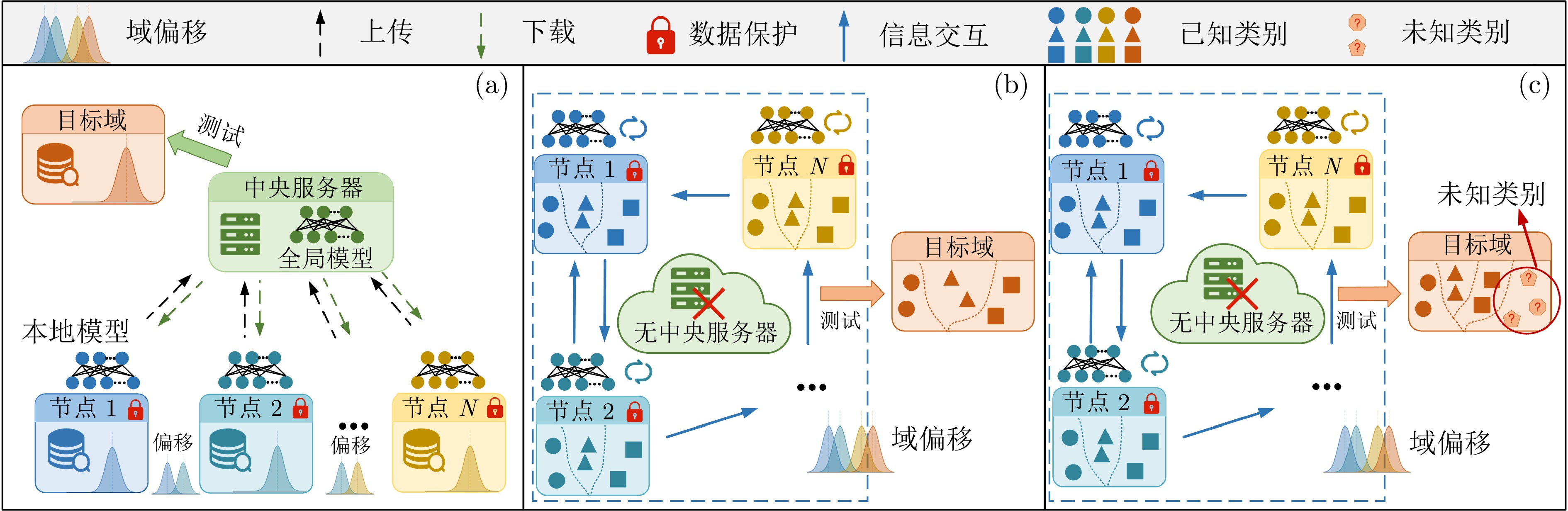
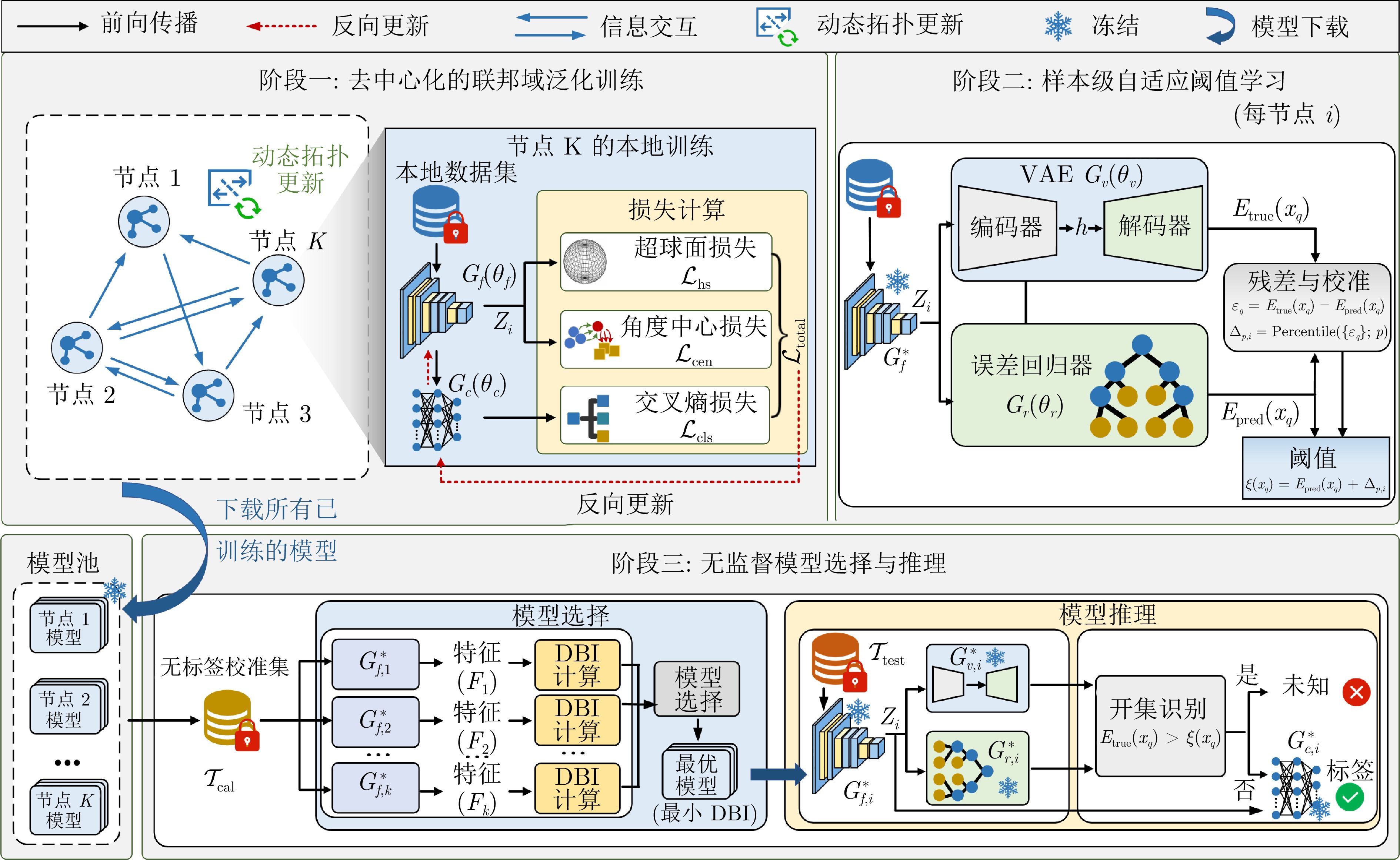
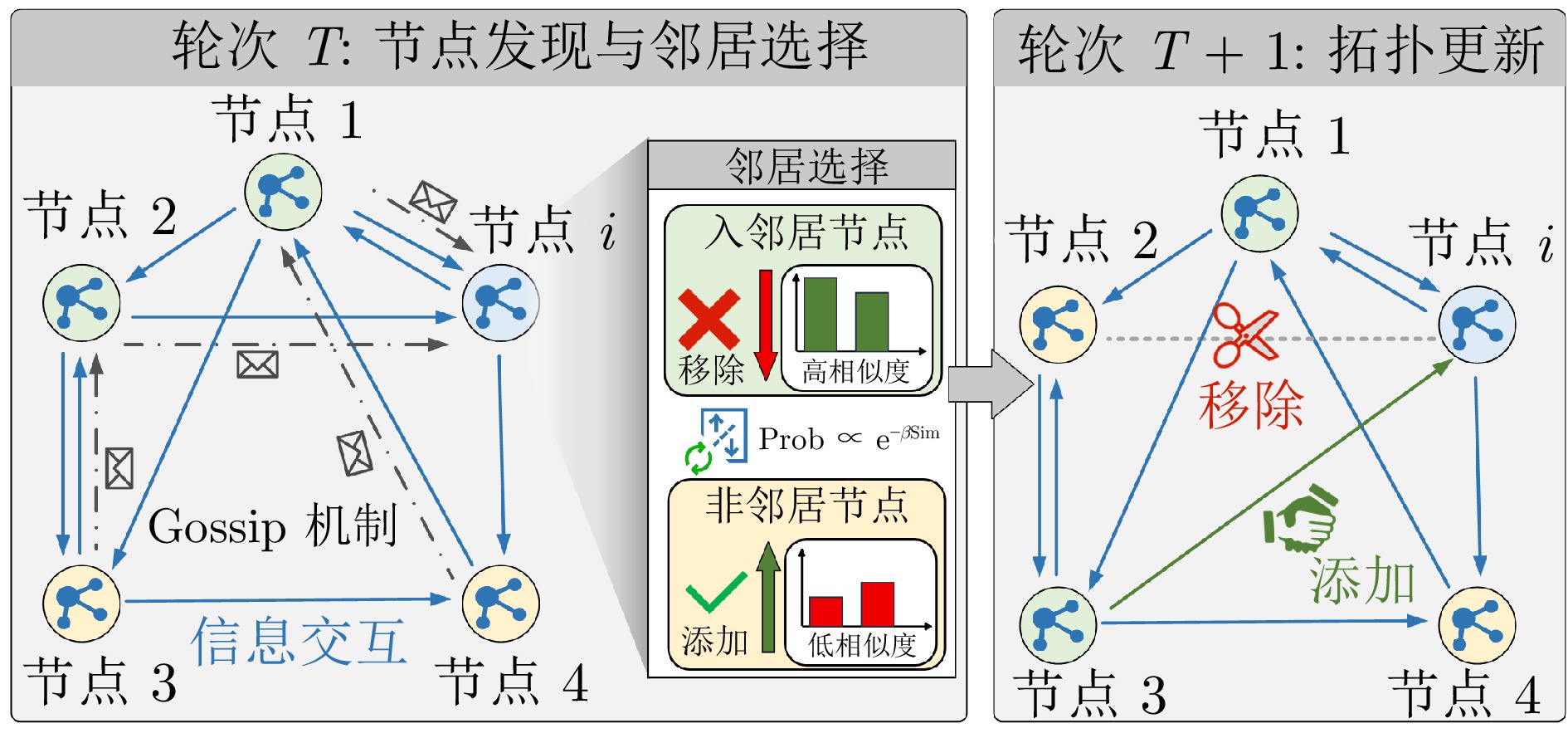
图 1 联邦域泛化架构((a)基于服务器的联邦域泛化; (b)去中心化联邦域泛化; (c)开集去中心化联邦域泛化)
Fig. 1 FDG architectures ((a) Server-based FDG; (b) Decentralized FDG; (c) Open-set decentralized FDG)
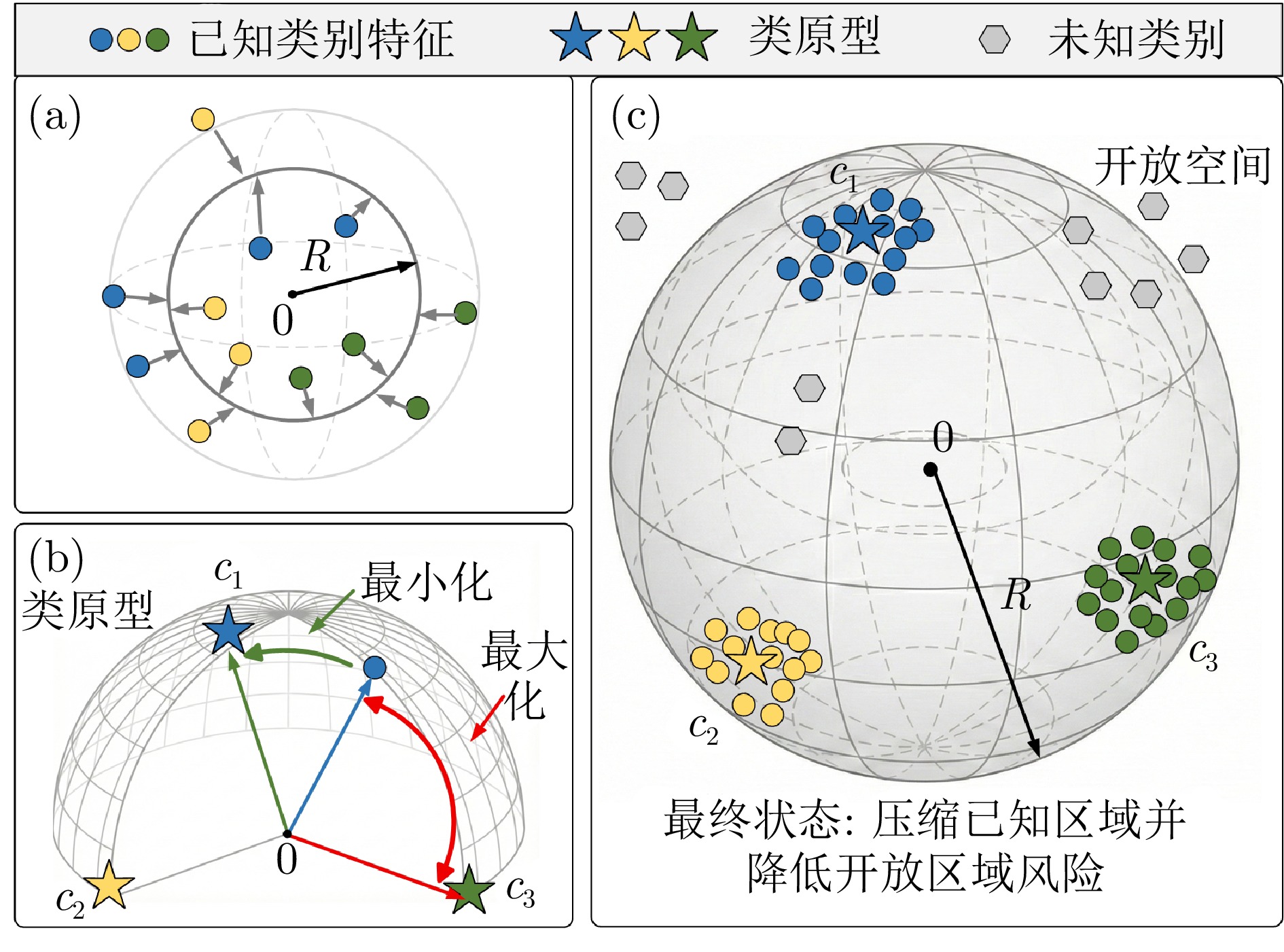
图 4 解耦联合优化策略((a)$ {\cal{L}}_{{\rm{hs}}} $; (b)$ {\cal{L}}_{{\rm{cen}}} $; (c)约束效果)
Fig. 4 Decoupled joint optimization strategy ((a) $ {\cal{L}}_{{\rm{hs}}} $; (b) $ {\cal{L}}_{{\rm{cen}}} $; (c) Effect of constraints)
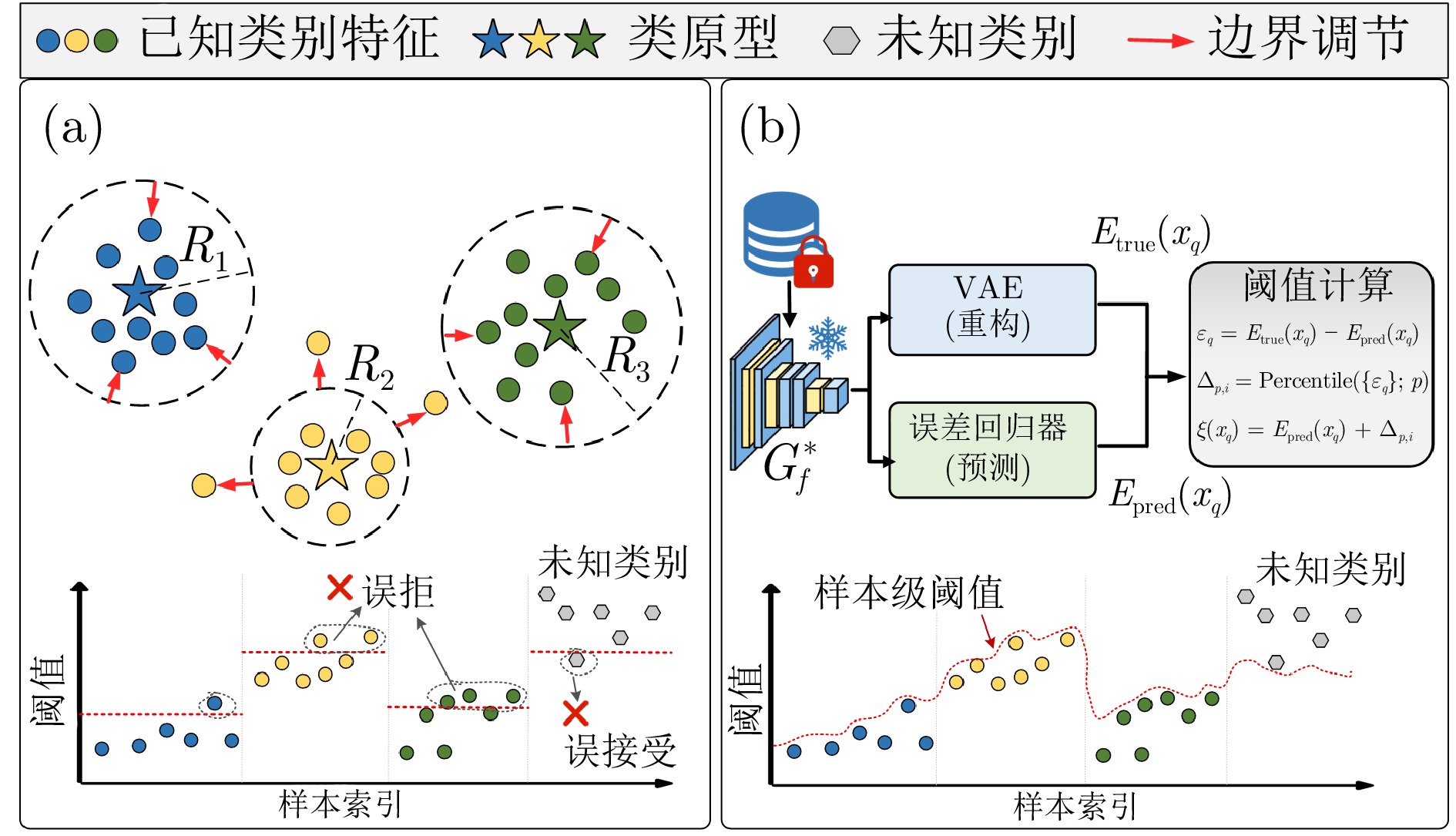
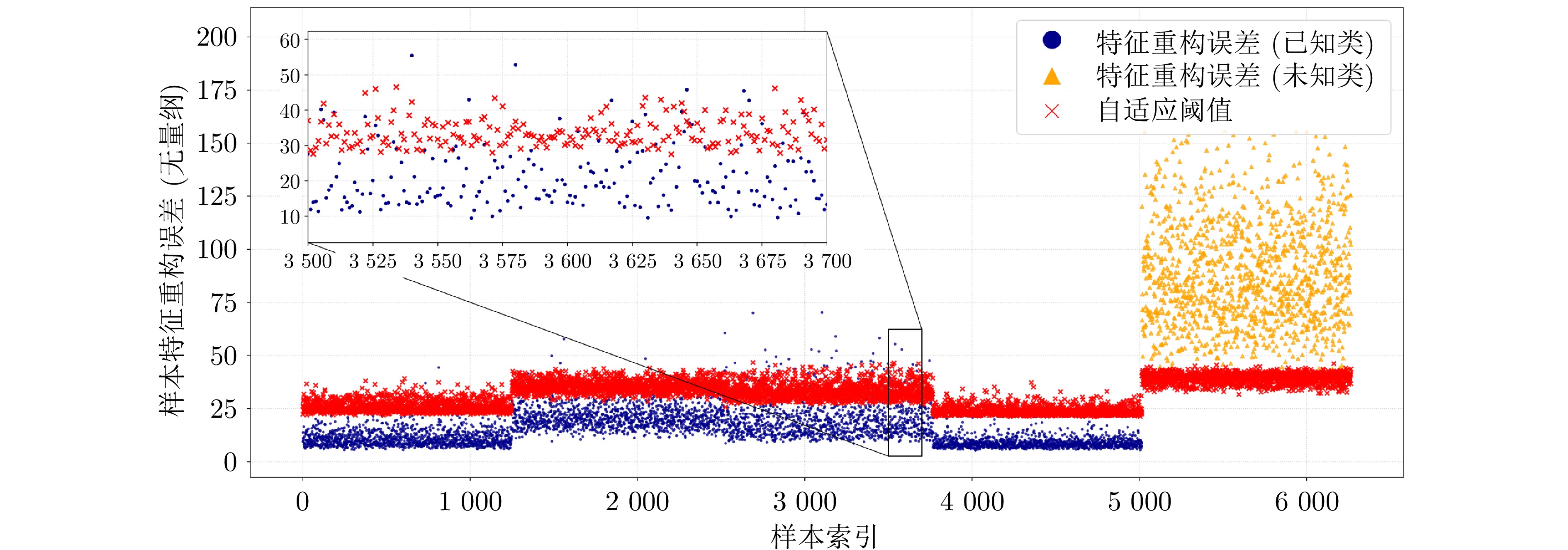
图 5 阈值对比((a)类级阈值; (b)样本级阈值)
Fig. 5 Threshold comparison ((a) Class-wise thresholds; (b) Sample-wise thresholds)
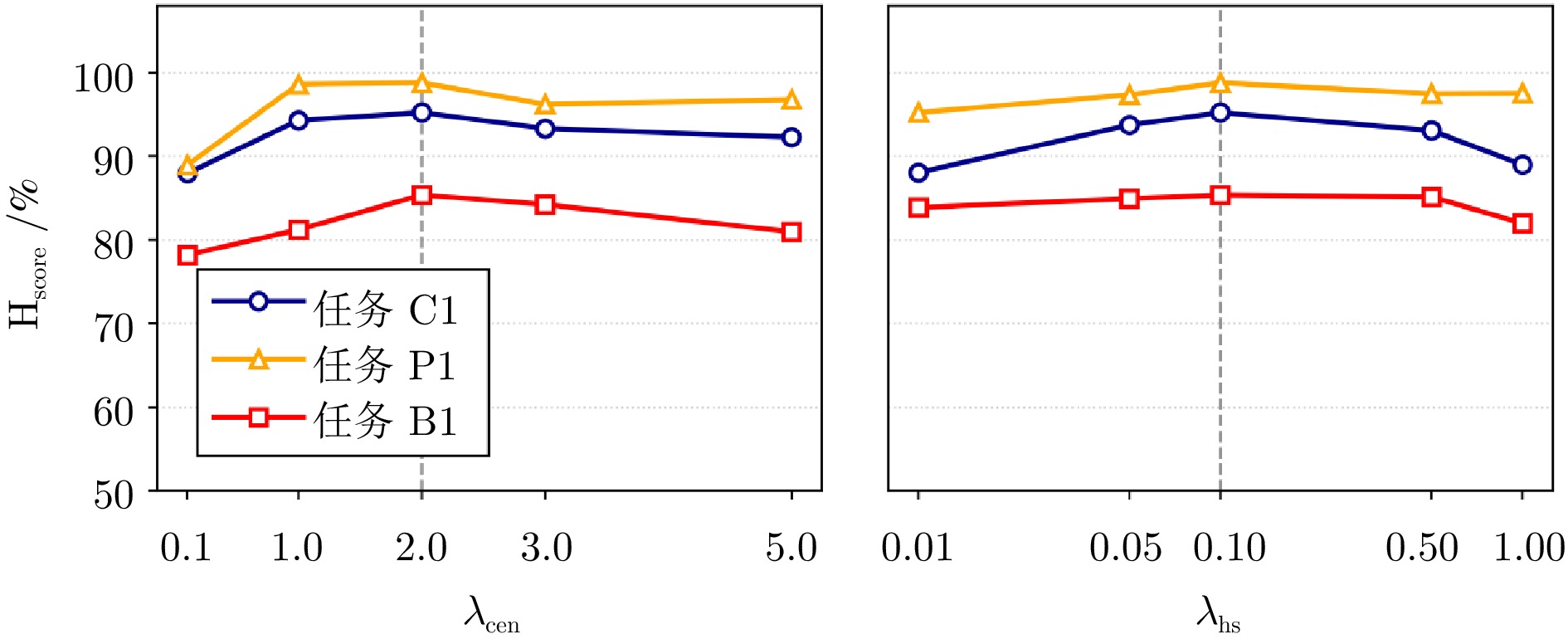
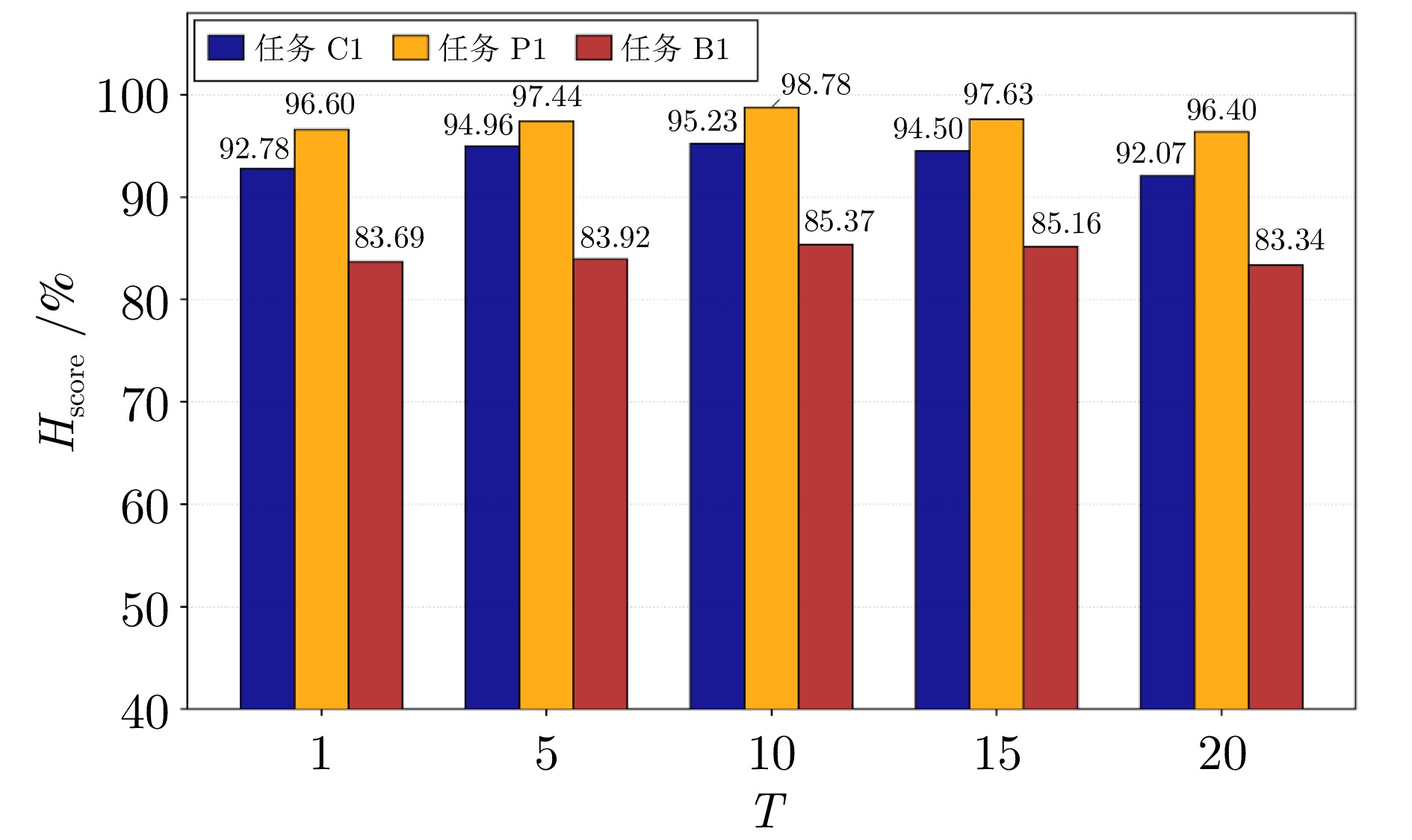
图 11 $ \lambda_{{\rm{cen}}} $与$ \lambda_{{\rm{hs}}} $的敏感性分析(右图采用对数横轴)
Fig. 11 Sensitivity analysis of $ \lambda_{{\rm{cen}}} $ and $ \lambda_{{\rm{hs}}} $ (right panel: logarithmic x-axis)
表 1 各数据集运行工况表
Table 1 Table of operating conditions for each dataset
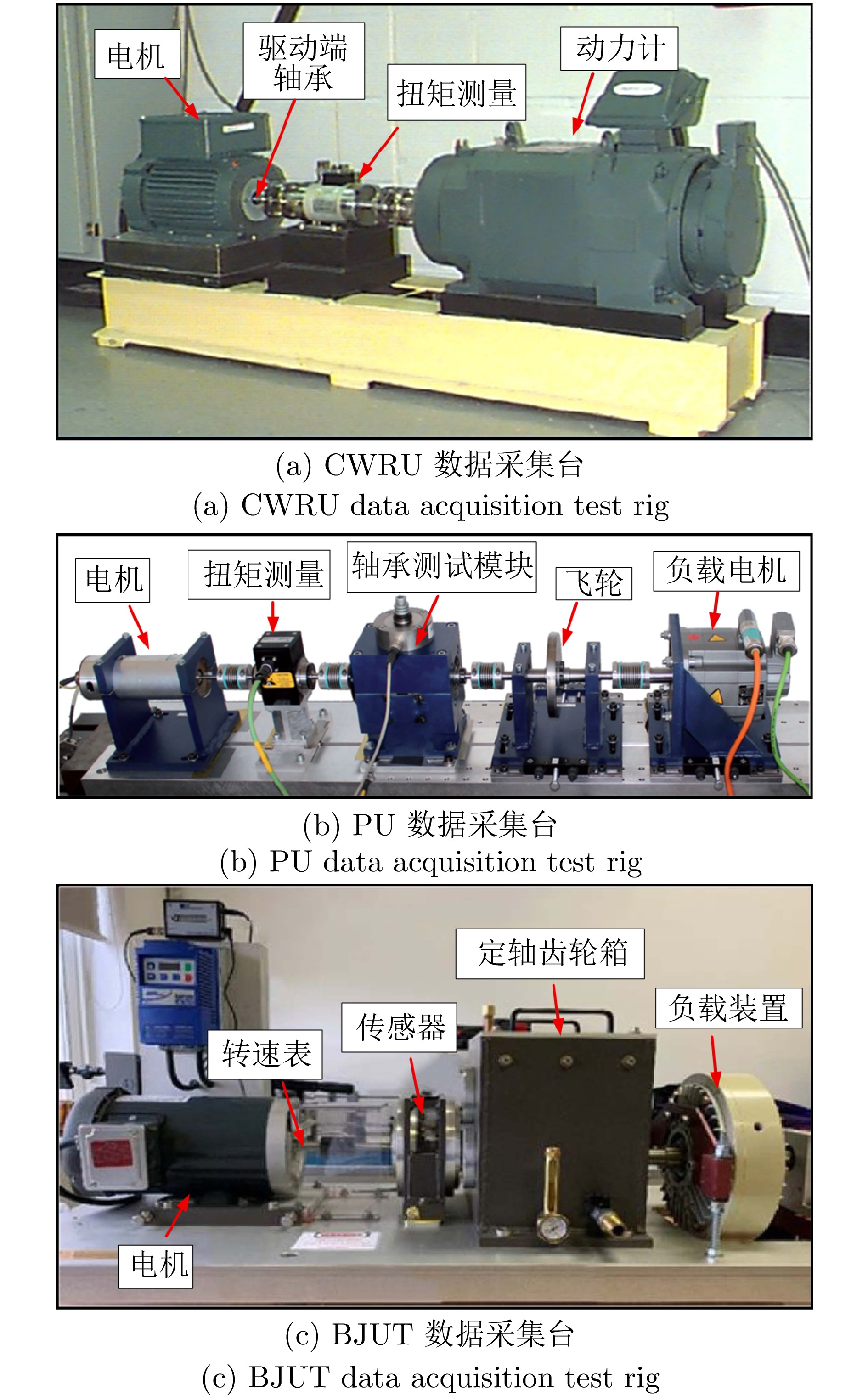
数据集 工况 工况详情 CWRU A 负载: 0 hp, 转速: 1 797 rpm B 负载: 1 hp, 转速: 1 772 rpm C 负载: 2 hp, 转速: 1 750 rpm D 负载: 3 hp, 转速: 1 730 rpm PU E 扭矩: 0.7 N$ \cdot $m, 径向力: 1 000 N F 扭矩: 0.1 N$ \cdot $m, 径向力: 1 000 N G 扭矩: 0.7 N$ \cdot $m, 径向力: 400 N BJUT H 转速频率: 20 Hz I 转速频率: 25 Hz J 转速频率: 30 Hz K 转速频率: 35 Hz  下载: 导出CSV
表 2 各数据集类别描述表
Table 2 Table of category descriptions for each dataset
数据集 类别 损伤详情 标签 数据集 类别 损伤详情 标签 CWRU Nor — 0 PU Nor — 0 IRF $ 0.007\,\;{\rm{in}} $ 1 ORF EDM 1 IRF $ 0.014\,\;{\rm{in}} $ 2 ORF EE 2 IRF $ 0.021\,\;{\rm{in}} $ 3 IRF EDM 3 BF $ 0.007\,\;{\rm{in}} $ 4 IRF EE 4 BF $ 0.014\,\;{\rm{in}} $ 5 BJUT Nor — 0 BF $ 0.021\,\;{\rm{in}} $ 6 MT 缺齿 1 ORF $ 0.007\,\;{\rm{in}} $ 7 RC 齿根裂纹 2 ORF $ 0.014\,\;{\rm{in}} $ 8 BT 断齿 3 ORF $ 0.021\,\;{\rm{in}} $ 9 Wear 齿面磨损 4
下载: 导出CSV
表 3 不同方法的功能对比
Table 3 Functional comparison of different methods
对比方法 隐私保护 去中心化 域泛化 开集诊断 M1 (OpenMax)[32] $ \times $ $ \times $ $ \times $ $ \checkmark $ M2 (FDDG)[33] $ \checkmark $ $ \times $ $ \checkmark $ $ \times $ M3 (FedDGMC)[17] $ \checkmark $ $ \times $ $ \checkmark $ $ \times $ M4 (FDG-CA)[19] $ \checkmark $ $ \checkmark $ $ \checkmark $ $ \times $ M5 (FedPD)[34] $ \checkmark $ $ \times $ $ \times $ $ \checkmark $ M6 (PD-FedOS)[35] $ \checkmark $ $ \times $ $ \times $ $ \checkmark $ M7 (FOSFD)[36] $ \checkmark $ $ \times $ $ \times $ $ \checkmark $ OS-DFDG (本文) $ \checkmark $ $ \checkmark $ $ \checkmark $ $ \checkmark $
下载: 导出CSV
表 4 CWRU、PU与BJUT数据集实验任务设置
Table 4 Experimental task settings on the CWRU, PU and BJUT datasets
任务ID 源域$ \to $目标域 源域已知类别集 目标域完整类别集 任务ID 源域$ \to $目标域 源域已知类别集 目标域完整类别集 C1 $ \{B,\; C,\; D\} \to A $ $ \{0,\; 4 \sim 9\} $ $ \{0 \sim 9\} $ P5 $ \{E,\; G\} \to F $ $ \{0,\; 1,\; 2,\; 4\} $ $ \{0 \sim 4\} $ C2 $ \{B,\; C,\; D\} \to A $ $ \{0 \sim 6\} $ $ \{0 \sim 9\} $ P6 $ \{E,\; G\} \to F $ $ \{0 \sim 3\} $ $ \{0 \sim 4\} $ C3 $ \{A,\; C,\; D\} \to B $ $ \{0 \sim 3,\; 7 \sim 9\} $ $ \{0 \sim 9\} $ P7 $ \{E,\; F\} \to G $ $ \{0,\; 2,\; 3,\; 4\} $ $ \{0 \sim 4\} $ C4 $ \{A,\; C,\; D\} \to B $ $ \{0 \sim 6\} $ $ \{0 \sim 9\} $ P8 $ \{E,\; F\} \to G $ $ \{0,\; 1,\; 3,\; 4\} $ $ \{0 \sim 4\} $ C5 $ \{A,\; B,\; D\} \to C $ $ \{0,\; 4 \sim 9\} $ $ \{0 \sim 9\} $ B1 $ \{I,\; J,\; K\} \to H $ $ \{0,\; 2,\; 3,\; 4\} $ $ \{0 \sim 4\} $ C6 $ \{A,\; B,\; D\} \to C $ $ \{0 \sim 3,\; 7 \sim 9\} $ $ \{0 \sim 9\} $ B2 $ \{I,\; J,\; K\} \to H $ $ \{0,\; 1,\; 3,\; 4\} $ $ \{0 \sim 4\} $ C7 $ \{A,\; B,\; C\} \to D $ $ \{0,\; 4 \sim 9\} $ $ \{0 \sim 9\} $ B3 $ \{H,\; J,\; K\} \to I $ $ \{0,\; 1,\; 3,\; 4\} $ $ \{0 \sim 4\} $ C8 $ \{A,\; B,\; C\} \to D $ $ \{0 \sim 6\} $ $ \{0 \sim 9\} $ B4 $ \{H,\; J,\; K\} \to I $ $ \{0,\; 1,\; 2,\; 4\} $ $ \{0 \sim 4\} $ P1 $ \{F,\; G\} \to E $ $ \{0,\; 2,\; 3,\; 4\} $ $ \{0 \sim 4\} $ B5 $ \{H,\; I,\; K\} \to J $ $ \{0,\; 1,\; 2,\; 4\} $ $ \{0 \sim 4\} $ P2 $ \{F,\; G\} \to E $ $ \{0,\; 1,\; 2,\; 4\} $ $ \{0 \sim 4\} $ B6 $ \{H,\; I,\; K\} \to J $ $ \{0,\; 1,\; 2,\; 3\} $ $ \{0 \sim 4\} $ P3 $ \{F,\; G\} \to E $ $ \{0 \sim 3\} $ $ \{0 \sim 4\} $ B7 $ \{H,\; I,\; J\} \to K $ $ \{0,\; 1,\; 2,\; 4\} $ $ \{0 \sim 4\} $ P4 $ \{E,\; G\} \to F $ $ \{0,\; 1,\; 3,\; 4\} $ $ \{0 \sim 4\} $ B8 $ \{H,\; I,\; J\} \to K $ $ \{0,\; 1,\; 2,\; 3\} $ $ \{0 \sim 4\} $
下载: 导出CSV
表 5 主要超参数配置
Table 5 Main hyperparameter settings
超参数 数值 超参数 数值 $ \eta_{{\rm{stage1}}} $ $ 2\times 10^{-4} $ $ \eta_v $ $ 1\times 10^{-3} $ $ \lambda_{{\rm{hs}}} $ 0.1 $ \lambda_{{\rm{cen}}} $ 2.0 $ T $ 10 $ T_{\max} $ 100 $ E $ 1 $ B_{{\rm{batch}}} $ 64 $ R $ 10.0 $ p $ 99.99% $ \gamma $ 0.5 $ \beta $ 10.0
下载: 导出CSV
表 6 OS-DFDG模型详细网络架构
Table 6 Detailed network architecture of the OS-DFDG model
组件 层级 配置详情 组件 层级 配置详情 特征提取器($ G_{ f} $) 卷积模块1 Conv1d(1, 16, k=64, s=1), BN, ReLU VAE ($ G_v $) 全连接层1 Linear(512, 256), ReLU 最大池化层1 MaxPool1d(k=2, s=2) 全连接层2 Linear(256, 128), ReLU 卷积模块2 Conv1d(16, 32, k=16, s=1), BN, ReLU 潜变量层 Linear(128, 64) ($ \mu $ & $ \log\sigma^2 $) 最大池化层2 MaxPool1d(k=2, s=2) 全连接层3 Linear(64, 128), ReLU 卷积模块3 Conv1d(32, 64, k=5, s=1), BN, ReLU 全连接层4 Linear(128, 256), ReLU 卷积模块4 Conv1d(64, 64, k=5, s=1), BN, ReLU 输出层 Linear(256, 512) 自适应平均池化层 AdaptiveAvgPool1d(output_size=8) 回归器($ G_r $) 决策树数量 100 分类器($ G_c $) 全连接层1 Linear(512, 512), ReLU 决策树架构 节点: 50, 深度: 4 全连接层2 Linear(512, $ M $) 学习率 0.05
下载: 导出CSV
表 7 24个任务上的$ A_{{\rm{kn}}} $、$ A_{{\rm{unk}}} $和$ H_{{\rm{score}}} $对比结果(%)
Table 7 Comparison of $ A_{{\rm{kn}}} $, $ A_{{\rm{unk}}} $, and $ H_{{\rm{score}}} $ results on 24 tasks (%)
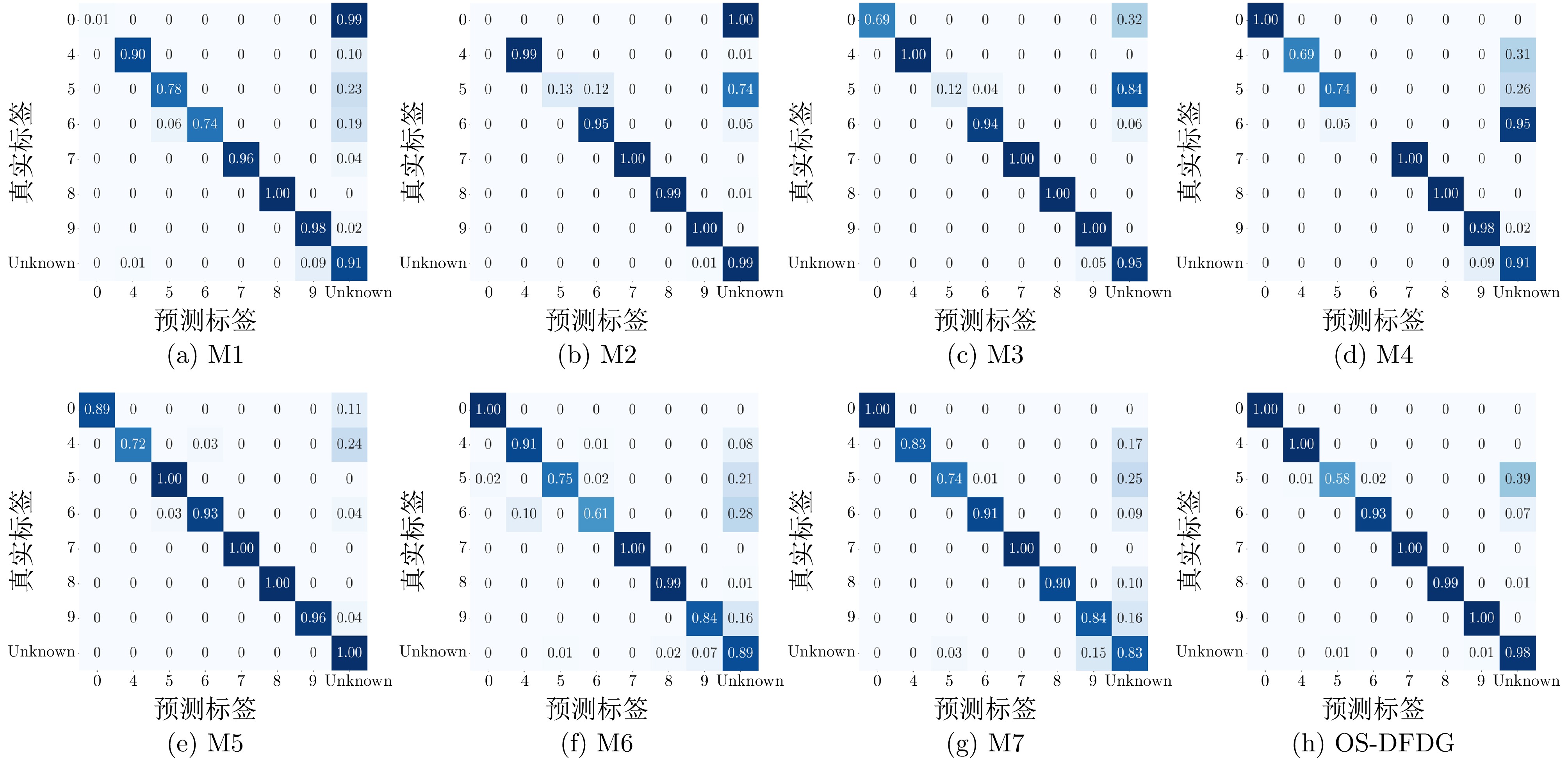
任务 M1 M2 M3 M4 M5 M6 M7 OS-DFDG $ A_{{\rm{kn}}} $ $ A_{{\rm{unk}}} $ $ H_{{\rm{score}}} $ $ A_{{\rm{kn}}} $ $ A_{{\rm{unk}}} $ $ H_{{\rm{score}}} $ $ A_{{\rm{kn}}} $ $ A_{{\rm{unk}}} $ $ H_{{\rm{score}}} $ $ A_{{\rm{kn}}} $ $ A_{{\rm{unk}}} $ $ H_{{\rm{score}}} $ $ A_{{\rm{kn}}} $ $ A_{{\rm{unk}}} $ $ H_{{\rm{score}}} $ $ A_{{\rm{kn}}} $ $ A_{{\rm{unk}}} $ $ H_{{\rm{score}}} $ $ A_{{\rm{kn}}} $ $ A_{{\rm{unk}}} $ $ H_{{\rm{score}}} $ $ A_{{\rm{kn}}} $ $ A_{{\rm{unk}}} $ $ H_{{\rm{score}}} $ C1 80.7 90.9 85.5 76.4 99.0 86.2 82.9 95.0 88.5 73.6 87.9 80.1 95.4 100.0 97.6 87.1 89.1 88.1 90.2 82.5 86.2 92.9 97.7 95.2 C2 74.4 69.8 72.0 73.4 73.0 73.2 72.1 92.5 81.0 83.0 88.9 85.9 89.3 73.3 80.5 81.9 80.3 81.1 86.1 80.3 83.1 89.5 94.6 92.0 C3 97.7 99.9 98.8 90.4 100.0 94.9 99.3 100.0 99.7 98.3 99.9 99.1 91.3 84.9 88.0 94.7 94.9 94.8 96.2 99.7 97.9 99.3 99.8 99.6 C4 98.7 90.0 94.1 90.1 68.0 77.5 87.4 95.9 91.5 90.3 96.6 93.3 93.0 81.7 87.0 83.6 88.5 86.0 91.0 85.2 88.0 97.2 99.2 98.2 C5 90.8 99.2 94.8 89.7 89.5 89.6 99.8 97.1 98.4 96.4 86.2 91.0 96.5 95.6 96.0 98.4 97.0 97.7 95.5 88.2 91.7 99.0 99.7 99.4 C6 99.6 97.6 98.6 97.4 100.0 98.7 100.0 100.0 100.0 98.7 100.0 99.4 89.8 99.8 94.5 93.1 94.7 93.9 98.0 98.3 98.1 99.2 97.5 98.3 C7 83.3 100.0 90.9 88.5 99.3 93.6 92.1 100.0 95.9 91.5 95.3 93.4 89.5 92.0 90.7 74.9 92.7 82.9 90.8 89.6 90.2 99.1 92.4 95.7 C8 84.4 93.8 88.8 74.4 90.1 81.5 83.4 93.0 87.9 80.8 83.2 82.0 95.9 91.6 93.7 74.2 90.2 81.4 85.6 97.5 91.1 94.2 87.7 90.8 P1 94.6 100.0 97.2 99.2 93.5 96.3 97.4 89.6 93.3 95.9 80.1 87.3 93.3 100.0 96.5 93.0 100.0 96.4 88.6 99.9 93.9 97.8 99.8 98.8 P2 99.1 95.3 97.2 98.7 85.5 91.6 96.8 91.6 94.2 96.3 98.1 97.2 93.7 94.7 94.2 95.2 99.6 97.4 90.6 98.3 94.3 97.9 96.9 97.4 P3 99.1 99.1 99.1 99.4 97.6 98.5 98.3 99.1 98.7 83.6 100.0 91.1 67.5 82.6 74.3 90.5 92.7 91.6 90.8 99.2 94.8 96.1 97.6 96.8 P4 99.5 88.2 93.5 97.9 91.0 94.4 98.7 89.2 93.7 96.1 97.6 96.8 93.3 98.7 95.9 91.6 92.6 92.1 93.0 99.6 96.2 97.5 92.5 94.9 P5 93.8 98.0 95.9 97.4 89.9 93.5 94.7 99.8 97.2 95.7 94.0 94.8 98.1 97.7 97.9 91.1 98.0 94.4 88.4 98.7 93.3 99.1 97.6 98.4 P6 98.9 73.5 84.3 99.8 89.1 94.1 99.6 94.7 97.1 82.7 78.8 80.7 78.8 87.3 82.9 76.9 98.8 86.5 94.8 87.2 90.8 92.3 91.1 91.6 P7 84.0 94.1 88.7 74.9 100.0 85.7 76.6 96.1 85.2 90.8 96.3 93.5 90.6 89.7 90.1 74.6 82.6 78.4 76.5 95.3 84.9 94.3 99.0 96.6 P8 90.9 92.1 91.5 73.8 75.2 74.5 85.8 78.7 82.1 97.8 91.7 94.6 85.8 64.6 73.7 78.5 85.0 81.6 81.0 90.7 85.6 96.1 97.5 96.8 B1 86.4 79.2 82.6 70.1 95.8 80.9 71.2 98.2 82.6 92.2 77.2 84.0 86.3 83.8 85.0 79.4 91.8 85.1 73.7 86.4 79.6 81.2 90.0 85.4 B2 82.9 97.6 89.6 78.5 98.2 87.2 88.8 91.2 90.0 83.7 99.4 90.9 85.5 79.4 82.3 75.9 88.6 81.8 77.6 82.3 79.9 86.3 98.6 92.0 B3 95.4 91.6 93.4 93.7 99.8 96.6 91.4 100.0 95.5 90.9 93.4 92.1 94.9 88.6 91.6 89.5 90.6 90.1 94.3 80.2 86.7 96.2 99.8 97.9 B4 92.5 81.0 86.4 82.4 95.4 88.4 80.5 77.6 79.0 81.1 82.6 81.8 84.8 75.4 79.8 87.1 87.6 87.4 86.0 86.6 86.3 90.2 87.4 88.8 B5 84.4 89.0 86.6 85.9 85.2 85.6 89.2 84.4 86.7 86.2 91.8 88.9 95.7 83.6 89.2 77.1 95.8 85.4 89.9 78.6 83.9 90.7 90.2 90.4 B6 96.5 90.6 93.5 81.9 92.2 86.8 92.2 99.0 95.5 83.8 84.7 84.2 84.4 94.6 89.2 84.5 92.8 88.5 82.4 87.2 84.7 92.8 95.7 94.2 B7 76.5 89.0 82.3 64.1 83.0 72.3 71.9 91.1 80.4 63.8 81.0 71.4 63.2 82.2 71.5 63.3 92.2 75.0 63.4 78.2 70.0 66.3 88.0 75.6 B8 83.2 83.0 83.1 87.1 83.8 85.4 62.9 100.0 77.2 79.7 80.0 79.9 82.2 85.8 84.0 71.6 88.2 79.0 74.4 92.6 82.5 83.6 93.6 88.3 均值 90.3 90.9 90.3 86.0 90.6 87.8 88.0 93.9 90.5 88.0 90.2 88.9 88.3 87.8 87.8 83.6 91.8 87.3 86.6 90.1 88.1 92.9 95.2 93.9
下载: 导出CSV
表 8 24个任务上的消融实验结果(%)
Table 8 Ablation results on 24 tasks (%)
任务 Ab1 Ab2 Ab3 Ab4 OS-DFDG $ A_{{\rm{kn}}} $ $ A_{{\rm{unk}}} $ $ H_{{\rm{score}}} $ $ A_{{\rm{kn}}} $ $ A_{{\rm{unk}}} $ $ H_{{\rm{score}}} $ $ A_{{\rm{kn}}} $ $ A_{{\rm{unk}}} $ $ H_{{\rm{score}}} $ $ A_{{\rm{kn}}} $ $ A_{{\rm{unk}}} $ $ H_{{\rm{score}}} $ $ A_{{\rm{kn}}} $ $ A_{{\rm{unk}}} $ $ H_{{\rm{score}}} $ C1 97.4 92.3 94.8 90.5 95.2 92.8 79.2 66.4 72.2 80.5 96.3 87.7 92.9 97.7 95.2 C2 83.3 91.8 87.4 86.3 67.6 75.8 75.8 79.4 77.6 70.6 90.6 79.4 89.5 94.6 92.0 C3 99.8 83.8 91.1 99.5 88.8 93.9 89.9 78.0 83.5 98.2 100.0 99.1 99.3 99.8 99.6 C4 93.9 99.4 96.6 83.8 99.9 91.1 80.3 81.7 81.0 93.6 99.9 96.7 97.2 99.2 98.2 C5 99.8 94.1 96.8 99.6 86.7 92.7 80.5 98.2 88.4 95.0 95.1 95.0 99.0 99.7 99.4 C6 99.7 95.0 97.3 99.9 90.8 95.2 74.1 90.5 81.5 99.7 91.5 95.4 99.2 97.5 98.3 C7 99.5 85.7 92.1 96.8 84.0 89.9 76.3 79.8 78.0 87.1 85.9 86.5 99.1 92.4 95.7 C8 96.8 62.8 76.2 84.9 72.0 77.9 69.5 70.9 70.2 99.3 81.3 89.4 94.2 87.7 90.8 P1 92.0 99.9 95.8 100.0 95.4 97.7 99.9 76.1 86.4 100.0 92.7 96.2 97.8 99.8 98.8 P2 99.3 89.5 94.2 95.5 91.4 93.4 93.2 74.0 82.5 99.2 85.8 92.0 97.9 96.9 97.4 P3 89.5 93.9 91.6 88.9 90.8 89.8 85.6 99.0 91.8 81.6 99.4 89.6 96.1 97.6 96.8 P4 83.3 99.0 90.5 86.6 98.1 92.0 79.7 80.4 80.1 99.9 82.0 90.1 97.5 92.5 94.9 P5 90.1 98.7 94.2 97.0 91.0 93.9 90.4 80.9 85.4 99.7 87.0 92.9 99.1 97.6 98.4 P6 90.5 86.5 88.5 81.5 91.8 86.3 99.2 82.9 90.3 81.9 91.2 86.3 92.3 91.1 91.6 P7 88.4 99.1 93.4 90.2 97.8 93.8 67.2 86.8 75.8 91.0 99.7 95.1 94.3 99.0 96.6 P8 66.8 75.5 70.9 72.5 89.7 80.2 71.2 76.8 73.9 90.5 93.8 92.1 96.1 97.5 96.8 B1 84.4 79.0 81.6 79.2 88.4 83.6 77.3 77.4 77.4 71.5 94.8 81.5 81.2 90.0 85.4 B2 73.5 99.4 84.5 81.5 100.0 89.8 72.6 88.5 79.8 68.0 99.8 80.9 86.3 98.6 92.0 B3 78.0 79.2 78.6 93.3 99.4 96.2 74.9 99.8 85.6 79.2 100.0 88.4 96.2 99.8 97.9 B4 81.0 92.4 86.3 81.9 91.6 86.5 86.0 80.2 83.0 84.0 79.6 81.8 90.2 87.4 88.8 B5 88.5 83.6 86.0 89.2 81.8 85.4 89.6 83.0 86.2 77.9 87.4 82.4 90.7 90.2 90.4 B6 74.9 99.4 85.4 85.9 90.0 87.9 92.2 82.0 86.8 78.0 98.8 87.2 92.8 95.7 94.2 B7 61.4 87.4 72.1 67.6 84.2 75.0 51.0 70.6 59.2 81.5 62.0 70.4 66.3 88.0 75.6 B8 74.7 99.8 85.4 78.1 99.6 87.6 86.4 70.2 77.4 62.9 99.6 77.1 83.6 93.6 88.3 均值 86.9 90.3 88.0 87.9 90.2 88.7 80.9 81.4 80.6 86.3 91.4 88.1 92.9 95.2 93.9
下载: 导出CSV
表 9 联合强连通性检验结果
Table 9 Joint strong connectivity verification results
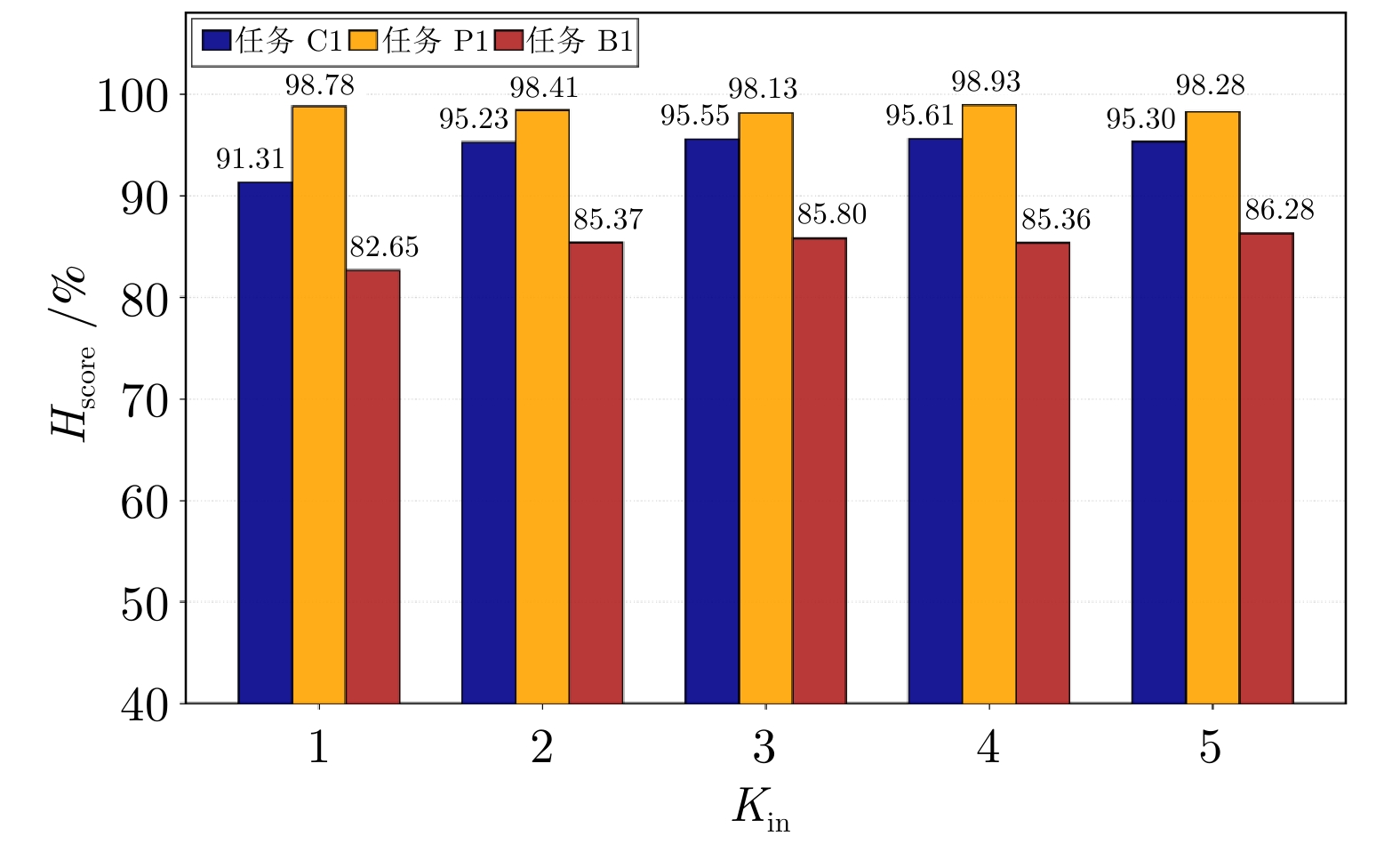
数据集 节点数$ N $ 固定入度$ K_{{\rm{in}}} $ $ q_{\max} $ $ B_g $ CWRU 10 2 4 31 PU 6 1 6 51 BJUT 10 2 3 21
下载: 导出CSV
表 10 类别异质下的鲁棒性分析结果(%)
Table 10 Robustness analysis results under category heterogeneity (%)
场景 C1 P1 B1 $ A_{{\rm{kn}}} $ $ A_{{\rm{unk}}} $ $ H_{{\rm{score}}} $ $ A_{{\rm{kn}}} $ $ A_{{\rm{unk}}} $ $ H_{{\rm{score}}} $ $ A_{{\rm{kn}}} $ $ A_{{\rm{unk}}} $ $ H_{{\rm{score}}} $ 同构场景 92.9 97.7 95.2 97.8 99.8 98.8 81.2 90.0 85.4 $ \alpha=1.0 $ 93.0 94.6 93.8 98.0 94.0 96.0 73.8 97.8 84.1 $ \alpha=0.5 $ 80.5 95.7 87.4 80.4 99.8 89.1 71.4 93.6 81.0 $ \alpha=0.1 $ 67.4 98.7 80.1 71.6 91.2 80.2 66.7 94.6 78.2 类别缺失25% 73.5 79.0 76.1 73.0 99.5 84.2 72.2 99.6 83.7
下载: 导出CSV
表 11 设备异构下的鲁棒性分析结果(%)
Table 11 Robustness analysis results under device heterogeneity (%)
设置 C1 P1 B1 $ A_{{\rm{kn}}} $ $ A_{{\rm{unk}}} $ $ H_{{\rm{score}}} $ $ A_{{\rm{kn}}} $ $ A_{{\rm{unk}}} $ $ H_{{\rm{score}}} $ $ A_{{\rm{kn}}} $ $ A_{{\rm{unk}}} $ $ H_{{\rm{score}}} $ 同构场景 92.9 97.7 95.2 97.8 99.8 98.8 81.2 90.0 85.4 $ {\cal{H}}_{c}(0.2,\;0.4) $ 92.5 94.7 93.6 94.8 97.3 96.0 89.3 79.6 84.2 $ {\cal{H}}_{c}(0.5,\;0.4) $ 86.4 99.5 92.5 92.1 98.8 95.3 82.0 80.2 81.1 $ {\cal{H}}_{d}(0.8,\;0.2,\;0) $ 96.9 87.0 91.7 98.4 92.7 95.5 87.8 76.4 81.7 $ {\cal{H}}_{d}(0.6,\;0.3,\;0.1) $ 85.6 90.1 87.8 96.8 87.9 92.1 72.0 84.2 77.6
下载: 导出CSV
-
[1] 楼嗣威, 张徐杰, 杨越麟, 李逸, 赵雨辰, 杨春节. 高炉炼铁过程故障检测与诊断综述: 回顾, 现状与展望. 自动化学报, 2025, 51(8): 1739−1759 doi: 10.16383/j.aas.c240660Lou Si-Wei, Zhang Xu-Jie, Yang Yue-Lin, Li Yi, Zhao Yu-Chen, Yang Chun-Jie. Review of fault detection and diagnosis research in blast furnace ironmaking process: Retrospective, status, and prospects. Acta Automatica Sinica, 2025, 51(8): 1739−1759 doi: 10.16383/j.aas.c240660 [2] 蒋鹏, 姚立忠, 秦鹏杰. 基于双域抗噪编码与门控循环Transformer的轴承故障诊断. 自动化学报, 2026, 52(7): 1372−1386 doi: 10.16383/j.aas.c250650Jiang Peng, Yao Li-Zhong, Qin Peng-Jie. Bearing fault diagnosis based on dual-domain anti-noise coding and gated recurrent Transformer. Acta Automatica Sinica, 2026, 52(7): 1372−1386 doi: 10.16383/j.aas.c250650 [3] Li J M, Zheng C H, Wu Z W, Chen H, Wang X B, Yang Z X. Review of fault diagnosis for rotating machinery: Prior knowledge integration in data-driven methods benefits model interpretability and generalizability. Mechanical Systems and Signal Processing, 2026, 242: Article No. 113623 doi: 10.1016/j.ymssp.2025.113623 [4] Li Y, Wang X W, Zeng R F, Donta P K, Murturi I, Huang M, et al. Federated domain generalization: A survey. Proceedings of the IEEE, 2025, 113(4): 370−410 doi: 10.1109/JPROC.2025.3596173 [5] Han T, Liu C, Yang W G, Jiang D X. Learning transferable features in deep convolutional neural networks for diagnosing unseen machine conditions. ISA Transactions, 2019, 93: 341−353 doi: 10.1016/j.isatra.2019.03.017 [6] Chen Y Y, Zhang D, Yan R Q, Xie M. Applications of domain generalization to machine fault diagnosis: A survey. IEEE/CAA Journal of Automatica Sinica, 2025, 12(10): 1963−1984 doi: 10.1109/JAS.2025.125120 [7] 谢刚, 韩秦, 聂晓音, 石慧, 张晓红, 田娟. 基于两阶段域泛化学习框架的轴承故障诊断方法. 自动化学报, 2024, 50(11): 2271−2285 doi: 10.16383/j.aas.c230716Xie Gang, Han Qin, Nie Xiao-Yin, Shi Hui, Zhang Xiao-Hong, Tian Juan. A two-stage domain generalization learning framework for fault diagnosis of bearings. Acta Automatica Sinica, 2024, 50(11): 2271−2285 doi: 10.16383/j.aas.c230716 [8] Scheirer W J, de Rezende R A, Sapkota A, Boult T E. Toward open set recognition. IEEE Transactions on Pattern Analysis and Machine Intelligence, 2013, 35(7): 1757−1772 doi: 10.1109/TPAMI.2012.256 [9] Dhamija A R, Günther M, Boult T E. Reducing network agnostophobia. In: Proceedings of the 32nd International Conference on Neural Information Processing Systems. Montreal, Canada: Curran Associates, Inc., 2018. 9157-9168 [10] Yu X L, Zhao Z B, Zhang X W, Zhang Q Y, Liu Y L, Sun C, et al. Deep-learning-based open set fault diagnosis by extreme value theory. IEEE Transactions on Industrial Informatics, 2022, 18(1): 185−196 doi: 10.1109/TII.2021.3070324 [11] Chen Y, Tao L F, Liu X, Ma J, Lu C, Liu H M. Open-set fault recognition and inference for rolling bearing based on open fault semantic subspace. IEEE Transactions on Instrumentation and Measurement, 2024, 73: Article No. 3502611 doi: 10.1109/tim.2023.3336436 [12] Zhuang Y H, Li Y B, Song Y, Qiu M K. Personalized federated learning for fault diagnosis with mixture of experts. Information Fusion, 2026, 125: Article No. 103439 doi: 10.1016/j.inffus.2025.103439 [13] McMahan B, Moore E, Ramage D, Hampson S, Agüera y Arcas B. Communication-efficient learning of deep networks from decentralized data. In: Proceedings of the 20th International Conference on Artificial Intelligence and Statistics. Fort Lauderdale, FL, USA: Proceedings of Machine Learning Research, 2017. 1273-1282 [14] 康津, 马萍, 张宏立, 王聪, 李新凯. 基于联邦域泛化的未知工况下滚动轴承故障诊断框架. 振动与冲击, 2025, 44(21): 316−326 doi: 10.13465/j.cnki.jvs.2025.21.032Kang Jin, Ma Ping, Zhang Hong-Li, Wang Cong, Li Xin-Kai. Fault diagnosis framework for rolling bearing under unknown working conditions based on federated domain generalization. Journal of Vibration and Shock, 2025, 44(21): 316−326 doi: 10.13465/j.cnki.jvs.2025.21.032 [15] Wang Y, Zhang G W, Kong X G, Du J L, Ma H B. Federated domain generalization for fault diagnosis: Cross-client style integration and dual alignment representation. IEEE Internet of Things Journal, 2025, 12(13): 23297−23308 doi: 10.1109/JIOT.2025.3551339 [16] 张泽辉, 李庆丹, 富瑶, 何宁昕, 高铁杠. 面向非独立同分布数据的自适应联邦深度学习算法. 自动化学报, 2023, 49(12): 2493−2506 doi: 10.16383/j.aas.c201018Zhang Ze-Hui, Li Qing-Dan, Fu Yao, He Ning-Xin, Gao Tie-Gang. Adaptive federated deep learning with non-IID data. Acta Automatica Sinica, 2023, 49(12): 2493−2506 doi: 10.16383/j.aas.c201018 [17] Zhao C, Shen W M. Federated domain generalization: A secure and robust framework for intelligent fault diagnosis. IEEE Transactions on Industrial Informatics, 2024, 20(2): 2662−2670 doi: 10.1109/TII.2023.3296894 [18] Yang T, Yi X L, Wu J F, Yuan Y, Wu D, Meng Z Y, et al. A survey of distributed optimization. Annual Reviews in Control, 2019, 47: 278−305 doi: 10.1016/j.arcontrol.2019.05.006 [19] Xu D Y, Jia M W, Chen T, Liu Y, Chai T Y, Yang T. Decentralized federated domain generalization with cluster alignment for fault diagnosis. Control Engineering Practice, 2024, 148: Article No. 105951 doi: 10.1016/j.conengprac.2024.105951 [20] Zehtabi S, Han D J, Hosseinalipour S, Brinton C G. Decentralized domain generalization with style sharing: Formal model and convergence analysis. In: Proceedings of the IEEE Conference on Computer Communications. Tokyo, Japan: IEEE, 2026. 1-10 [21] Davies D L, Bouldin D W. A cluster separation measure. IEEE Transactions on Pattern Analysis and Machine Intelligence, 1979, 1(2): 224−227 [22] Nguyen D T A, Wang S, Nguyen D T, Nedić A, Poor H V. Decentralized federated learning with gradient tracking over time-varying directed networks. arXiv preprint arXiv: 2409.17189, 2024. [23] le Bars B, Bellet A, Tommasi M, Lavoie E, Kermarrec A M. Refined convergence and topology learning for decentralized SGD with heterogeneous data. In: Proceedings of the 26th International Conference on Artificial Intelligence and Statistics. Valencia, Spain: Proceedings of Machine Learning Research, 2023. 1672-1702 [24] Chen G Y, Peng P X, Wang X Q, Tian Y H. Adversarial reciprocal points learning for open set recognition. IEEE Transactions on Pattern Analysis and Machine Intelligence, 2022, 44(11): 8065−8081 [25] Zhao C, Shen W M. Adaptive open set domain generalization network: Learning to diagnose unknown faults under unknown working conditions. Reliability Engineering & System Safety, 2022, 226: Article No. 108672 doi: 10.1016/j.ress.2022.108672 [26] Liu M Y, Cheng Z, Yang Y, Hu N Q, Shen G J, Yang Y. Adaptive reconstruct feature difference network for open set domain generalization fault diagnosis. Engineering Applications of Artificial Intelligence, 2025, 142: Article No. 109895 doi: 10.1016/j.engappai.2024.109895 [27] Pan C L, Shang Z W, Liu F, Cheng H C, Yao L Y. Open-set domain generalization method combining data augmentation and adaptive decision boundaries for fault diagnosis under unseen working conditions. Structural Health Monitoring, DOI: 10.1177/14759217251362178 [28] Ke G L, Meng Q, Finley T, Wang T F, Chen W, Ma W D, et al. LightGBM: A highly efficient gradient boosting decision tree. In: Proceedings of the 31st Annual Conference on Neural Information Processing Systems. Long Beach, CA, USA: Curran Associates, Inc., 2017. 3146-3154 [29] Smith W A, Randall R B. Rolling element bearing diagnostics using the Case Western Reserve University data: A benchmark study. Mechanical Systems and Signal Processing, 2015, 64-65: 100−131 doi: 10.1016/j.ymssp.2015.04.021 [30] Lessmeier C, Kimotho J K, Zimmer D, Sextro W. Condition monitoring of bearing damage in electromechanical drive systems by using motor current signals of electric motors: A benchmark data set for data-driven classification. In: Proceedings of the Third European Conference of the Prognostics and Health Management Society. Bilbao, Spain: Prognostics and Health Management Society, 2016. 1-17 [31] Liu D D, Cui L L, Cheng W D. A review on deep learning in planetary gearbox health state recognition: Methods, applications, and dataset publication. Measurement Science and Technology, 2024, 35(1): Article No. 012002 doi: 10.1088/1361-6501/acf390 [32] Bendale A, Boult T E. Towards open set deep networks. In: Proceedings of the IEEE Conference on Computer Vision and Pattern Recognition. Las Vegas, NV, USA: IEEE, 2016. 1563-1572 [33] Zhao C, Shen W M. A federated distillation domain generalization framework for machinery fault diagnosis with data privacy. Engineering Applications of Artificial Intelligence, 2024, 130: Article No. 107765 doi: 10.1016/j.engappai.2023.107765 [34] Yang C, Zhu M L, Liu Y F, Yuan Y X. FedPD: federated open set recognition with parameter disentanglement. In: Proceedings of the IEEE/CVF International Conference on Computer Vision. Paris, France: IEEE, 2023. 4882-4891 [35] Mao G, Li Y B, Cai Z Q, Wang T, Noman K, Zhang R. PD-FedOS: Prototype-driven federated open-set learning framework for collaborative intelligent fault diagnosis of aero-engine rotor systems. Expert Systems With Applications, 2026, 320: Article No. 132133 doi: 10.1016/j.eswa.2026.132133 [36] Xu D Y, Jia M W, Chen T, Liu Y, Chen D Y, Chai T Y, et al. Federated open-set fault diagnosis for unknown bearing fault detection. Mechanical Systems and Signal Processing, 2026, 246: Article No. 113917 doi: 10.1016/j.ymssp.2026.113917 [37] Zhang H L, Xu H, Lin T E. Deep open intent classification with adaptive decision boundary. In: Proceedings of the 35th AAAI Conference on Artificial Intelligence. Palo Alto, CA, USA: AAAI Press, 2021. 14374-14382 [38] Fu B, Cao Z J, Long M S, Wang J M. Learning to detect open classes for universal domain adaptation. In: Proceedings of the European Conference on Computer Vision. Cham, Switzerland: Springer International Publishing, 2020. 567-583 -

 下载:

计量
- 文章访问数: 13
- HTML全文浏览量: 10
- 被引次数: 0
