


Minimum-energy Output Feedback Control of Linear Systems With Predefined Exponential Convergence
-
摘要: 针对线性系统, 研究预定指数收敛速度下的最小能量输出反馈控制问题. 不同于传统的线性二次型调节器方法, 此问题的挑战在于: 1) 保证状态观测器与控制器预定指数收敛速度与能量最小的协同优化; 2)在稳定性分析过程中, 由于观测误差与状态估计之间的耦合项, 导致难以保证Lyapunov函数导数的负定性. 为解决以上难题, 提出一种基于系统变换的预定收敛速度控制与矩阵束解耦优化方法, 其核心与创新在于: 1) 根据系统模型的对偶系统, 将其对应的代数Riccati方程解嵌入观测器设计, 使得系统观测误差具有预定的指数收敛速度并保证能量最小; 2) 在稳定性分析过程中, 针对观测误差与状态估计之间的耦合项, 利用矩阵束理论, 建立Lyapunov函数与耦合项之间的代数关系, 保证其导数的负定性, 进而实现系统的增广状态向量按照预定收敛速度镇定并给出能量最小条件, 降低了算法的保守性. 仿真结果验证了方法的有效性.Abstract: In this paper, we address the problem of minimum-energy output feedback control for linear systems with a predefined exponential convergence rate. Unlike traditional linear quadratic regulator methods, the challenges of this problem are: 1) Ensuring the predefined exponential convergence rate for both the state observer and the controller while guaranteeing minimum energy; 2) During the stability analysis, the coupling term between the observation error and the state estimate makes it difficult to ensure the negative definiteness of the derivative of the Lyapunov function. To address these issues, we propose a predefined convergence rate control and matrix-pencil decoupling optimization method based on system transformation, with the following contributions: 1) Based on the dual of the system model, the solution of the corresponding algebraic Riccati equation is embedded into the observer design, ensuring that the system observation error achieves the predefined exponential convergence rate while also guaranteeing minimum energy; 2) During the stability analysis, for the coupling term between the observation error and the state estimate, matrix-pencil theory is used to establish an algebraic relationship between the Lyapunov function and the coupling term, ensuring the negative definiteness of its derivative. This further stabilizes the augmented state vector of the system at the predefined convergence rate and provides the minimum-energy condition, reducing the conservatism of the algorithm. Simulation results verify the effectiveness of the proposed method.
-
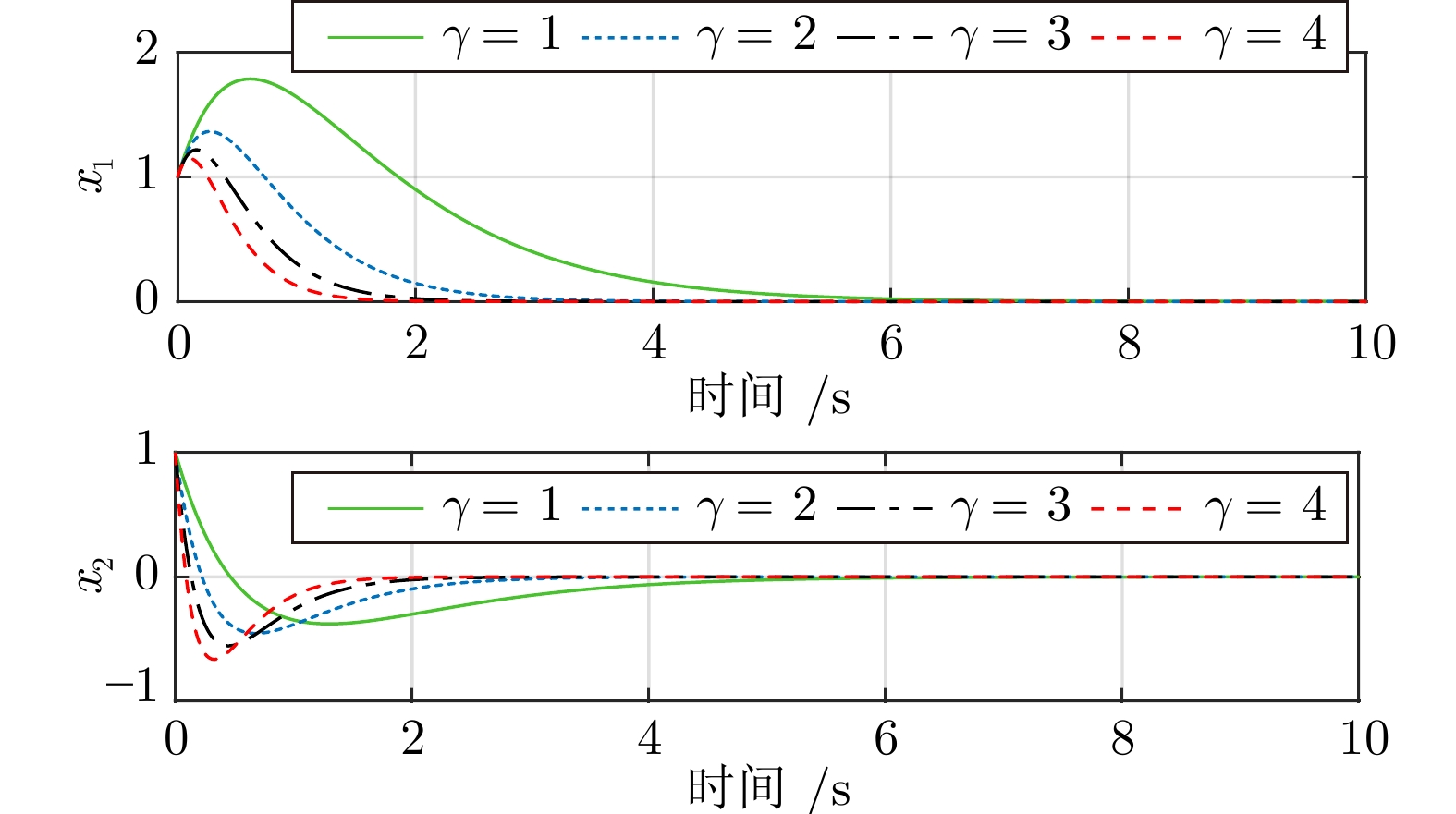
图 1 不同$ \gamma $值下系统状态响应曲线
Fig. 1 Response curves of system states under different values of $ \gamma $
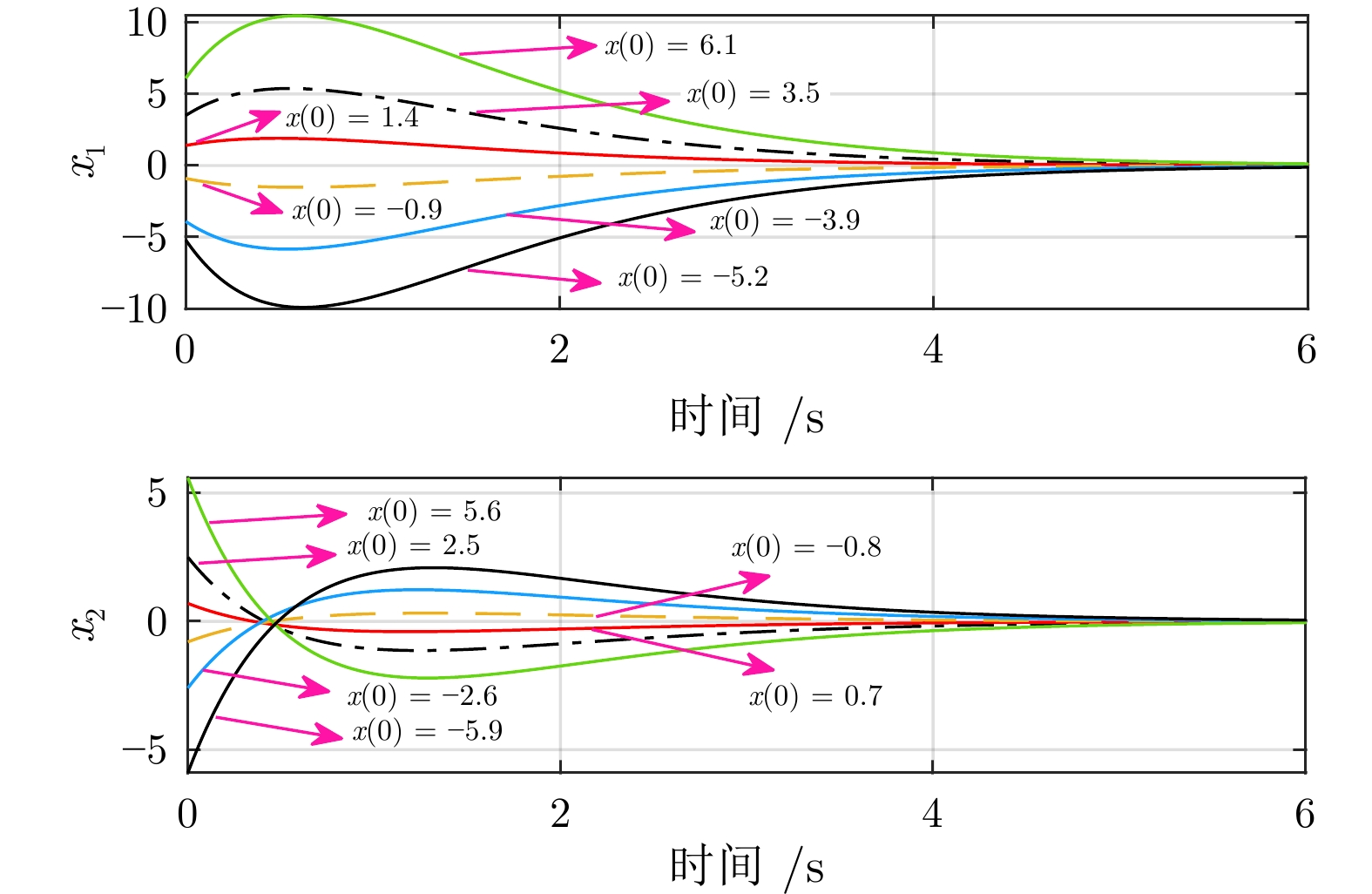
图 2 不同初始状态下系统状态响应曲线
Fig. 2 Response curves of system states under different initial values
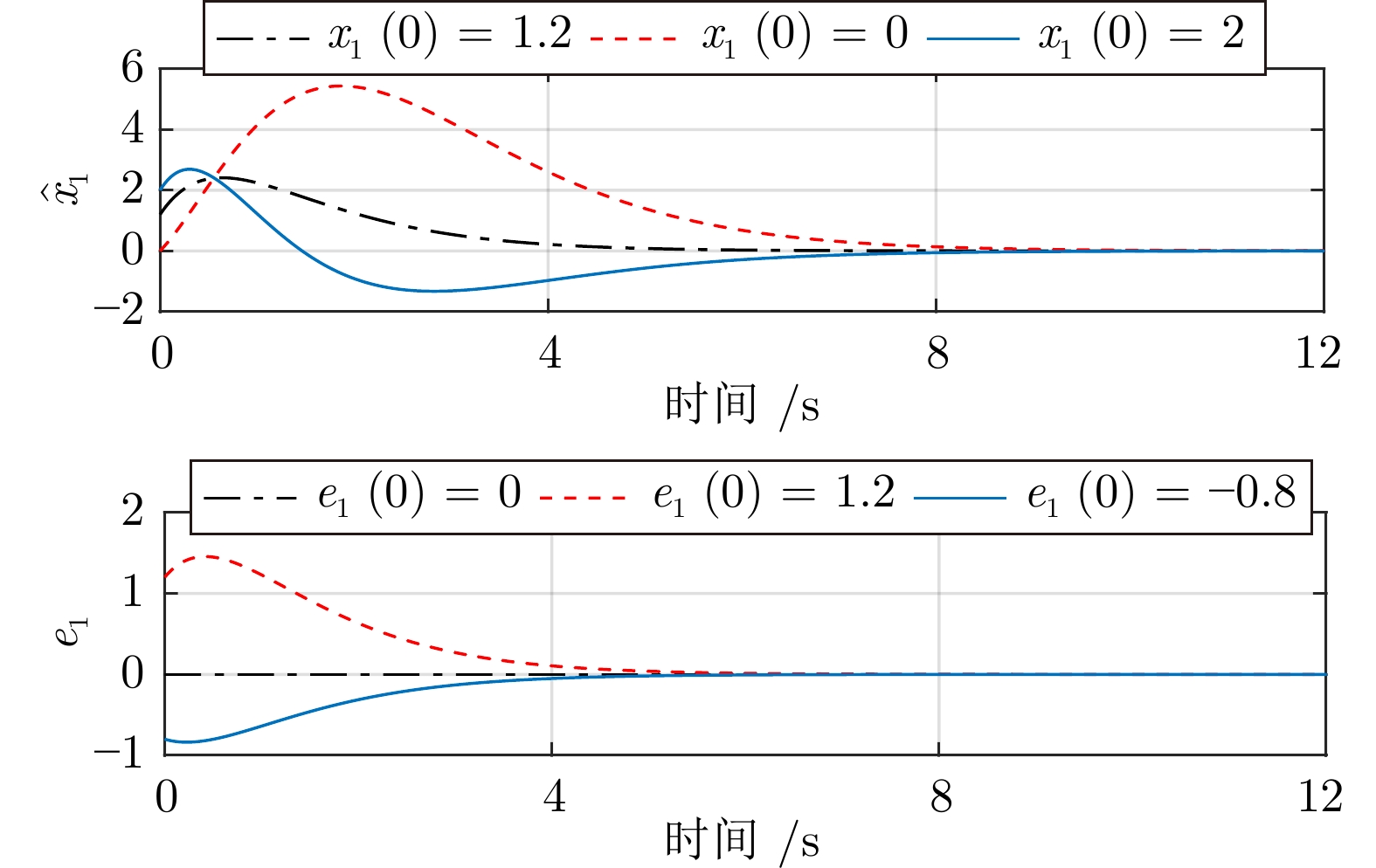
图 4 不同初始值下的系统状态估计$ \hat x_1(t) $与观测误差$ e_1(t) $响应曲线
Fig. 4 Response curves of system state estimate $ \hat x_1(t) $ and observer error $ e_1(t) $ under different initial values
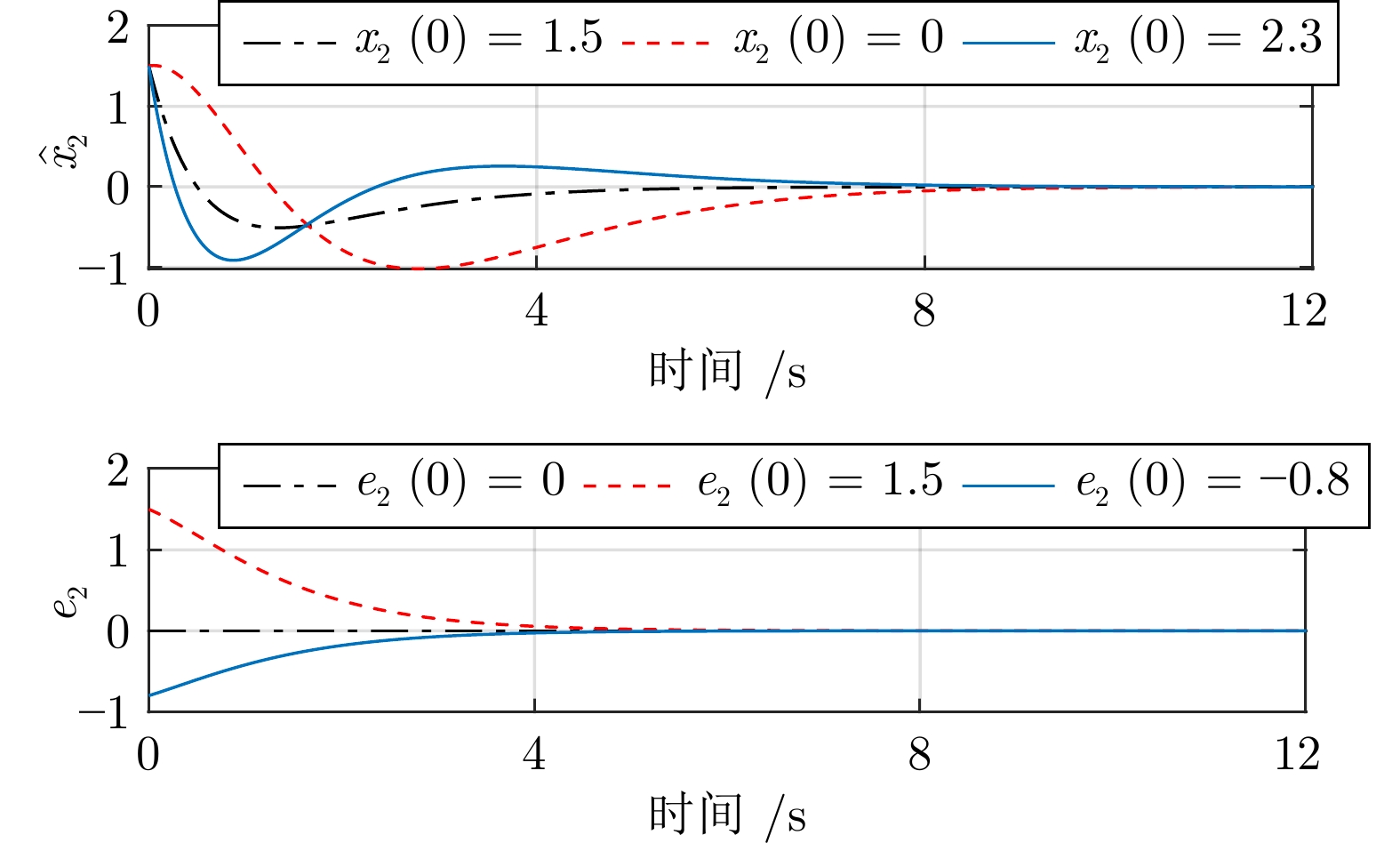
图 5 不同初始值下的系统状态估计$ \hat x_2(t) $与观测误差$ e_2(t) $响应曲线
Fig. 5 Response curves of system state estimate $ \hat x_2(t) $ and observer error $ e_2(t) $ under different initial values
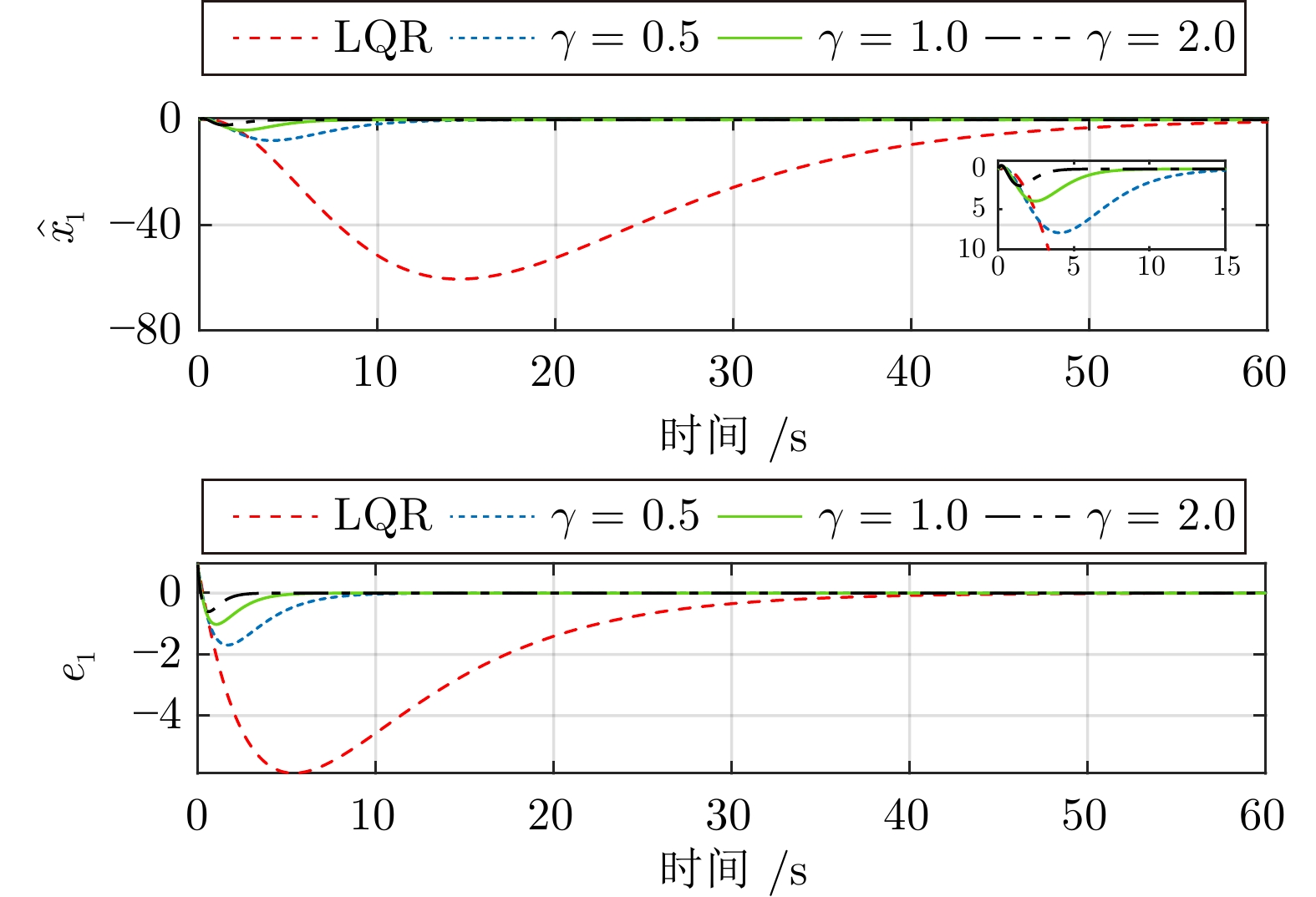
图 7 LQR方法与所提方法下的系统状态估计$ \hat x_1(t) $与观测误差$ e_1(t) $响应曲线
Fig. 7 Response curves of system state estimate $ \hat x_1(t) $ and observer error $ e_1(t) $ under the LQR method and the proposed method
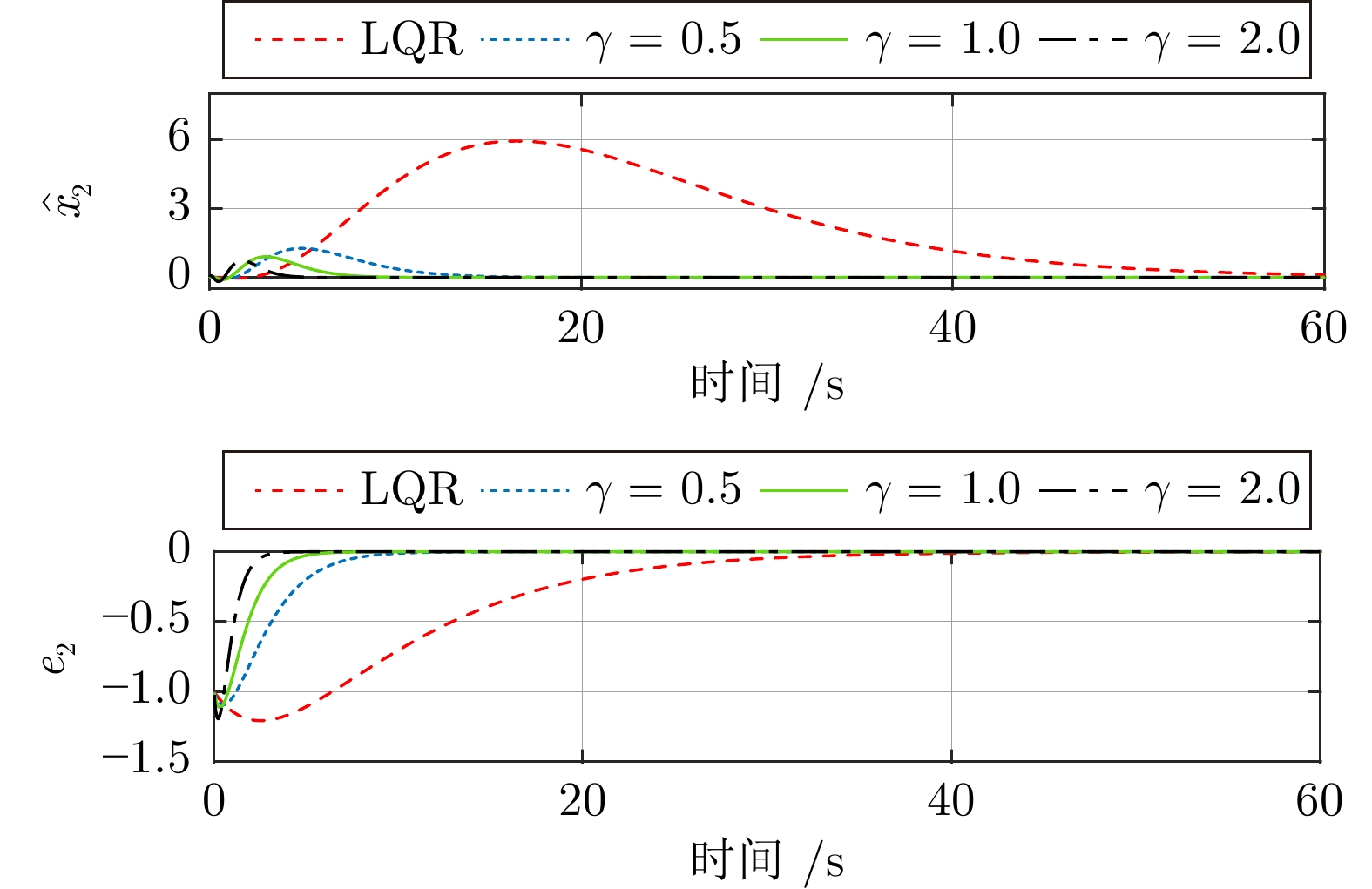
图 8 LQR方法与所提方法下的系统状态估计$ \hat x_2(t) $与观测误差$ e_2(t) $响应曲线
Fig. 8 Response curves of system state estimate $ \hat x_2(t) $ and observer error $ e_2(t) $ under the LQR method and the proposed method
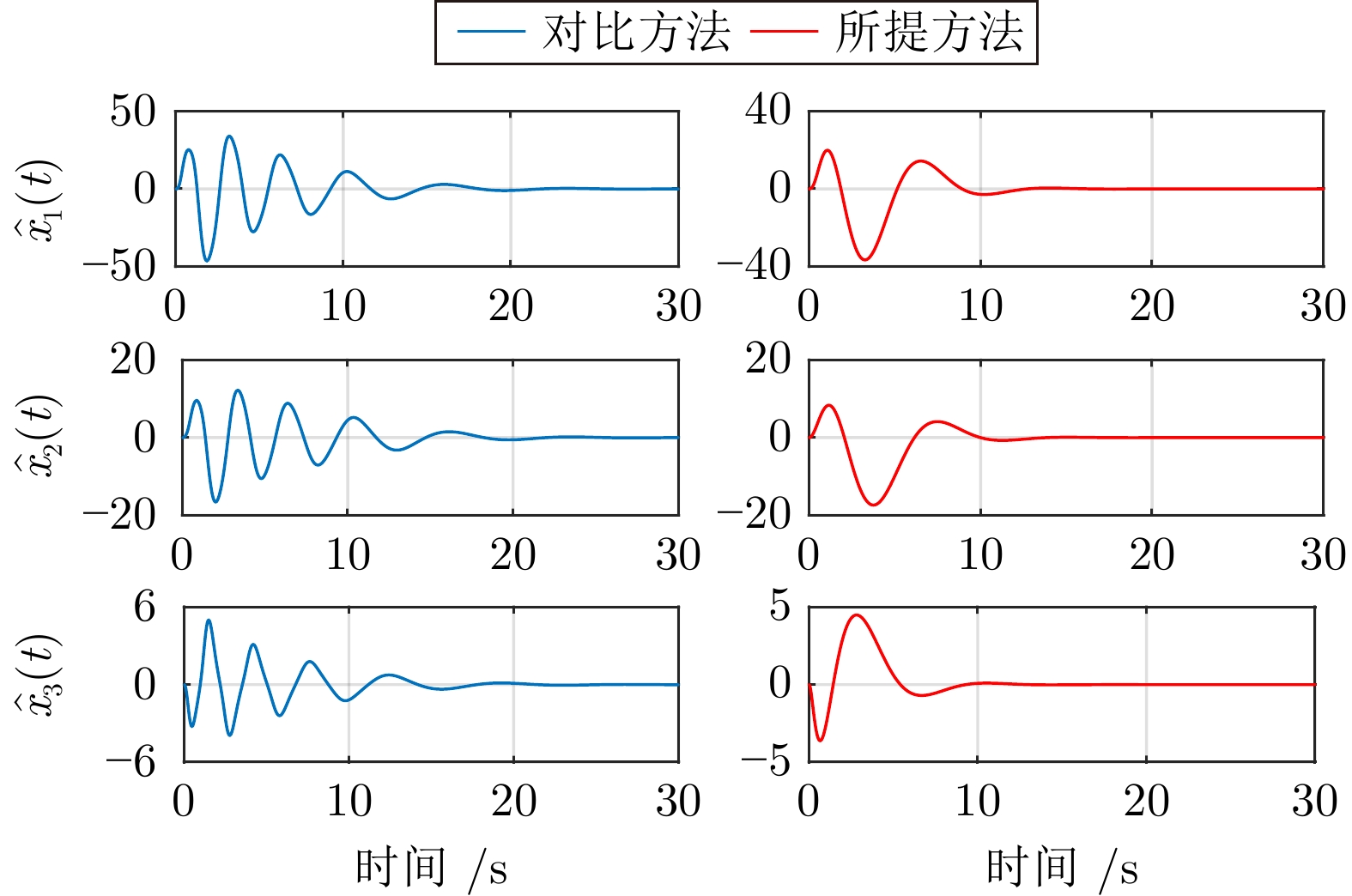
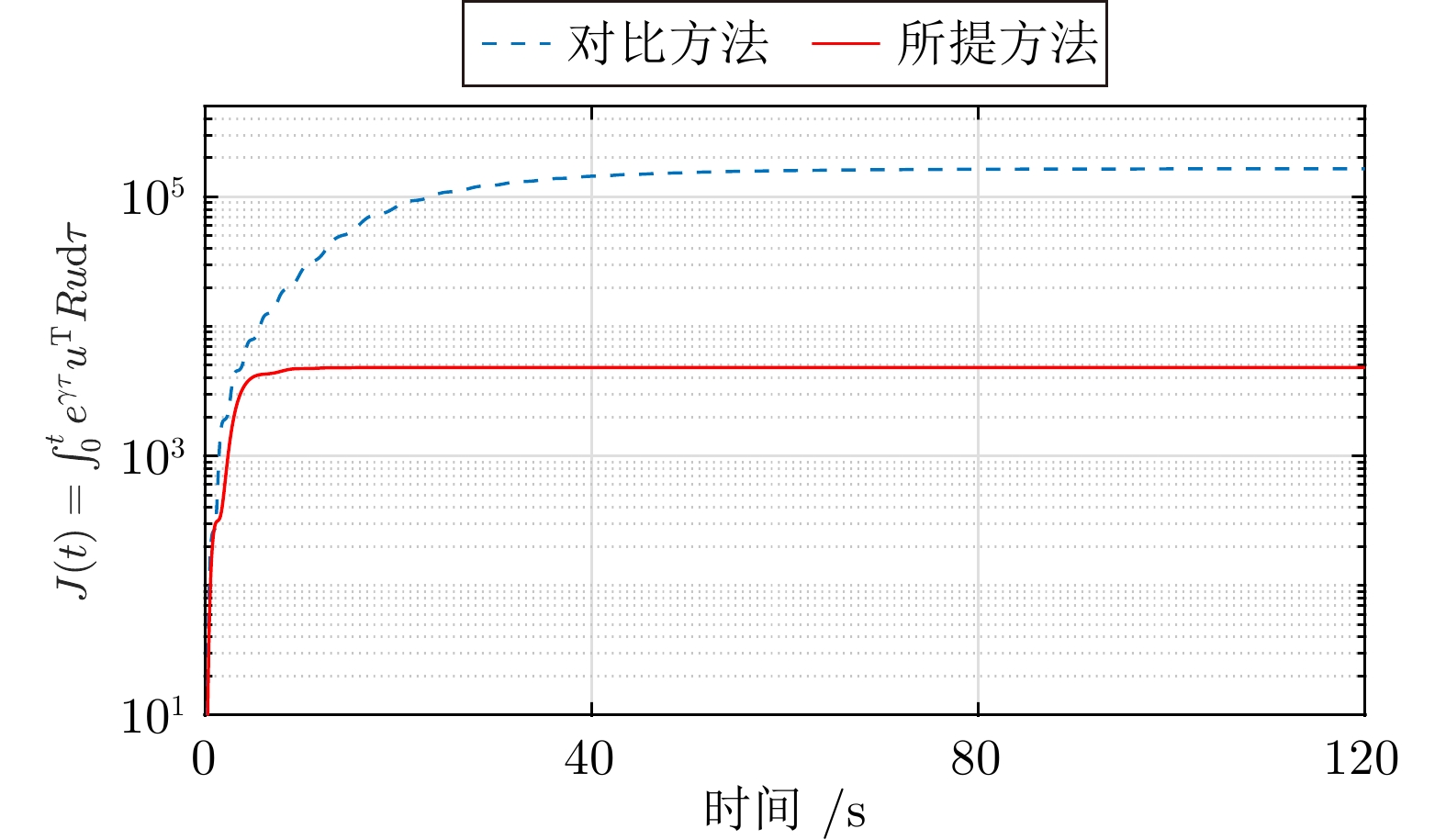
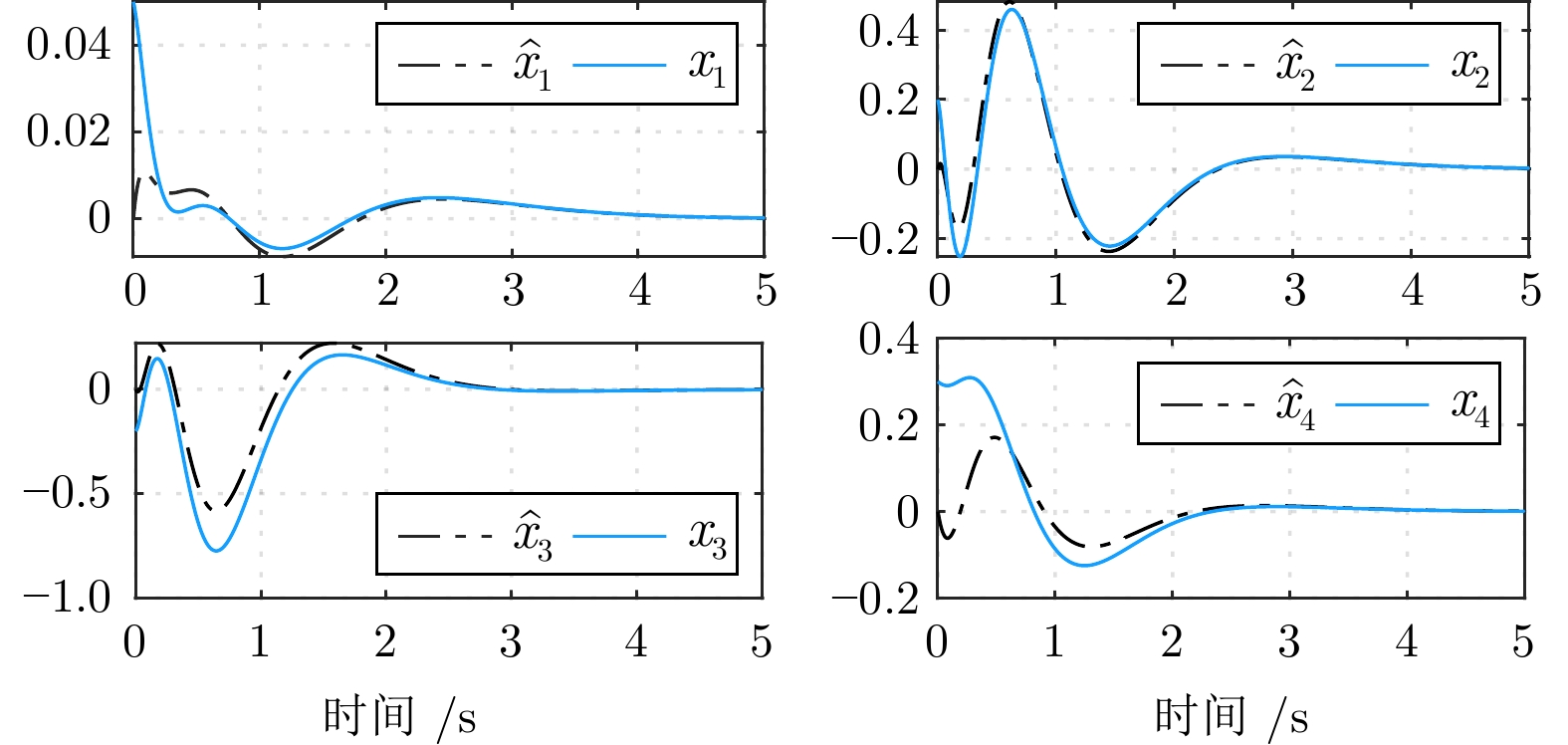
图 14 VTOL系统状态$ x(t) $与状态估计$ \hat{x}(t) $响应曲线
Fig. 14 Response curves of state $ x(t) $ and its state estimate $ \hat x(t) $ of VTOL system
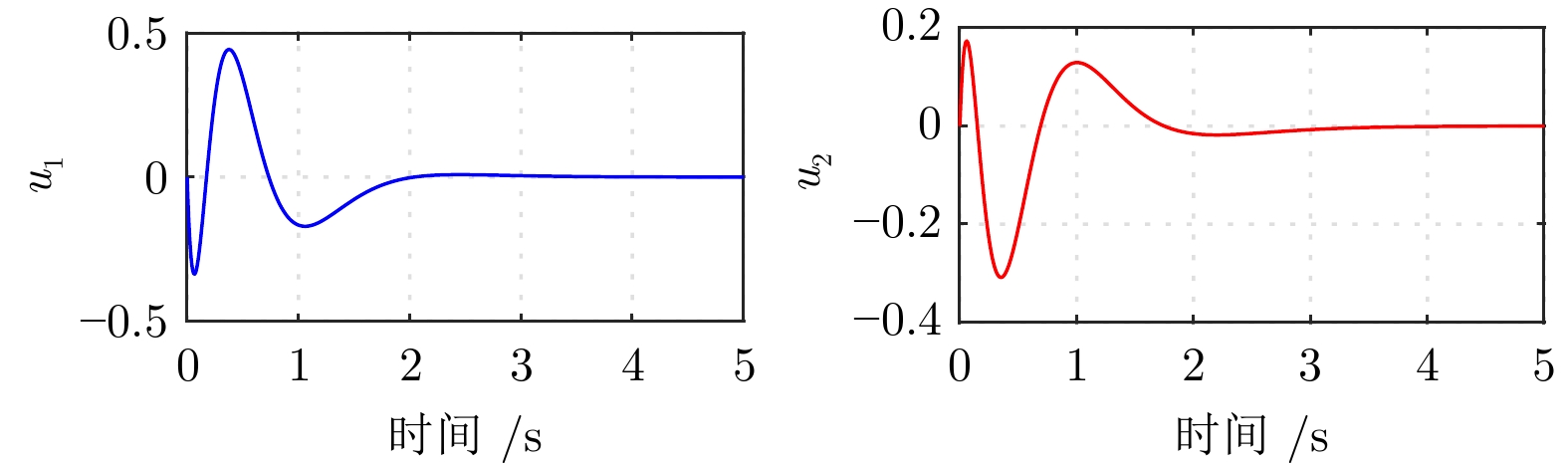
图 15 VTOL系统状态控制输入响应曲线
Fig. 15 Response curves of system states and control inputs of VTOL system
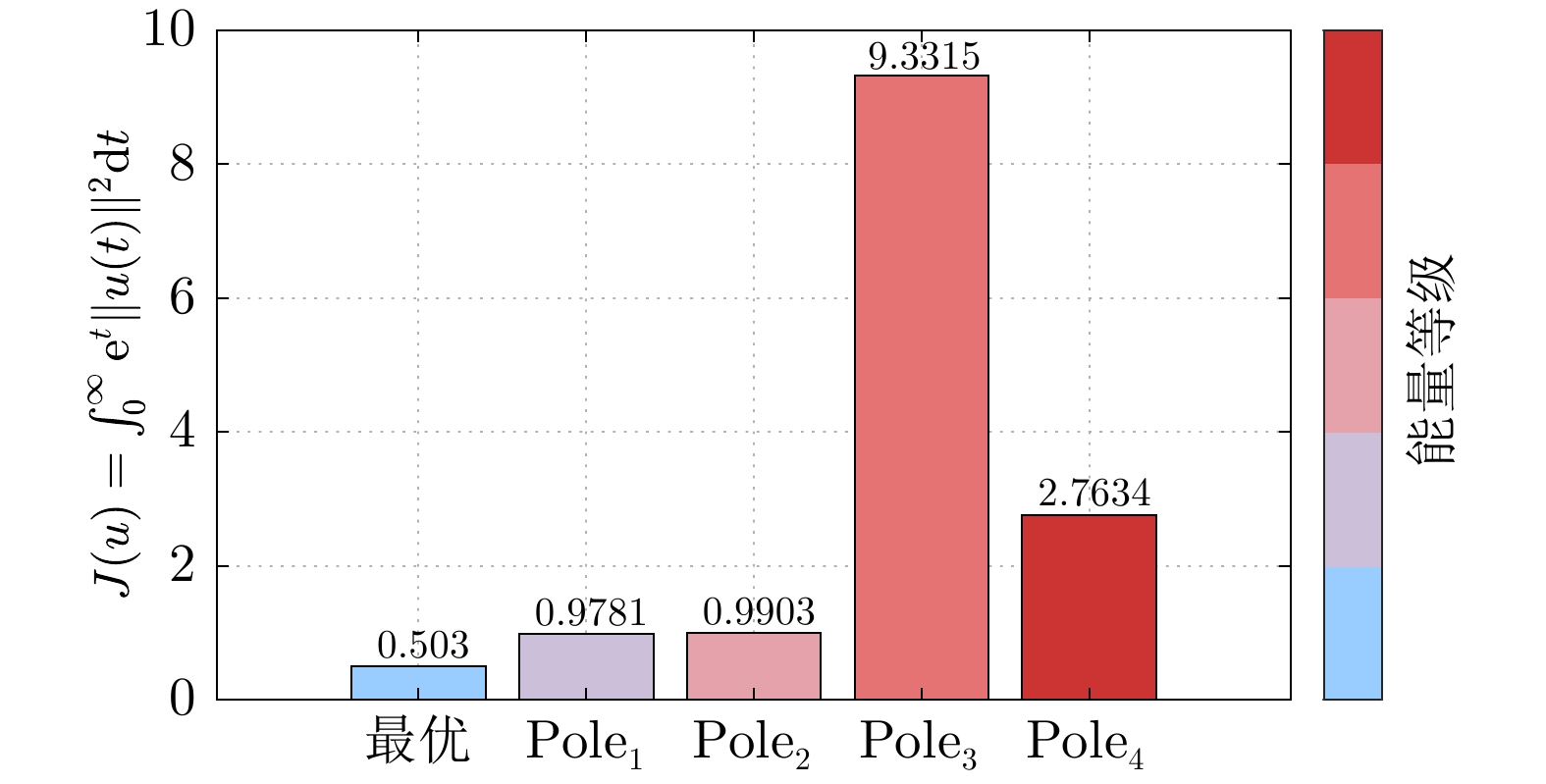
表 1 仿真极点配置
Table 1 Pole placements for simulation
最优 Pole$ _1 $ Pole$ _2 $ Pole$ _3 $ Pole$ _4 $ $ \begin{bmatrix} -1.158 1\\-1.241 8 \end{bmatrix} $ $ \begin{bmatrix} -0.705 5\\-0.900 0 \end{bmatrix} $ $ \begin{bmatrix} -3.000 0\\-2.500 0 \end{bmatrix} $ $ \begin{bmatrix} -0.577 8\\-0.650 0 \end{bmatrix} $ $ \begin{bmatrix} -5.000 0\\-5.800 0 \end{bmatrix} $  下载: 导出CSV
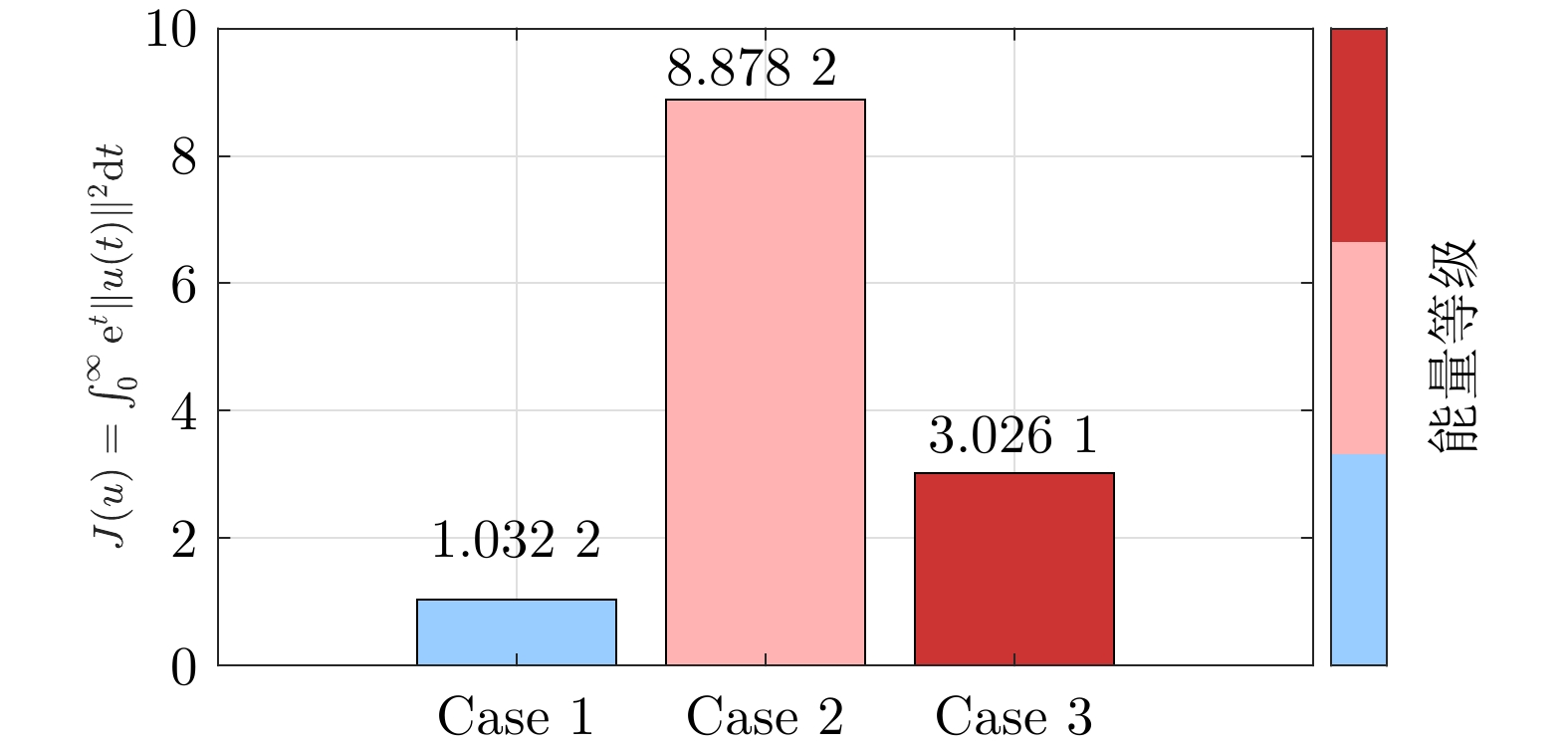
表 2 系统状态初始值
Table 2 Initial value of system states
Case 1 Case 2 Case 3 $ x(0) $=[1.2, 1.5]$ ^{\text{T}} $ $ x(0) $=[1.2, 1.5]$ ^{\text{T}} $ $ x(0) $=[1.2, 1.5]$ ^{\text{T}} $ $ \hat{x}(0) $=[1.2, 1.5]$ ^{\text{T}} $ $ \hat{x}(0) $=[0.0, 0.0]$ ^{\text{T}} $ $ \hat{x}(0) $=[2.0, 2.3]$ ^{\text{T}} $
下载: 导出CSV
-
[1] Kalman R E. Contributions to the theory of optimal control. Boletín de la Sociedad Matemática Mexicana, 1960, 5(2): 102−119 [2] Jiang Y, Chai T Y, Chen G R. Output feedback-based adaptive optimal output regulation for continuous-time strict-feedback nonlinear systems. IEEE Transactions on Automatic Control, 2025, 70(2): 767−782 doi: 10.1109/TAC.2024.3441668 [3] 杜城龙, 韩洁, 李繁飙, 桂卫华. 基于无模型策略梯度强化学习的未知随机系统最优控制. 自动化学报, 2025, 51(10): 2245−2255 doi: 10.16383/j.aas.c250156Du Cheng-long, Han Jie, Li Fan-biao, Gui Wei-hua. Model-free policy gradient-based reinforcement learning algorithms for optimal control of unknown stochastic systems. Acta Automatica Sinica, 2025, 51(10): 2245−2255 doi: 10.16383/j.aas.c250156 [4] Doyle J C, Glover K, Khargonekar P P, Francis B A. State-space solutions to standard H2 and H∞ control-problems. IEEE Transactions on Automatic Control, 1989, 34(8): 831−847 doi: 10.1109/9.29425 [5] Zhou B, Duan G R, Lin Z L. A parametric Lyapunov equation approach to the design of low gain feedback. IEEE Transactions on Automatic Control, 2008, 53(6): 1548−1554 doi: 10.1109/TAC.2008.921036 [6] Zhou B. Finite-time stabilization of linear systems by bounded linear time-varying feedback. Automatica, 2020, 113: Article No. 108760 doi: 10.1016/j.automatica.2019.108760 [7] Zhou B. Finite-time stability analysis and stabilization by bounded linear time-varying feedback. Automatica, 2020, 121: Article No. 109191 doi: 10.1016/j.automatica.2020.109191 [8] 张康康, 周彬, 蔡光斌, 侯明哲. 高超声速飞行器指定时间时变高增益反馈跟踪控制. 自动化学报, 2024, 50(6): 1151−1159 doi: 10.16383/j.aas.c210895Zhang Kang-kang, Zhou Bin, Cai Guang-bin, Hou Ming-zhe. Prescribed-time tracking control of hypersonic vehicles by time-varying high-gain feedback. Acta Automatica Sinica, 2024, 50(6): 1151−1159 doi: 10.16383/j.aas.c210895 [9] Jiang H Y, Zhou B, Liu G P. H∞ optimal control of unknown linear systems by adaptive dynamic programming with applications to time-delay systems. International Journal of Robust and Nonlinear Control, 2021, 31(12): 5602−5617 doi: 10.1002/rnc.5557 [10] Zhao J G, Yang C Y, Gao W N, Park J H. Optimal dynamic controller design for linear quadratic tracking problems. IEEE Transactions on Automatic Control, 2024, 69(6): 4021−4027 doi: 10.1109/TAC.2023.3342057 [11] Hambly B, Xu R Y, Yang H N. Policy gradient methods for the noisy linear quadratic regulator over a finite horizon. SIAM Journal on Control and Optimization, 2021, 59(5): 3359−3391 doi: 10.1137/20M1382386 [12] Wu W L, Wang Y J, Zhang H H, Zhang M Q, Chiu M S, Wu Z. Phased long short-term memory-based predictive control of chemical processes with asynchronous and delayed measurements. IEEE Transactions on Control Systems Technology, 2025, 33(6): 2439−2454 doi: 10.1109/TCST.2025.3587908 [13] 田昊, 汤健, 夏恒, 王天峥, 余文, 乔俊飞. 基于IT2FBLS强化学习PID的MSWI过程炉膛温度控制. 自动化学报, 2025, 51(7): 1626−1641 doi: 10.16383/j.aas.c240074Tian Hao, Tang Jian, Xia Heng, Wang Tian-zheng, Yu Wen, Qiao Jun-fei. Furnace temperature control using IT2FBLS-based reinforcement learning PID for MSWI process. Acta Automatica Sinica, 2025, 51(7): 1626−1641 doi: 10.16383/j.aas.c240074 [14] Luenberger D G. Observing the state of a linear system. IEEE Transactions on Military Electronics, 1964, 8(2): 74−80 doi: 10.1109/TME.1964.4323124 [15] Marino R, Tomei P. Nonlinear Control Design: Geometric, Adaptive and Robust. London: Prentice Hall, 1996. [16] Edwards C, Spurgeon S K. Sliding Mode Control: Theory and Applications. London: Taylor & Francis, 1998. [17] Han J. From PID to active disturbance rejection control. IEEE transactions on Industrial Electronics, 2009, 56(3): 900−906 doi: 10.1109/TIE.2008.2011621 [18] Khalil H K, Praly L. High‐gain observers in nonlinear feedback control. International Journal of Robust and Nonlinear Control, 2014, 24(6): 993−1015 doi: 10.1002/rnc.3051 [19] Williams R L, Lawrence D A. Linear State-Space Control Systems. Hoboken: John Wiley & Sons, 2007. [20] Chen X Y, Zhao F, Liu Y, Liu H W, Huang T W, Qiu J L. Reduced-order observer-based preassigned finite-time control of nonlinear systems and its applications. IEEE Transactions on Systems, Man, and Cybernetics: Systems, 2023, 53(7): 4205−4215 doi: 10.1109/TSMC.2023.3241365 [21] Xu Z B, Sun C B, Liu Q Y. Output-feedback prescribed performance control for the full-state constrained nonlinear systems and its application to DC motor system. IEEE Transactions on Systems, Man, and Cybernetics: Systems, 2023, 53(7): 3898−3907 doi: 10.1109/TSMC.2022.3216119 [22] Holloway J, Krstic M. Prescribed-time output feedback for linear systems in controllable canonical form. Automatica, 2019, 107(4): 77−85 doi: 10.1016/j.automatica.2019.05.027 [23] Lien C H. Robust observer-based control of systems with state perturbations via LMI approach. IEEE Transactions on Automatic Control, 2004, 49(8): 1365−1370 doi: 10.1109/TAC.2004.832660 [24] Li W Q, Krstic M. Prescribed-time output-feedback control of stochastic nonlinear systems. IEEE Transactions on Automatic Control, 2022, 68(3): 1431−1446 [25] Zou A M, Liu Y, Hou Z G, Hu Z P. Practical predefined-time output-feedback consensus tracking control for multiagent systems. IEEE Transactions on Cybernetics, 2022, 53(8): 5311−5322 [26] Zhou B. Exact prescribed-time stabilization and observer design for a class of MIMO nonlinear systems. Automatica, 2026, 185: Article No. 112810 doi: 10.1016/j.automatica.2025.112810 [27] Zhang Z H, Li S, Yan H. Interval observer-based output feedback control for a class of interconnected systems with uncertain interconnections. International Journal of Control, Automation and Systems, 2019, 17(4): 957−965 doi: 10.1007/s12555-018-0652-2 [28] Ye H F, Song Y D. A separation principle for the prescribed-time stabilization of a class of nonlinear systems. Automatica, 2025, 171: Article No. 111983 doi: 10.1016/j.automatica.2024.111983 [29] Ye H F, Wen C Y, Song Y D. Decentralized prescribed-time control for interconnected nonlinear systems via output-feedback. Automatica, 2024, 163: Article No. 111571 doi: 10.1016/j.automatica.2024.111571 [30] Ye H F, Wen C Y, Song Y D. Decentralized and distributed control of large-scale interconnected multi-agent systems in prescribed time. IEEE Transactions on Automatic Control, 2025, 70(2): 1115−1130 doi: 10.1109/TAC.2024.3451213 [31] Tan Y, Ye H F, Wen C Y, Song Y D. Decentralized prescribed-time output-feedback control for interconnected systems with coupled non-identical subsystems of different orders. IEEE/CAA Journal of Automatica Sinica, 2026, 13(5): 1097−1107 doi: 10.1109/JAS.2025.125918 [32] 周彬, 线性系统理论. 北京: 科学出版社, 2024.Zhou Bin. Linear Systems Theory. Beijing: Science Press, 2024. [33] Khalil H K. Nonlinear Systems. Englewood Cliffs, NJ, USA: Prentice Hall, 2002. [34] 倪茂林. Existence condition on solutions to the algebraic Riccati equation. 自动化学报, 2008, 34(1): 85−87 doi: 10.3724/SP.J.1004.2008.00085Ni Mao-lin. Existence condition on solutions to the algebraic Riccati equation. Acta Automatica Sinica, 2008, 34(1): 85−87 doi: 10.3724/SP.J.1004.2008.00085 [35] Krishnamurthy P, Khorrami F. A matrix pencil formulation for non-conservative realization of scaling-based controllers for feedforward-like systems. IEEE Transactions on Automatic Control, 2024, 69(1): 261−274 doi: 10.1109/TAC.2023.3274915 [36] Zhang H, Lewis F L, Das A. Optimal design for synchronization of cooperative systems: State feedback, observer and output feedback. IEEE Transactions on Automatic Control, 2011, 56(8): 1948−1952 doi: 10.1109/TAC.2011.2139510 [37] Share P M M. Luenberger-type cubic observers for state estimation of linear systems. International Journal of Adaptive Control and Signal Processing, 2020, 34(9): 1148−1161 doi: 10.1002/acs.3125 [38] Zhang J H, Shi P, Lin W G. Extended sliding mode observer based control for Markovian jump linear systems with disturbances. Automatica, 2016, 70: 140−147 doi: 10.1016/j.automatica.2016.03.020 -

 下载:

计量
- 文章访问数: 25
- HTML全文浏览量: 8
- 被引次数: 0
