


-
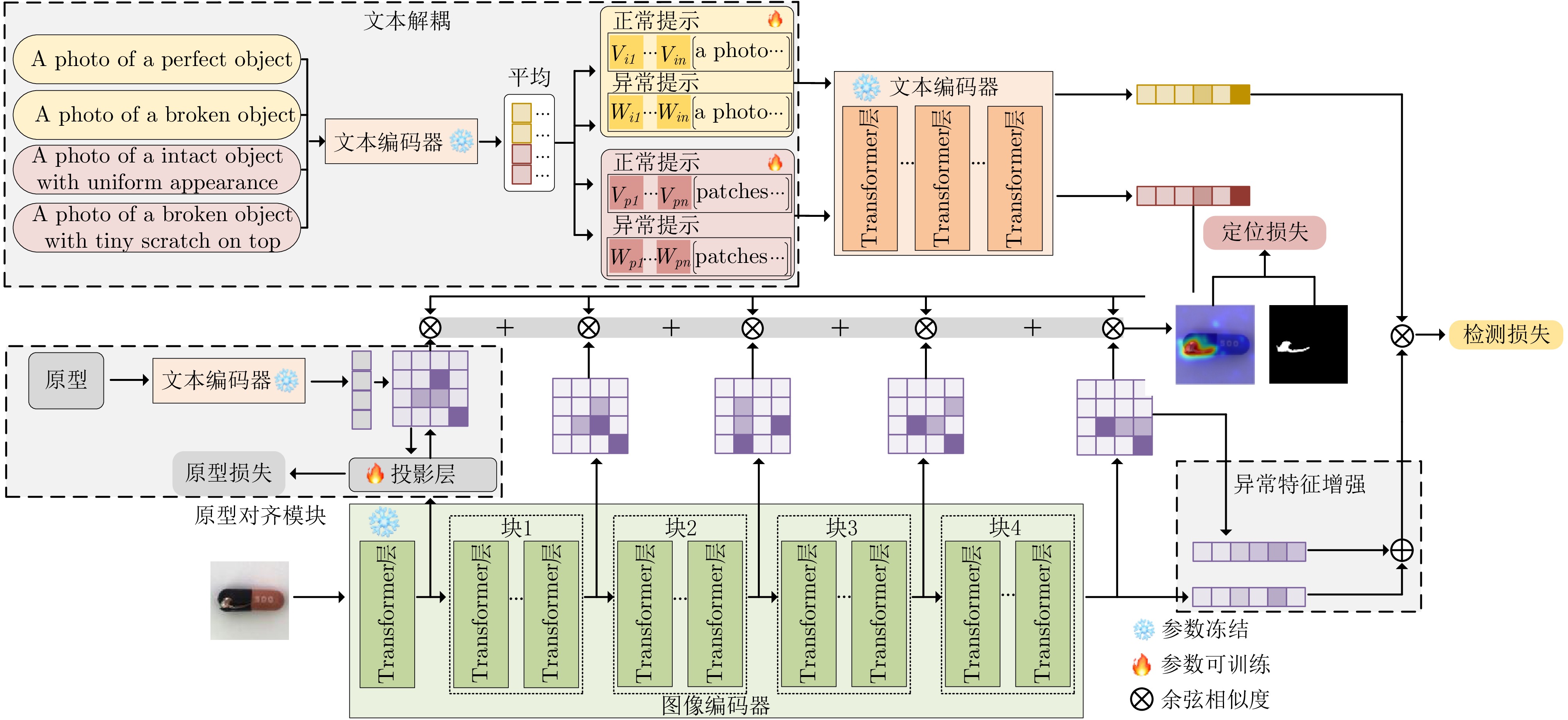
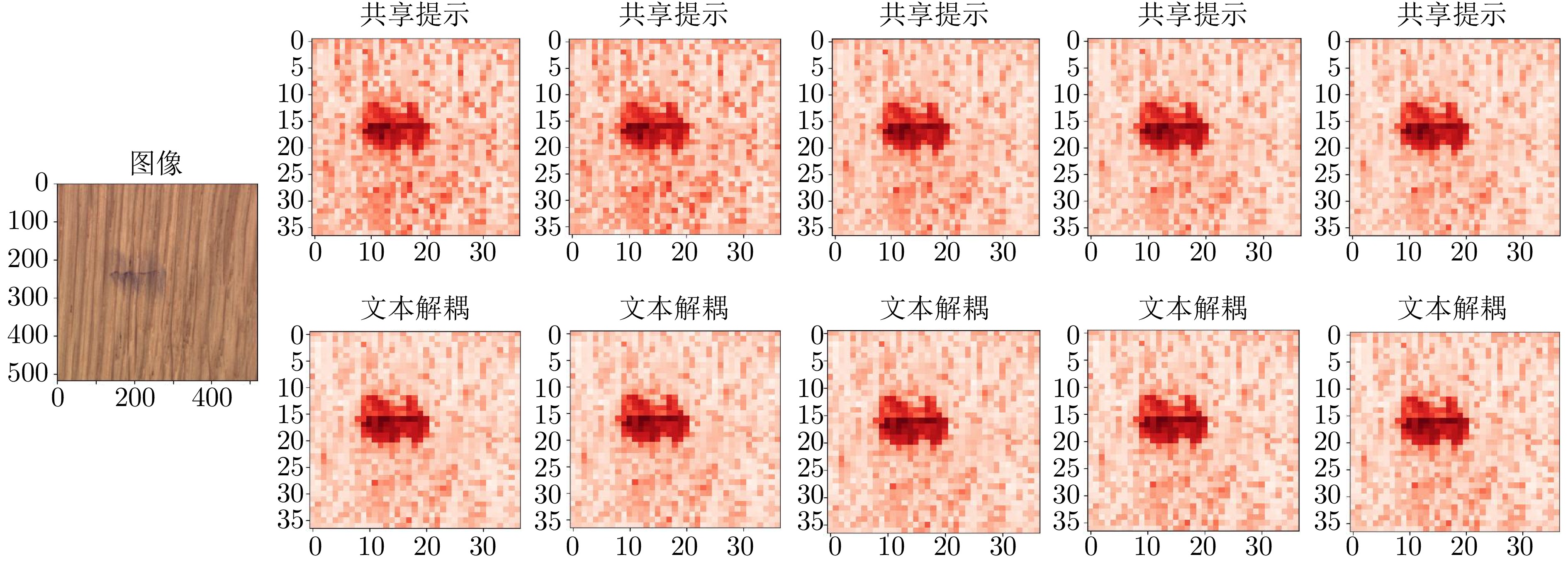
摘要: 随着大规模视觉−语言预训练模型的不断发展, 零样本异常检测逐渐成为一个重要的研究方向. 该任务要求模型能够直接对类别未知的异常样本进行有效检测与定位, 而无需依赖目标领域的训练数据. 由于异常检测与异常定位任务分别需要全局和局部不同粒度的语义信息, 现有方法共享文本提示的设计使模型无法同时满足二者的需求, 导致性能难以兼顾. 为此, 提出一种基于文本解耦的零样本异常检测方法, 其核心是为每个任务分别设计独立的提示并进行优化. 同时, 针对模型在异常定位任务中跨数据集泛化能力较弱的问题, 提出原型对齐模块. 该模块通过优化图像块特征与原型之间的距离, 提升模型的异常定位能力. 此外, 考虑到仅依赖图像的全局特征难以充分识别细微异常, 进一步设计了异常特征增强策略, 通过聚焦于潜在的异常区域以提升异常检测的性能. 实验结果表明, 所提出方法在MVTec AD、ISIC、BrainMRI等公开数据集上均取得优良性能, 验证了其有效性与泛化能力.
-
关键词:
- 异常检测 /
- 对比语言−图像预训练 /
- 零样本 /
- 文本解耦
Abstract: With the continuous advancement of large pre-trained vision-language, zero-shot anomaly detection has gradually emerged as a significant research direction. This task requires the models to effectively detect and localize anomalies of unknown categories directly, without relying on training data from the target domain. Since anomaly detection and anomaly localization tasks require semantic information of different granularity globally and locally, the design of shared textual prompts in the existing methods makes it impossible for the model to satisfy the needs of both at the same time, which makes it difficult to balance performance. To address this issue, this paper proposes a text-decoupled zero-shot anomaly detection method. Its core lies in designing and optimizing independent prompts for each task. Furthermore, to tackle the model′s weak cross-dataset generalization in anomaly localization, a prototype alignment module is introduced. This module enhances anomaly localization capabilities by optimizing the distance between image patch features and prototypes. Finally, considering that relying solely on global image features is insufficient for identifying subtle anomalies, an anomaly feature enhancement strategy is designed to improve anomaly detection performance by focusing on potential anomalous regions. Experimental results demonstrate that the proposed method achieves excellent performance on public datasets such as MVTec AD, ISIC, and BrainMRI, validating its effectiveness and generalization capability.-
Key words:
- anomaly detection /
- contrastive language-lmage pre-training /
- zero-shot /
- text decoupling
-
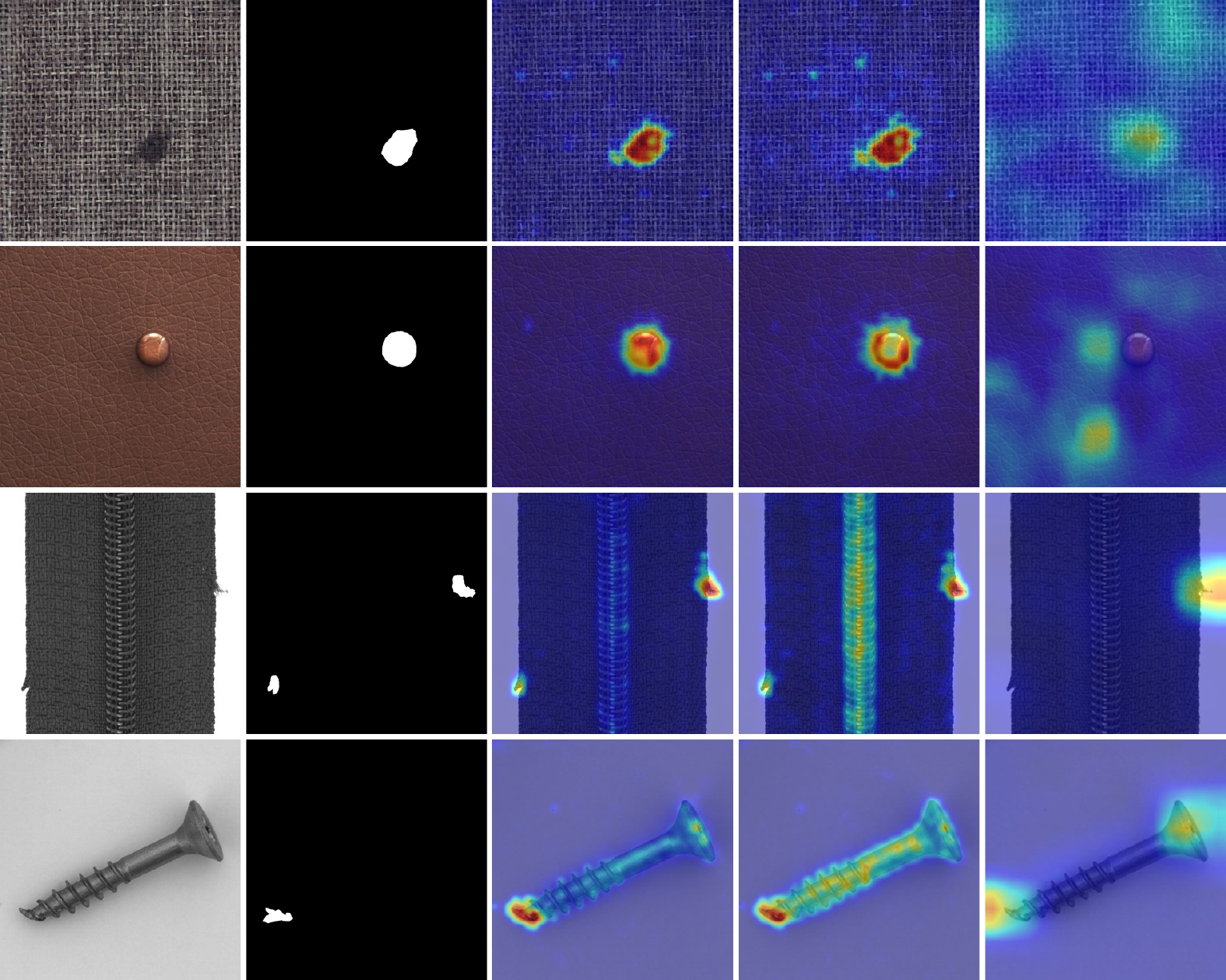
图 5 不同方法在MVtec AD数据集上的可视分析
Fig. 5 The visual analysis of different methods on the MVtec AD dataset
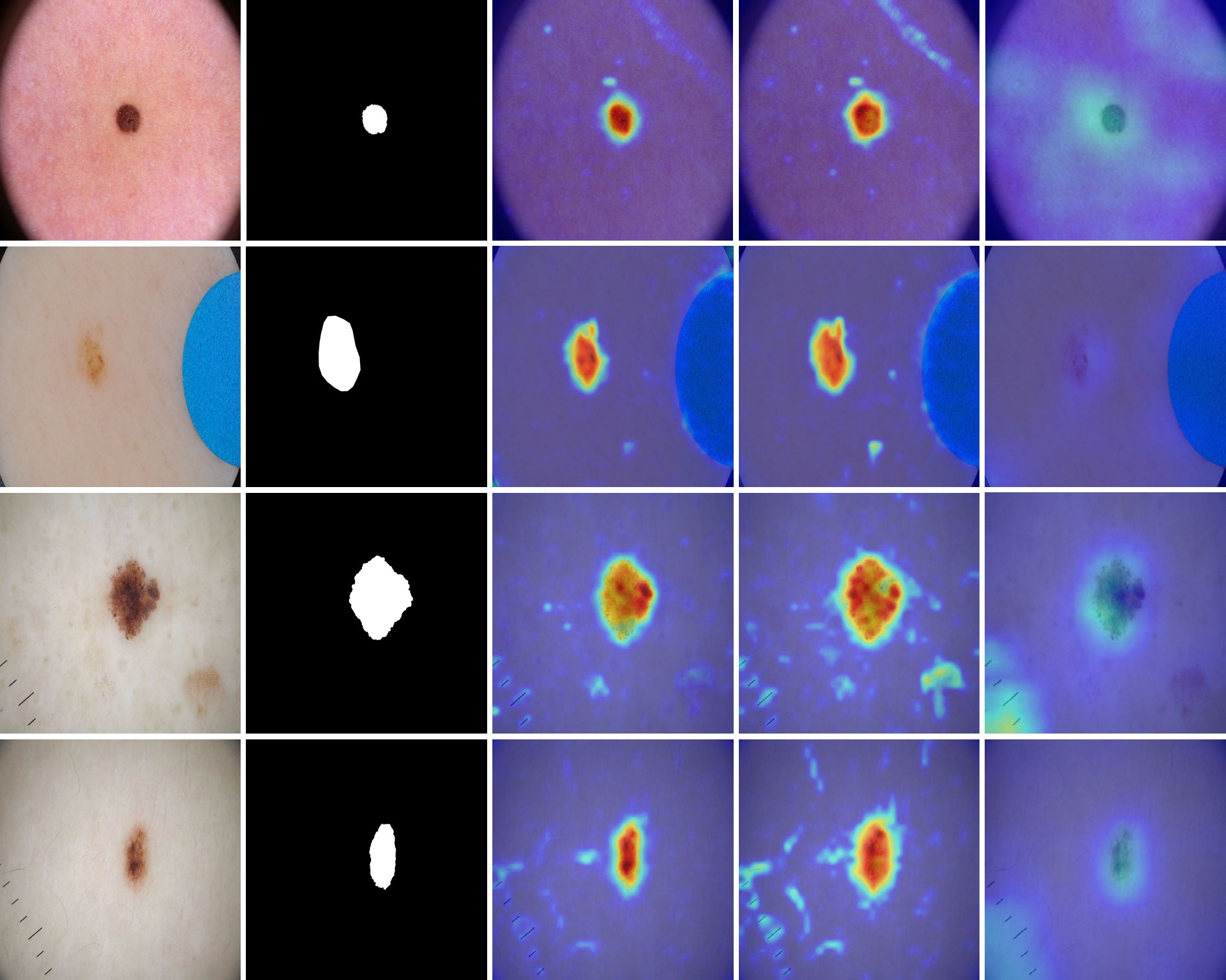
图 8 不同方法在ISIC数据集上的可视分析
Fig. 8 The visual analysis of different methods on the ISIC dataset
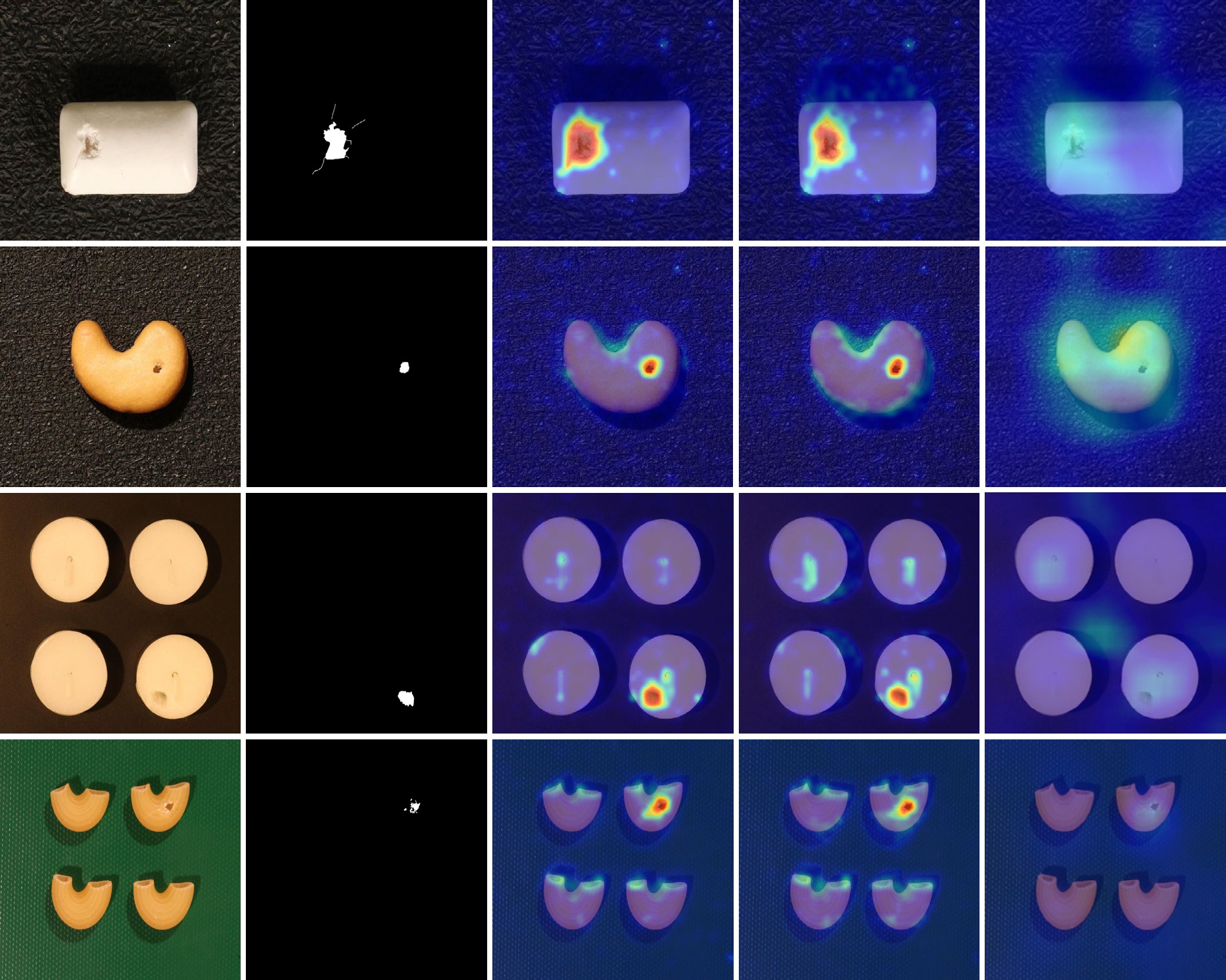
图 6 不同方法在VisA数据集上的可视分析
Fig. 6 The visual analysis of different methods on the VisA dataset
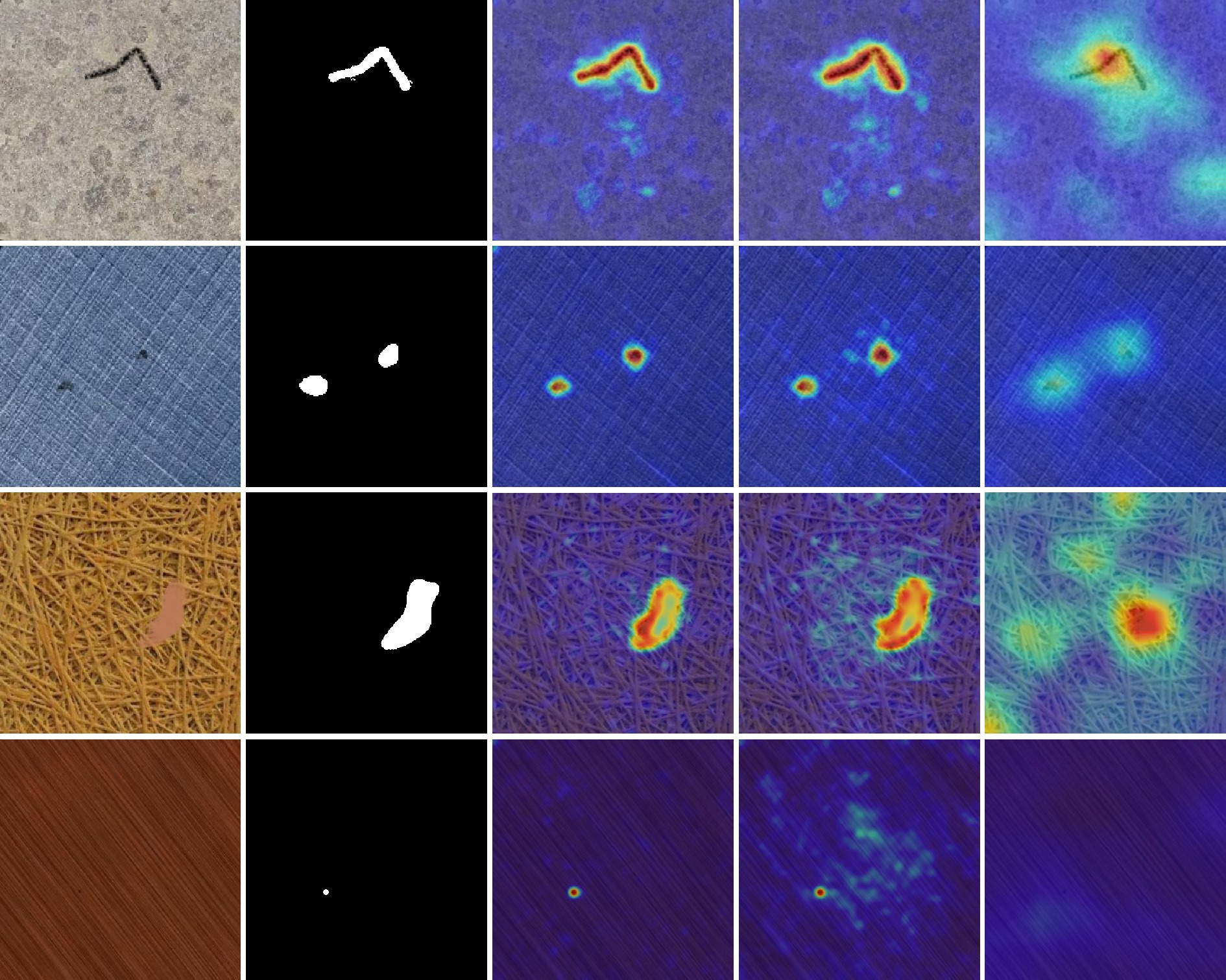
图 7 不同方法在DTD-Synthetic数据集上的可视分析
Fig. 7 The visual analysis of different methods on the DTD-Synthetic dataset
表 1 数据集的关键统计数据
Table 1 Key statistics the utilized datasets
数据集 领域 类别 模态 类别数 测试集中正常与异常样本数 任务 MVTec AD 工业 物体和纹理 摄影 15 (467, 1 258) 异常检测与定位 VisA 物体类 12 (962, 1 200) MPDD 物体类 6 (176, 282) BTAD 物体类 3 (451, 290) DAGM 纹理类 10 (6 996, 1 054) DTD-Synthetic 纹理类 12 (357, 947) ISIC 医学 皮肤 摄影 1 (0, 379) 异常定位 CVC-ClinicDB 结肠 内窥镜 (0, 612) CVC-ColonDB 结肠 内窥镜 (0, 380) Head_CT 医学 脑部 放射学(CT) 1 (100, 100) 异常检测 BrainMRI 放射学(MRI) (98, 155) Br35H 放射学(MRI) (1 500, 1 500)  下载: 导出CSV
表 2 不同方法在工业领域的性能比较
Table 2 Comparison of the performance of different methods in the industrial domain
任务 数据集 CLIP[12] CoOp[30] WinCLIP[13] April-GAN[14] AnomalyCLIP[16] 本文方法 图像级(AUROC, AP) MVTec AD (74.1, 87.6) (88.8, 94.8) (91.8, 96.5) (86.1, 93.5) (91.5, 96.2) (92.0, 96.8) VisA (66.4, 71.5) (62.8, 68.1) (78.1, 81.2) (78.0, 81.4) (82.1, 85.4) (83.7, 85.8) MPDD (54.3, 65.4) (55.1, 64.2) (63.6, 69.9) (73.0, 80.2) (77.0, 82.0) (76.0, 80.6) BTAD (34.5, 52.5) (66.8, 77.4) (68.2, 70.9) (73.6, 68.6) (88.3, 87.3) (91.8, 94.8) DAGM (79.6, 59.0) (87.5, 74.6) (91.8, 79.5) (94.4, 83.8) (97.5, 92.3) (97.9, 92.5) DTD-Syn. (71.6, 85.7) (-, -) (93.2, 92.6) (86.4, 95.0) (93.5, 97.0) (93.1, 97.1) 平均值 (63.4, 70.3) (72.2, 75.8) (81.1, 81.8) (82.6, 83.8) (88.3, 90.0) (89.0, 91.2) 像素级(AUROC, AUPRO) MVTec AD (38.4, 11.3) (33.3, 6.7) (85.1, 64.6) (87.6, 44.0) (91.1, 81.4) (90.8, 83.2) VisA (46.6, 14.8) (24.2, 3.8) (79.6, 56.8) (94.2, 86.8) (95.5, 87.0) (95.3, 90.9) MPDD (62.1, 33.0) (15.4, 2.3) (76.4, 48.9) (94.1, 83.2) (96.5, 88.7) (97.4, 91.9) BTAD (30.6, 4.4) (28.6, 3.8) (72.7, 27.3) (60.8, 25.0) (94.2, 74.8) (94.5, 80.0) DAGM (28.2, 2.9) (17.5, 2.1) (87.6, 65.7) (82.4, 66.2) (95.6, 91.0) (95.6, 90.0) DTD-Syn. (33.9, 12.5) (-, -) (83.9, 57.8) (95.3, 86.9) (97.9, 92.3) (98.4, 95.1) 平均值 (40.0, 13.2) (23.8, 3.7) (80.9, 53.5) (85.7, 65.4) (95.1, 85.9) (95.3, 88.5) 注: 加粗字体表示该方法在该数据集上取得最佳性能, 下划线表示次优性能.
下载: 导出CSV
表 3 不同方法在医学领域的性能比较(%)
Table 3 Comparison of the performance of different methods in the medical domain (%)
任务 数据集 CLIP[12] CoOp[30] WinCLIP[13] April-GAN[14] AnomalyCLIP[16] 本文方法 图像级(AUROC, AP) Head_CT (56.5, 58.4) (78.4, 78.8) (81.8, 80.2) (89.1, 89.4) (93.4, 91.6) (94.1, 94.7) BrainMRI (73.9, 81.7) (61.3, 44.9) (86.6, 91.5) (89.3, 90.9) (90.3, 92.2) (95.0, 95.9) Br35H (78.4, 78.8) (86.0, 87.5) (80.5, 82.2) (93.1, 92.9) (94.6, 94.7) (96.5, 96.5) 平均值 (69.6, 73.0) (75.2, 70.4) (83.0, 84.6) (90.5, 91.1) (92.8, 92.8) (95.2, 95.7) 像素级(AUROC, AUPRO) ISIC (33.1, 5.8) (51.7, 15.9) (83.3, 55.1) (89.4, 77.2) (89.7, 78.4) (90.5, 82.2) CVC-Colo. (49.5, 15.8) (40.5, 2.6) (70.3, 32.5) (78.4, 64.6) (81.9, 71.3) (80.0, 70.6) CVC-Clin. (47.5, 18.9) (34.8, 2.4) (51.2, 13.8) (80.5, 60.7) (82.9, 67.8) (84.9, 69.4) 平均值 (43.4, 13.5) (42.3, 7.0) (68.3, 33.8) (82.8, 67.5) (84.8, 72.5) (85.1, 74.1) 注: 加粗字体表示该方法在该数据集上取得最佳性能, 下划线表示次优性能.
下载: 导出CSV
表 4 文本解耦策略消融实验结果
Table 4 Ablation study results of text decoupling strategy
方法 数据集 不同$ \lambda $值的性能对比 $ \lambda=4 $ $ \lambda=2 $ $ \lambda=1 $ $ \lambda=0.5 $ $ \lambda=0.25 $ 基线模型 VisA (46.4, 57.0) (58.0, 65.1) (68.2, 72.6) (76.3, 79.6) (79.8, 82.3) (94.6, 90.1) (95.0, 90.1) (95.1, 89.8) (95.0, 88.9) (94.2, 85.0) BTAD (27.7, 49.2) (32.3, 50.6) (42.5, 55.1) (52.0, 59.8) (63.8, 67.5) (93.2, 78.2) (93.3, 78.1) (93.0, 77.3) (92.2, 74.8) (90.2, 69.3) 基线模型 + 文本解耦 VisA (82.5, 84.5) (82.5, 84.5) (82.5, 84.5) (82.5, 84.5) (82.5, 84.5) (95.2, 90.6) (95.2, 90.6) (95.2, 90.6) (95.2, 90.6) (95.2, 90.6) BTAD (91.6, 94.1) (91.6, 94.1) (91.6, 94.1) (91.6, 94.1) (91.6, 94.1) (93.6, 79.3) (93.6, 79.3) (93.6, 79.3) (93.6, 79.3) (93.6, 79.3) 注: 对于每一个数据集, 表中的数据上方是图像级指标(AUROC, AP), 下方是像素级指标(AUROC, AUPRO).
下载: 导出CSV
表 5 检测任务的异常得分
Table 5 Abnormal scores in the detection task
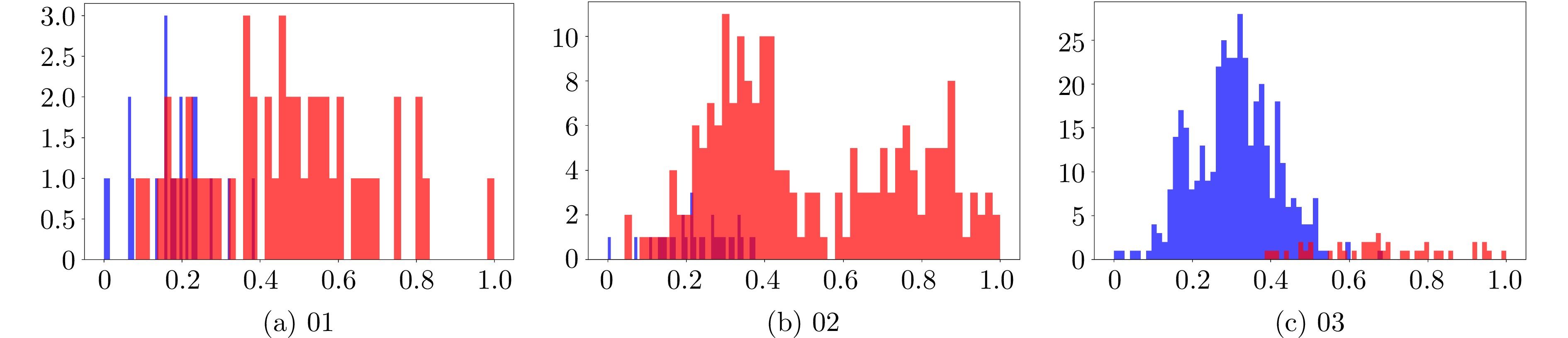
$ \lambda=0.25 $ $ \lambda=0.5 $ $ \lambda=1 $ $ \lambda=2 $ $ \lambda=4 $ 共享提示 0.0795 0.0447 0.0404 0.0177 0.0159 文本解耦 0.1308 0.1543 0.1289 0.1273 0.1273
下载: 导出CSV
表 6 原型对齐模块消融实验结果
Table 6 Ablation study results of prototype alignment module
原型对齐 医学领域数据集 工业领域数据集 CVC-Clin. ISIC VisA BTAD $ \times $ (84.8, 69.0) (90.5, 80.7) (95.2, 90.6) (93.6, 79.3) $ \checkmark $ (84.9, 69.4) (90.5, 82.2) (95.3, 90.9) (94.5, 80.0) 注: 表中的数据是像素级指标(AUROC, AUPRO).
下载: 导出CSV
表 7 不同原型数量的实验结果
Table 7 Experimental results for different numbers of prototypes
$ C=16 $ $ C=12 $ $ C=8 $ $ C=4 $ CVC-ClinicDB (84.9, 69.4) (84.9, 69.4) (85.0, 69.2) (84.9, 69.4) ISIC (90.5, 82.2) (90.6, 82.0) (90.5, 82.2) (90.5, 82.2) VisA (95.3, 90.9) (95.4, 90.9) (95.3, 90.9) (95.3, 90.9) BTAD (94.3, 79.8) (94.3, 80.0) (94.2, 80.1) (94.5, 80.0)
下载: 导出CSV
表 8 不同构造策略下的实验结果
Table 8 Experimental results under different construction Strategies
随机初始化 特定描述 通用描述 CVC-ClinicDB (84.1, 66.7) (85.0, 69.3) (84.9, 69.4) ISIC (80.9, 80.8) (90.5, 81.9) (90.5, 82.2) VisA (94.3, 90.2) (95.3, 90.7) (95.3, 90.9) BTAD (93.4, 79.6) (94.0, 79.5) (94.5, 80.0)
下载: 导出CSV
表 9 异常特征增强策略消融实验结果
Table 9 Ablation study results of anomaly feature enhancement strategy
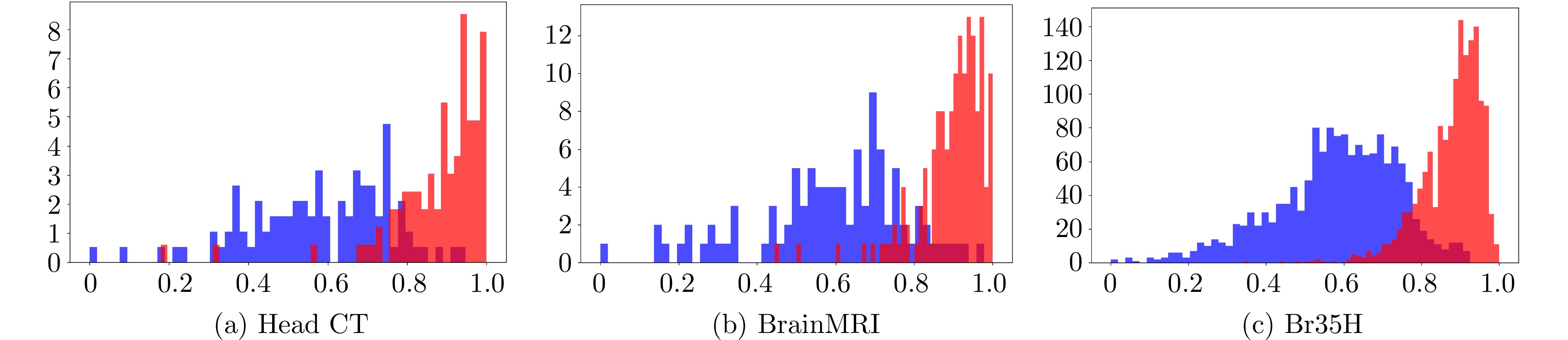
特征增强 医学领域数据集 工业领域数据集 Head_CT BrainMRI VisA BTAD $ \times $ (92.3, 92.1) (92.7, 93.5) (82.5, 84.5) (91.6, 94.1) $ \checkmark $ (94.1, 94.7) (95.0, 95.9) (83.7, 85.8) (91.8, 94.8) 注: 表中的数据是图像级指标(AUROC, AP).
下载: 导出CSV
表 10 不同融合权重下的实验结果
Table 10 Experimental results under different fusion weights
融合权重 0.1 0.3 0.5 0.7 0.9 Head_CT (94.1, 94.7) (93.3, 93.7) (92.1, 93.4) (90.4, 92.3) (83.8, 87.8) BrainMRI (95.0, 95.9) (94.9, 95.5) (94.9, 95.4) (94.3, 95.0) (92.9, 94.3) VisA (83.7, 85.8) (83.8, 85.9) (83.9, 85.8) (79.7, 82.8) (76.4, 80.3) BTAD (91.8, 94.8) (92.4, 95.1) (92.7, 95.4) (92.4, 94.7) (93.7, 93.8) 平均值 (91.1, 92.8) (91.1, 92.6) (90.9, 92.5) (89.2, 91.2) (86.7, 89.1)
下载: 导出CSV
表 11 不同方法的参数量与推理速度对比
Table 11 Comparison of parameters and inference speed of different methods
方法 可训练的参数量 推理速度(ms) Winclip 0 253 AnomalyCLIP 5525500 339 本文方法 629376 268
下载: 导出CSV
-
[1] 毛国君, 吴星臻, 邢树礼. 基于多尺度流模型的视觉异常检测研究. 自动化学报, 2024, 50(3): 640−648Mao Guo-Jun, Wu Xing-Zhen, Xing Shu-Li. Research on visual anomaly detection based on multi-scale normalizing flow. Acta Automatica Sinica, 2024, 50(3): 640−648 [2] 吕承侃, 沈飞, 张正涛, 张峰. 图像异常检测研究现状综述. 自动化学报, 2022, 48(6): 1402−1428 doi: 10.16383/j.aas.c200956Lv Cheng-Kan, Shen Fei, Zhang Zheng-Tao, Zhang Feng. Review of image anomaly detection. Acta Automatica Sinica, 2022, 48(6): 1402−1428 doi: 10.16383/j.aas.c200956 [3] 伍麟, 郝鸿宇, 宋友. 基于计算机视觉的工业金属表面缺陷检测综述. 自动化学报, 2024, 50(7): 1261−1283 doi: 10.16383/j.aas.c230039Wu Lin, Hao Hong-Yu, Song You. A review of metal surface defect detection based on computer vision. Acta Automatica Sinica, 2024, 50(7): 1261−1283 doi: 10.16383/j.aas.c230039 [4] 罗东亮, 蔡雨萱, 杨子豪, 章哲彦, 周瑜, 白翔. 工业缺陷检测深度学习方法综述. 中国科学: 信息科学, 2022, 52(6): 1002−1039Luo Dong-Liang, Cai Yu-Xuan, Yang Zi-Hao, Zhang Zhe-Yan, Zhou Yu, Bai Xiang. Survey on industrial defect detection with deep learning. Scientia Sinica Informations, 2022, 52(6): 1002−1039 [5] Bergmann P, Fauser M, Sattlegger D, Steger C. MVTec AD——A comprehensive real-world dataset for unsupervised anomaly detection. In: Proceedings of the IEEE/CVF Conference on Computer Vision and Pattern Recognition. Long Beach, USA: IEEE, 2019. 9592–9600 [6] Zhao M Y, Guo Q. Reconstruction-based distillation for anomaly detection. Computers & Graphics, 2025, 116: Article No. 104328 doi: 10.1016/j.cag.2025.104328 [7] Xiang T, Zhang Y, Lu Y, Yuille A L, Zhang C, Cai W, et al. Squid: Deep feature in-painting for unsupervised anomaly detection. In: Proceedings of the IEEE/CVF Conference on Computer Vision and Pattern Recognition. Vancouver, Canada: IEEE, 2023. 23890–23901 [8] Hansen S, Gautam S, Jenssen R, Kampffmeyer M. Anomaly detection-inspired few-shot medical image segmentation through self-supervision with supervoxels. Medical Image Analysis, 2022, 78: Article No. 102385 doi: 10.1016/j.media.2022.102385 [9] Qiao Q, Qu M, Wang W, Jiang B, Guo Q. Effective global context integration for lightweight 3D medical image segmentation. IEEE Transactions on Circuits and Systems for Video Technology, 2025, 35: 4661−4674 doi: 10.1109/TCSVT.2024.3511926 [10] Sultani W, Chen C, Shah M. Real-world anomaly detection in surveillance videos. In: Proceedings of the IEEE/CVF Conference on Computer Vision and Pattern Recognition. Salt Lake City, USA: IEEE, 2018. 6479–6488 [11] Prieto-Martín M, Comino-Trinidad M, Casas D. Detecting anomalies in dense 3D crowds. Computers and Graphics, 2025, 130: Art-icle No. 104267 doi: 10.1016/j.cag.2025.104267 [12] Radford A, Kim J W, Hallacy C, Ramesh A, Goh G, Agarwal S, et al. Learning transferable visual models from natural language supervision. In: Proceedings of the International Conference on Machine Learning. Virtual Event: PMLR, 2021. 8748–8763 [13] Jeong J, Zou Y, Kim T, Zhang D, Ravichandran A, Dabeer O. WinCLIP: Zero-/few-shot anomaly classification and segmentation. In: Proceedings of the IEEE/CVF Conference on Computer Vision and Pattern Recognition. Vancouver, Canada: IEEE, 2023. 19606–19616 [14] Chen X, Han Y, Zhang J. April-GAN: A zero-/few-shot anomaly classification and segmentation method for CVPR 2023 VAND workshop challenge tracks 1&2: 1st place on zero-shot AD and 4th place on few-shot AD. arXiv preprint arXiv: 2305.17382, 2023 [15] Huang C, Jiang A, Feng J, Zhang Y, Wang X, Wang Y. Adapting visual-language models for generalizable anomaly detection in medical images. In: Proceedings of the IEEE/CVF Conference on Computer Vision and Pattern Recognition. Seattle, USA: IEEE, 2024. 11375–11385 [16] Zhou Q H, Pang G S, Tian Y, He S B, Chen J M. AnomalyCLIP: Object-agnostic prompt learning for zero-shot anomaly detection. In: Proceedings of the International Conference on Learning Representations. Vienna, Austria: ICLR, 2024. 49705–49737 [17] Guo J, Lu S, Zhang W H, Chen F, Li H Q, Liao H E. Dinomaly: The less is more philosophy in multi-class unsupervised anomaly detection. In: Proceedings of the IEEE/CVF Conference on Computer Vision and Pattern Recognition. Nashville, USA: IEEE, 2025. 20405–20415 [18] Beizaee F, Lodygensky G A, Desrosiers C, Dolz J. Correcting deviations from normality: A reformulated diffusion model for multi-class unsupervised anomaly detection. In: Proceedings of the IEEE/CVF Conference on Computer Vision and Pattern Recognition. Nashville, USA: IEEE, 2025. 19088–19097 [19] Yang H, Chen Y, Song K, Yin Z. Multiscale feature-clustering-based fully convolutional autoencoder for fast accurate visual inspection of texture surface defects. IEEE Transactions on Automation Science and Engineering, 2019, 16(3): 1450−1467 doi: 10.1109/TASE.2018.2886031 [20] Avola D, Cascio M, Cinque L, Fagioli A, Foresti G L, Marini M R, et al. Real-time deep learning method for automated detection and localization of structural defects in manufactured products. Computers & Industrial Engineering, 2022, 172: Article No. 108512 doi: 10.1016/j.cie.2022.108512 [21] Roth K, Pemula L, Zepeda J, Schölkopf B, Brox T, Gehler P. Towards total recall in industrial anomaly detection. In: Proceedings of the IEEE/CVF Conference on Computer Vision and Pattern Recognition. New Orleans, USA: IEEE, 2022. 14318–14328 [22] Liu Z, Zhou Y, Xu Y, Wang Z. Simplenet: A simple network for image anomaly detection and localization. In: Proceedings of the IEEE/CVF Conference on Computer Vision and Pattern Recognition. Vancouver, Canada: IEEE, 2023. 20402–20411 [23] Bergmann P, Fauser M, Sattlegger D, Steger C. Uninformed students: Student-teacher anomaly detection with discriminative latent embeddings. In: Proceedings of the IEEE/CVF Conference on Computer Vision and Pattern Recognition. Virtual Event: IEEE, 2020. 4183–4192 [24] Chen Z N, Luo X S, Wang W Q, Zhao Z C, Su F, Men A D. Filter or compensate: Towards invariant representation from distribution shift for anomaly detection. In: Proceedings of the AAAI Conference on Artificial Intelligence. Philadelphia, USA: AAAI, 2025. 2420–2428 [25] Deng H, Li X. Anomaly detection via reverse distillation from one-class embedding. In: Proceedings of the IEEE/CVF Conference on Computer Vision and Pattern Recognition. New Orleans, USA: IEEE, 2022. 9737–9746 [26] Wang X L, Wang X Y, Bai H H, Lim E G, Xiao J M. CNC: Cross-modal normality constraint for unsupervised multi-class anomaly detection. In: Proceedings of the AAAI Conference on Artificial Intelligence. Philadelphia, USA: AAAI, 2025. 7943–7951 [27] Li B, Weinberger K Q, Belongie S, Koltun V, Ranftl R. Language-driven semantic segmentation. In: Proceedings of the International Conference on Learning Representations. Virtual Event: ICLR, 2022. [28] Gu X, Lin T Y, Kuo W, Cui Y. Open-vocabulary object detection via vision and language knowledge distillation. In: Proceedings of the International Conference on Learning Representations. Virtual Event: ICLR, 2021. [29] Vinker Y, Pajouheshgar E, Bo J Y, Bachmann R C, Bermano A H, Cohen-Or D, et al. CLIPasso: Semantically-aware object sketching. ACM Transactions on Graphics, 2022, 41(4): 1−11 [30] Zhou K, Yang J, Loy C C, Liu Z. Learning to prompt for vision-language models. International Journal of Computer Vision, 2022, 130(9): 2337−2348 doi: 10.1007/s11263-022-01653-1 [31] Rao Y, Zhao W, Chen G, Tang Y, Zhu Z, Huang G, et al. DenseCLIP: Language-guided dense prediction with context-aware prompting. In: Proceedings of the IEEE/CVF Conference on Computer Vision and Pattern Recognition. New Orleans, USA: IEEE, 2022. 18082–18091 [32] Zhou K, Yang J, Loy C C, Liu Z. Conditional prompt learning for vision-language models. In: Proceedings of the IEEE/CVF Conference on Computer Vision and Pattern Recognition. New Orleans, USA: IEEE, 2022. 16816–16825 [33] Cao Y, Zhang J, Frittoli L, Cheng Y, Shen W, Boracchi G. AdaCLIP: Adapting CLIP with hybrid learnable prompts for zero-shot anomaly detection. In: Proceedings of the European Conference on Computer Vision. Milan, Italy: Springer, 2024. 55–72 [34] Gu Z, Zhu B, Zhu G, Chen Y, Li H, Tang M, et al. FiLo: Zero-shot anomaly detection by fine-grained description and high-quality localization. In: Proceedings of the 32nd ACM International Conference on Multimedia. Melbourne, Australia: ACM, 2024. 2041–2049 [35] Dosovitskiy A, Beyer L, Kolesnikov A, Weissenborn D, Zhai X, Unterthiner T, et al. An image is worth 16x16 words: Transformers for image recognition at scale. In: Proceedings of the International Conference on Learning Representations. Virtual Event: ICLR, 2021. [36] Lin T Y, Goyal P, Girshick R, He K, Dollár P. Focal loss for dense object detection. In: Proceedings of the IEEE International Conference on Computer Vision. Venice, Italy: IEEE, 2017. 2980–2988 [37] Milletari F, Navab N, Ahmadi S A. V-net: Fully convolutional neural networks for volumetric medical image segmentation. In: Proceedings of the 2016 Fourth International Conference on 3D Vision. Stanford, USA: IEEE, 2016. 565–571 [38] Zou Y, Jeong J, Pemula L, Zhang D, Dabeer O. Spot-the-difference self-supervised pre-training for anomaly detection and segmentation. In: Proceedings of the European Conference on Computer Vision. Tel Aviv, Israel: Springer, 2022. 392–408 [39] Jezek S, Jonak M, Burget R, Dvorak P, Skotak M. Deep learning-based defect detection of metal parts: Evaluating current methods in complex conditions. In: Proceedings of the 2021 13th International Congress on Ultra Modern Telecommunications and Control Systems and Workshops. Brno, Czech Republic: IEEE, 2021. 66–71 [40] Mishra P, Verk R, Fornasier D, Piciarelli C, Foresti G L. VT-ADL: A vision transformer network for image anomaly detection and localization. In: Proceedings of the 2021 IEEE 30th International Symposium on Industrial Electronics. Kyoto, Japan: IEEE, 2021. 1–6 [41] Wieler M, Hahn T. Weakly supervised learning for industrial optical inspection. In: DAGM Symposium. Germany: Springer, 2007. 11 [42] Aota T, Tong L T T, Okatani T. Zero-shot versus many-shot: Unsupervised texture anomaly detection. In: Proceedings of the IEEE/CVF Winter Conference on Applications of Computer Vision. Waikoloa, USA: IEEE, 2023. 5564–5572 [43] Gutman D, Codella N C F, Celebi E, Helba B, Marchetti M, Mishra N, et al. Skin lesion analysis toward melanoma detection: A challenge at the International Symposium on Biomedical Imaging (ISBI) 2016, hosted by the International Skin Imaging Collaboration (ISIC). arXiv preprint arXiv: 1605.01397, 2016. [44] Bernal J, Sánchez F J, Fernández-Esparrach G, Gil D, Rodríguez C, Vilariño F. WM-DOVA maps for accurate polyp highlighting in colonoscopy: Validation vs. saliency maps from physicians. Computerized Medical Imaging and Graphics, 2015, 43: 99−111 doi: 10.1016/j.compmedimag.2015.02.007 [45] Tajbakhsh N, Gurudu S R, Liang J M. Automated polyp detection in colonoscopy videos using shape and context information. IEEE Transactions on Medical Imaging, 2015, 35(2): 630−644 doi: 10.1109/tmi.2015.2487997 [46] Kitamura F C. Head CT - Hemorrhage [Online], available: https://www.kaggle.com/dsv/152137, September 6, 2025. [47] Kanade P B, Gumaste P P. Brain tumor detection using MRI images. Brain, 2015, 3(2): 146−150 [48] Hamada A. Br35H: : Brain Tumor Detection 2020. IEEE Datasport, March 10, 2025, doi: 10.21227/tbkk-q937 -

 下载:
下载:

计量
- 文章访问数: 388
- HTML全文浏览量: 158
- 被引次数: 0
