


Bearing Fault Diagnosis Based on Dual-domain Anti-noise Coding and Gated Recurrent Transformer
-
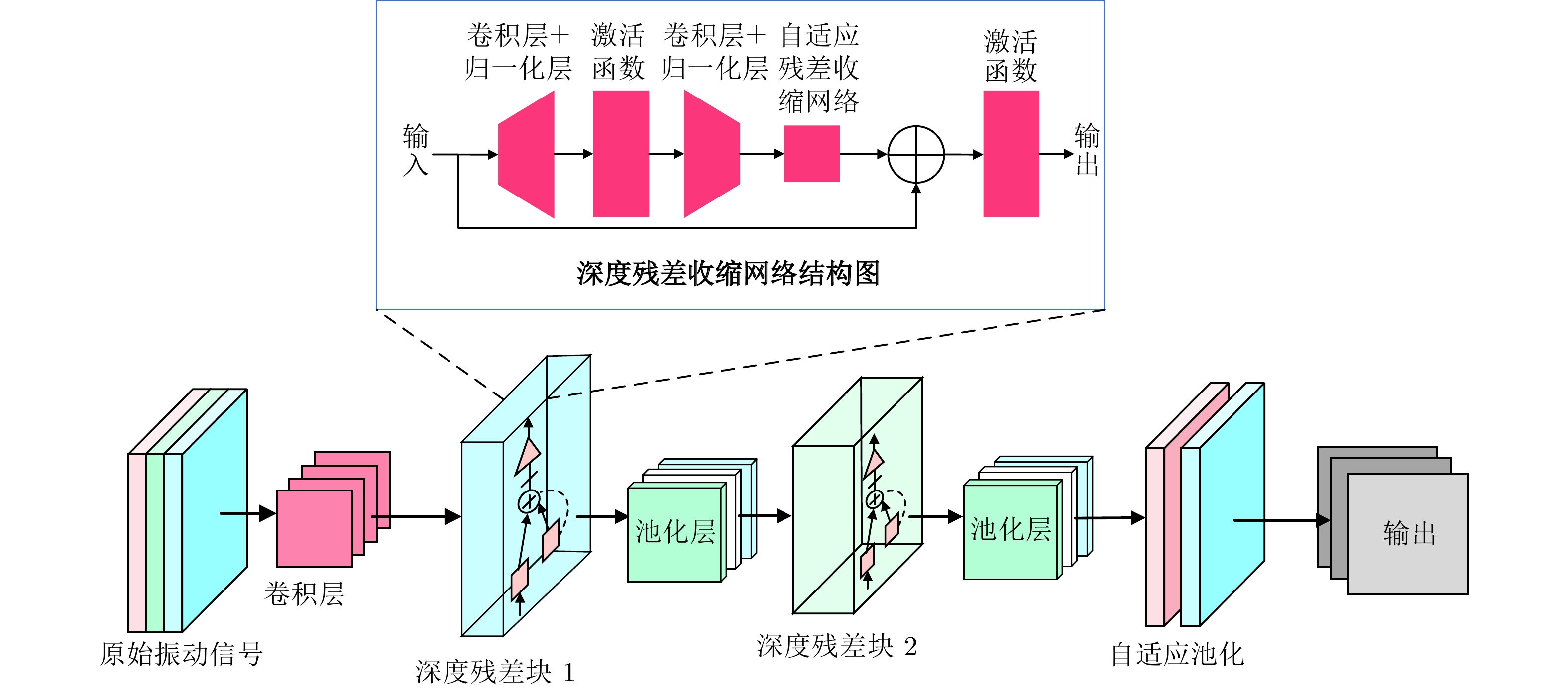
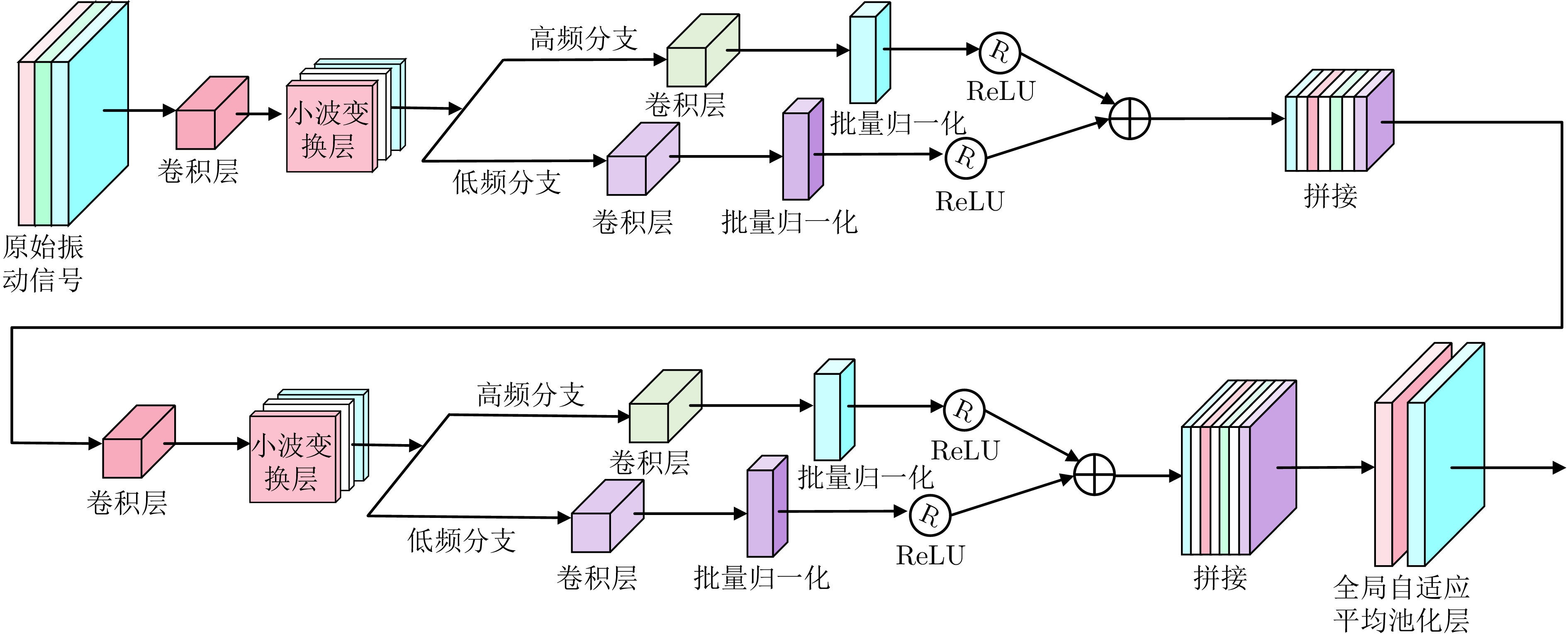
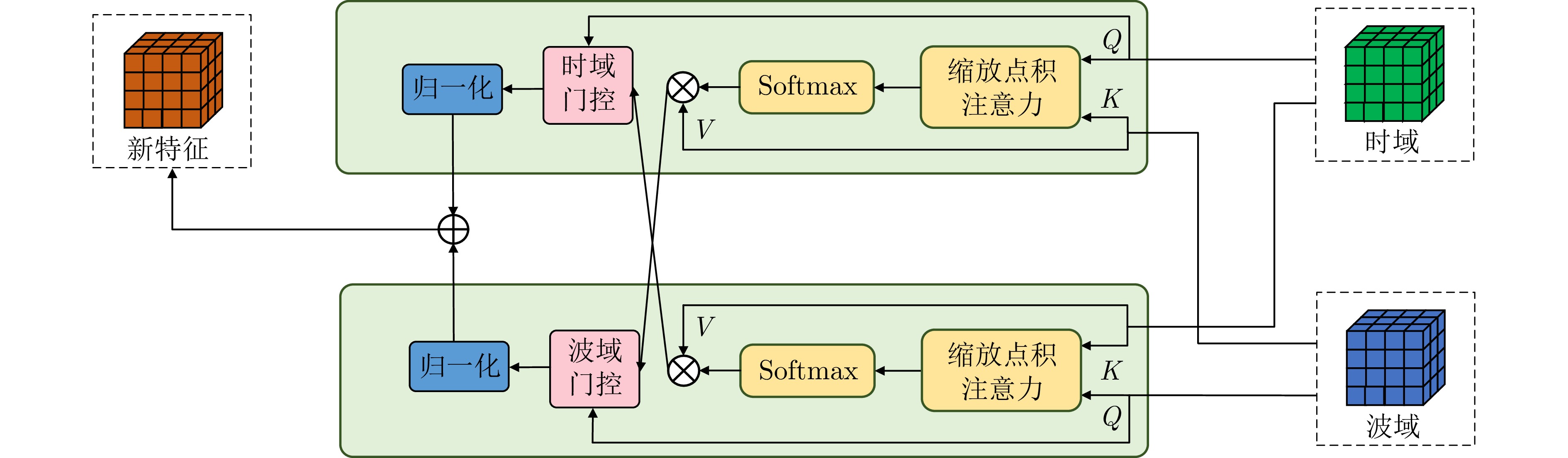
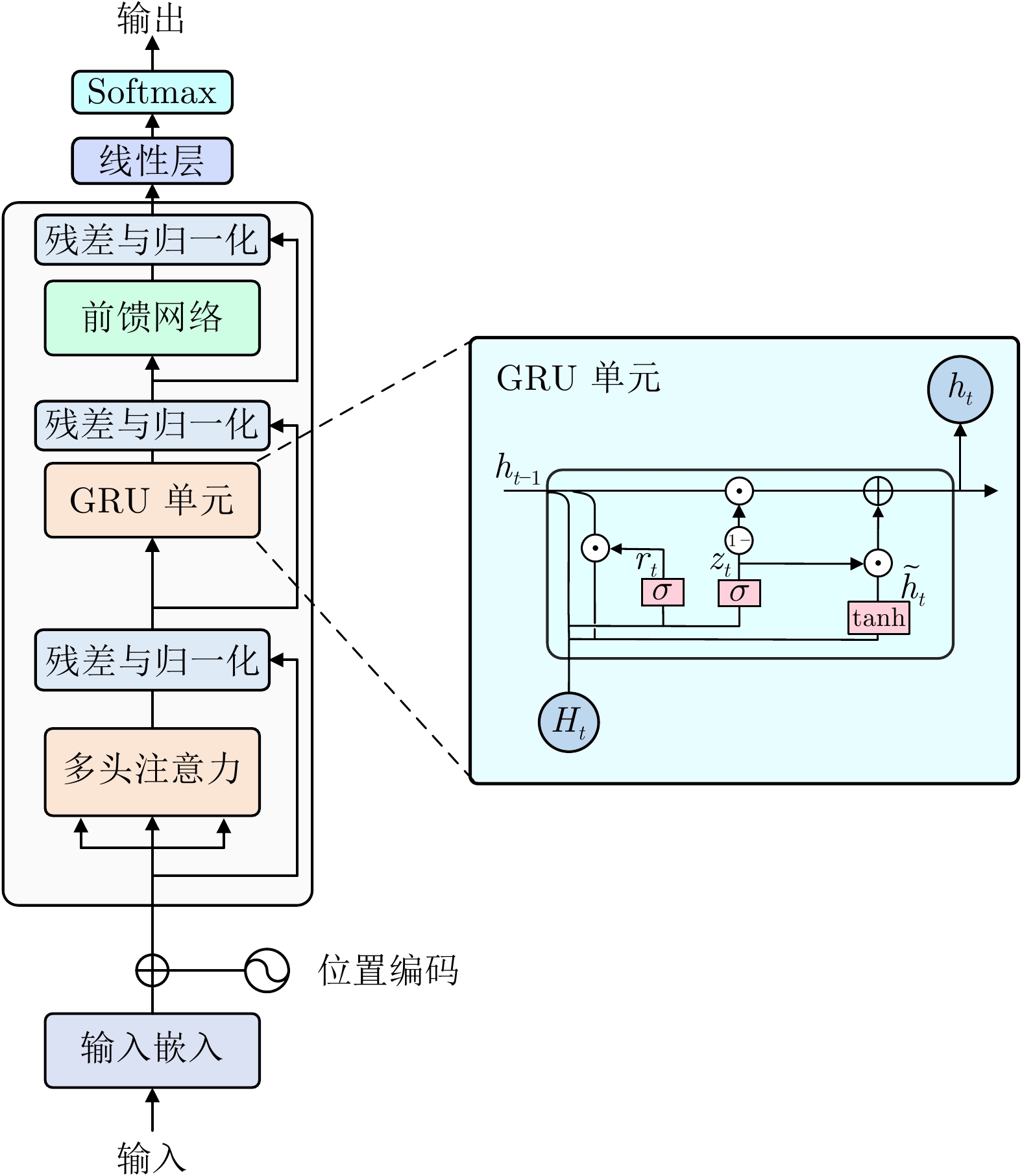
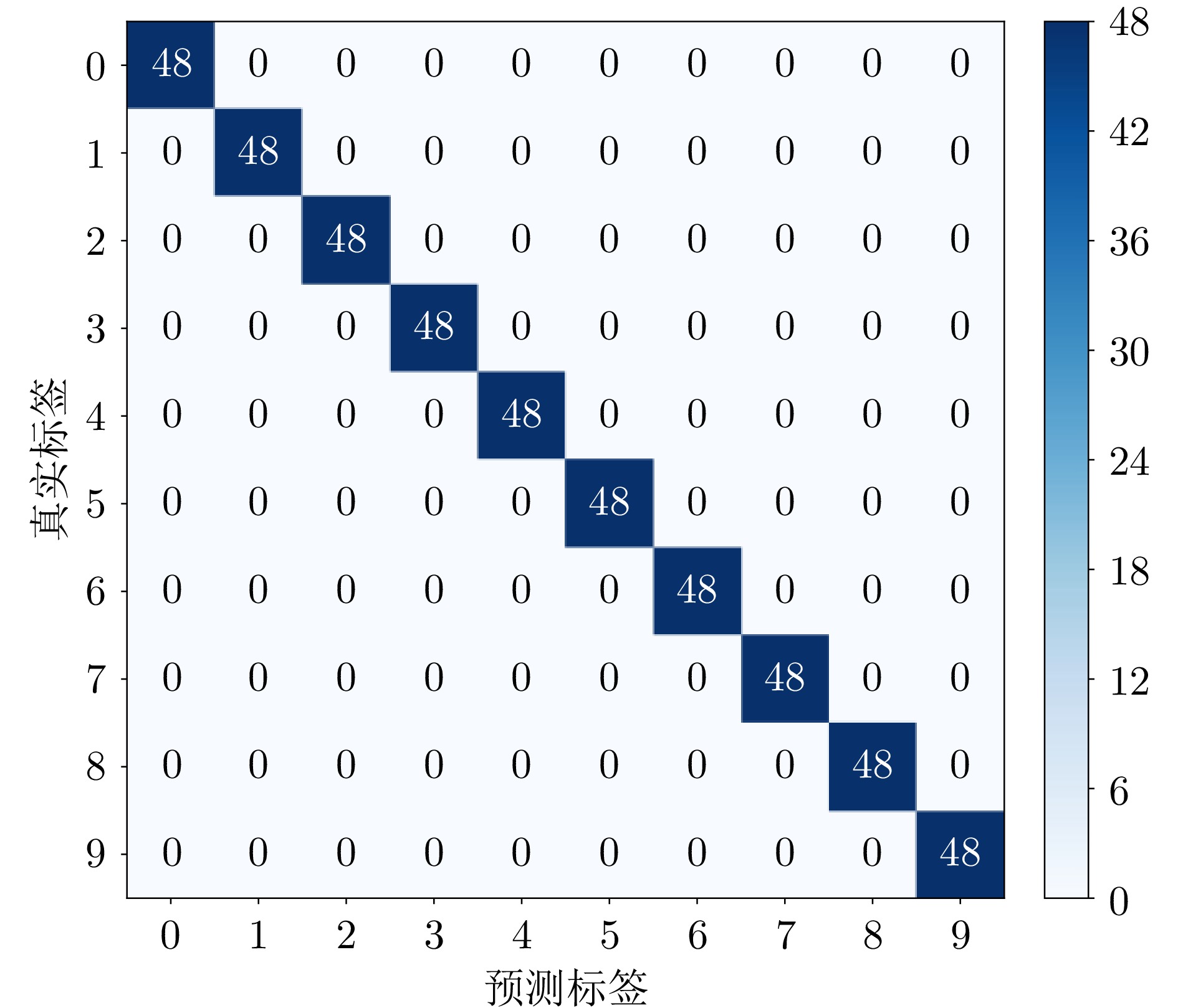
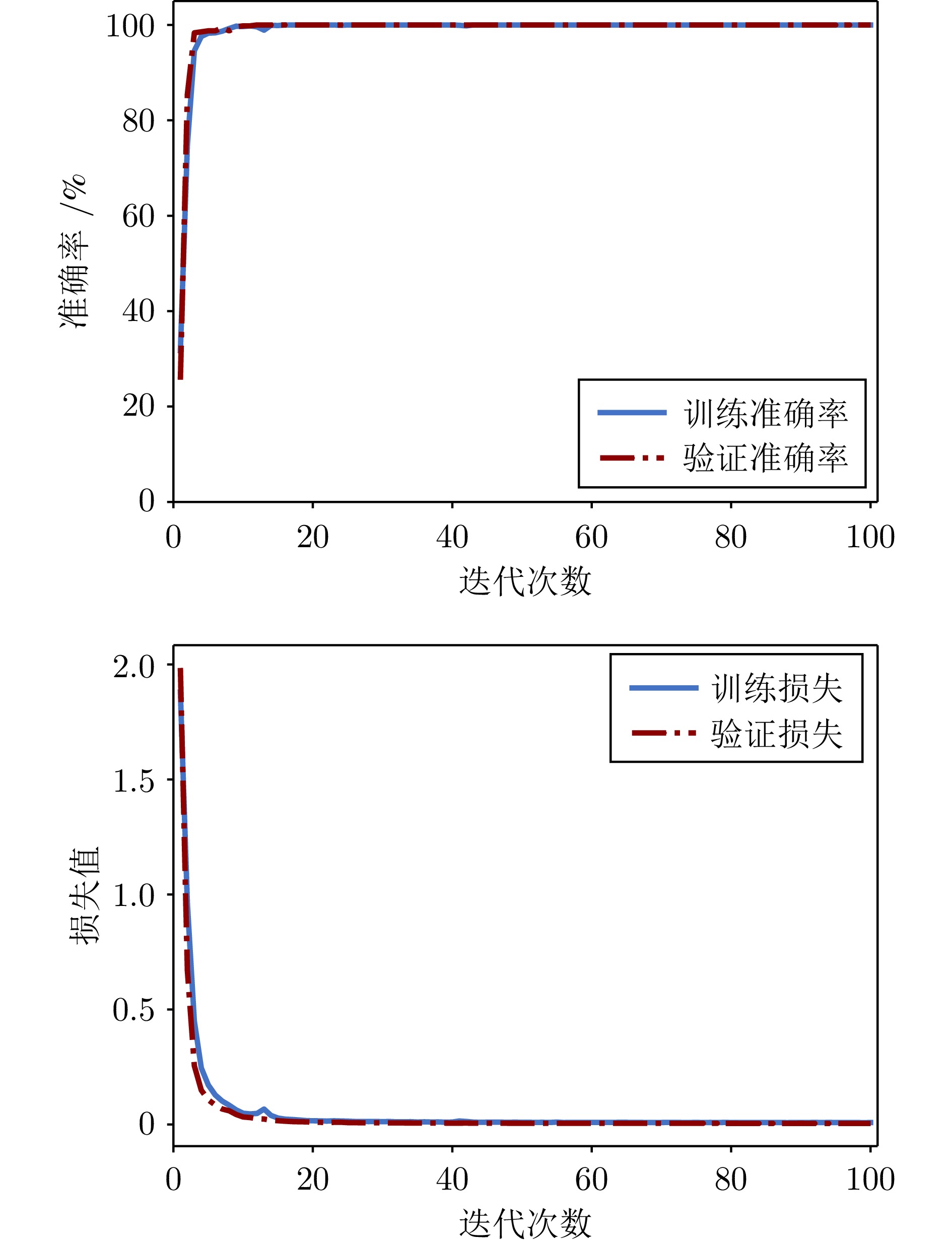
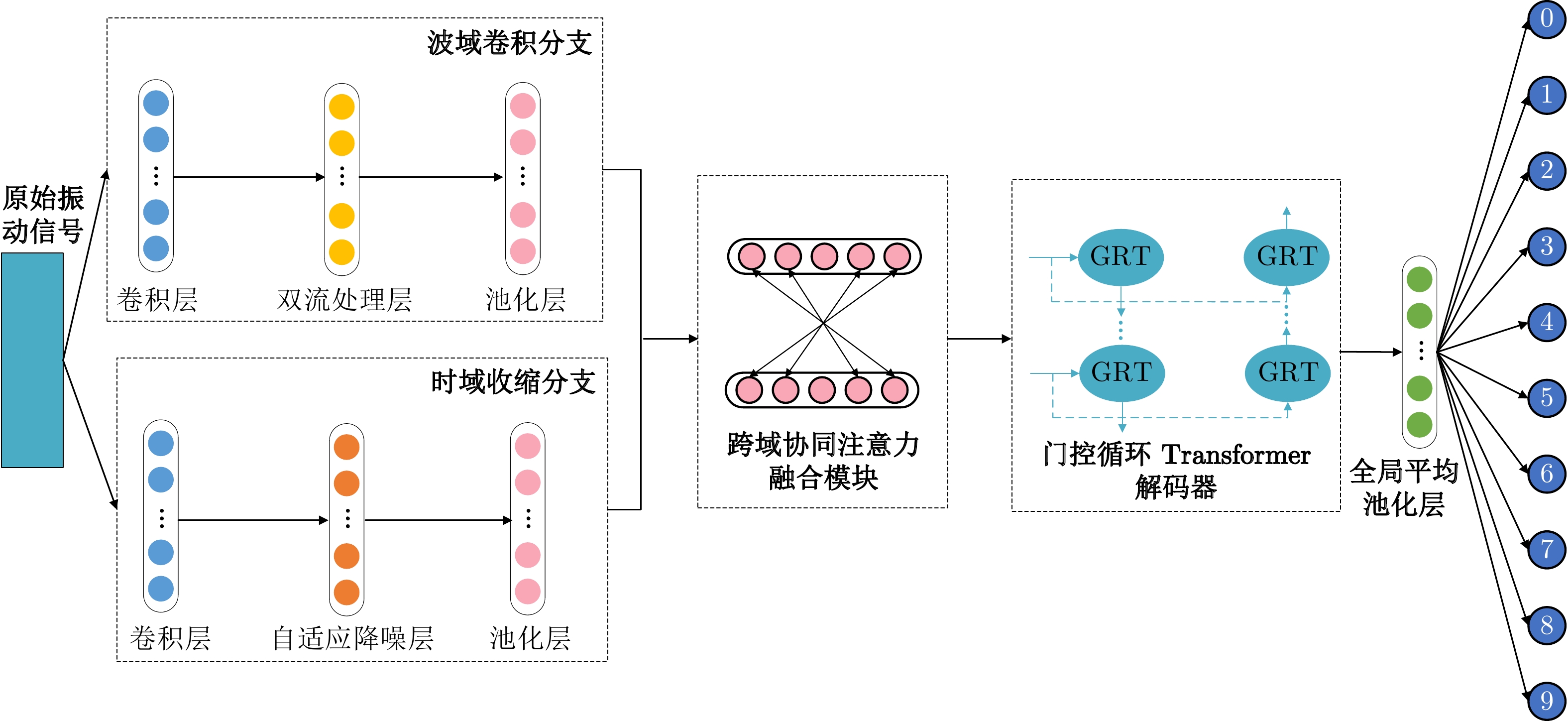
摘要: 针对强噪声非平稳环境下滚动轴承故障信号关键特征易被淹没而导致诊断性能下降的难题, 提出一种双域抗噪编码与协同注意力混合解码模型. 首先, 该模型构建一个双域抗噪编码器, 其时域残差收缩分支可自适应学习阈值以抑制干扰, 同时波域可微分小波卷积分支用以捕获多尺度频率结构, 二者共同实现鲁棒的多域特征表示; 其次, 模型设计双域协同注意力模块, 通过双向交互与门控调节实现时域、波域特征的动态协同与自适应融合, 进而提升高噪声下的特征融合能力; 最后, 开发门控循环Transformer解码器组件, 将Transformer自注意力机制与GRU循环门控机制深度融合, 在统一的特征空间内同步实现全局建模与局部时序依赖提取的高效平衡. 基于凯斯西储大学与帕德博恩大学轴承数据集的实验表明, 该模型在标准工况下准确率达到100%, 且在强噪声下仍保持高准确率, 充分体现了其优越的抗噪性与鲁棒性.
-
关键词:
- 故障诊断 /
- 双域特征提取 /
- 协同注意力机制 /
- 门控循环Transformer
Abstract: To address the challenge where key features of rolling bearing fault signals are easily masked in strong noise and non-stationary environments, leading to degraded diagnostic performance, this paper proposes a dual-domain anti-noise encoder with co-attention hybrid decoder. First, the model constructs a dual-domain anti-noise encoder: Its time-domain residual shrinkage branch adaptively learns thresholds to suppress interference, while the wavelet-domain differentiable wavelet convolution branch captures multi-scale frequency structures, jointly achieving a robust multi-domain feature representation. Second, a dual-domain co-attention module is designed to realize dynamic coordination and adaptive fusion of time-domain and wavelet-domain features via bidirectional interaction and gated regulation, enhancing feature fusion capability under high noise. Finally, a gated recurrent Transformer decoder component is developed, deeply integrating the Transformer's self-attention mechanism with the GRU's recurrent gated mechanism. This achieves an efficient balance between global modeling and local temporal dependency extraction within a unified feature space. Experiments on the Case Western Reserve University and Paderborn University bearing dataset demonstrate that the proposed model achieves 100% accuracy under standard conditions and maintains high accuracy even under strong noise, validating its superior anti-noise performance and robustness. -
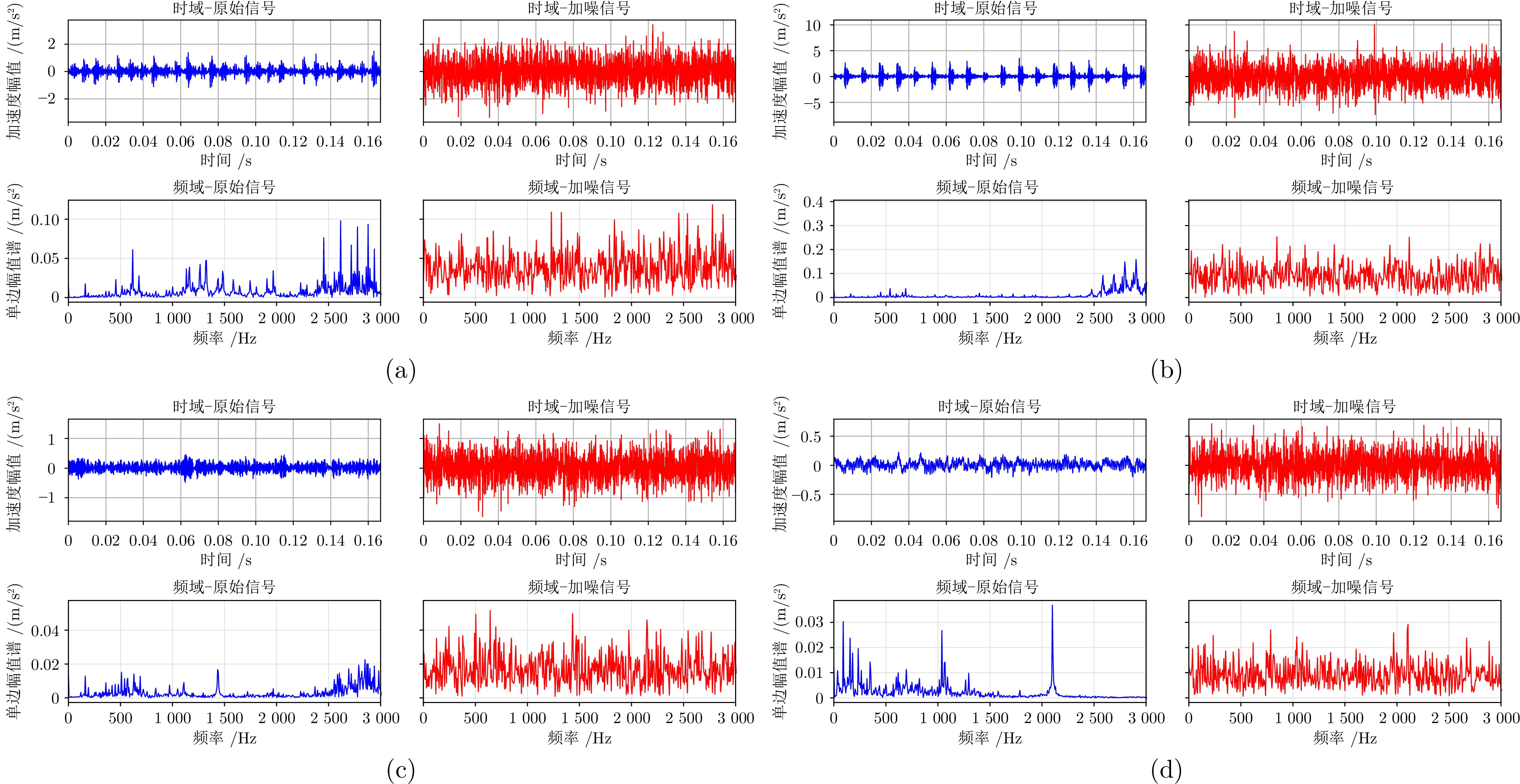
图 6 原始信号与 −10 dB信噪比下的信号对比((a) 内圈故障; (b) 外圈故障; (c) 滚动体故障; (d) 正常状态)
Fig. 6 Signal comparison (original vs −10 dB SNR) ((a) Inner race fault; (b) Outer race fault; (c) Rolling element fault; (d) Normal state)
表 1 模型参数
Table 1 Model parameters
层名称 滤波
器数卷积核大
小/步长单元数 输入
大小输出
大小激活
函数卷积层1 50 20/2 — 1× 2000 50×991 tanh 小波变换1 — — — 50×991 100×495 — 卷积层2 30 10/2 — 100×495 30×243 tanh 小波变换2 — — — 30×243 60×121 — 卷积层3 50 6/1 — 60×121 50×116 tanh 自适应池化1 — — — 50×116 1×128 — 残差收缩块1 64 7/2 — 1× 2000 64× 1000 ReLU 残差收缩块2 128 7/2 — 64× 1000 128×500 ReLU 残差收缩块3 128 7/1 — 128×500 128×500 ReLU 自适应池化2 — — — 128×500 1×128 — 协同注意力 — — 4 2×1×128 1×128 — 门控循环
Transformer 1— — 4 1×128 1×128 — 门控循环
Transformer 2— — 4 1×128 1×128 — 全局池化 — — 10 1×128 1×128 — Dropout层 — — — 1×128 1×128 — 全连接层 — — — 1×128 1×10 Softmax  下载: 导出CSV
表 2 故障样本信息
Table 2 Fault sample information
轴承状态 标签 故障尺寸(mm) 样本数(个) 数据长度 负载区 滚动体故障 0 0.178 240 2000 — 滚动体故障 1 0.356 240 2000 — 滚动体故障 2 0.533 240 2000 — 内圈故障 3 0.178 240 2000 — 内圈故障 4 0.356 240 2000 — 内圈故障 5 0.533 240 2000 — 正常状态 6 — 240 2000 — 外圈故障 7 0.178 240 2000 6:00 外圈故障 8 0.356 240 2000 6:00 外圈故障 9 0.533 240 2000 6:00
下载: 导出CSV
表 3 特征评价指标
Table 3 Feature evaluation metrics
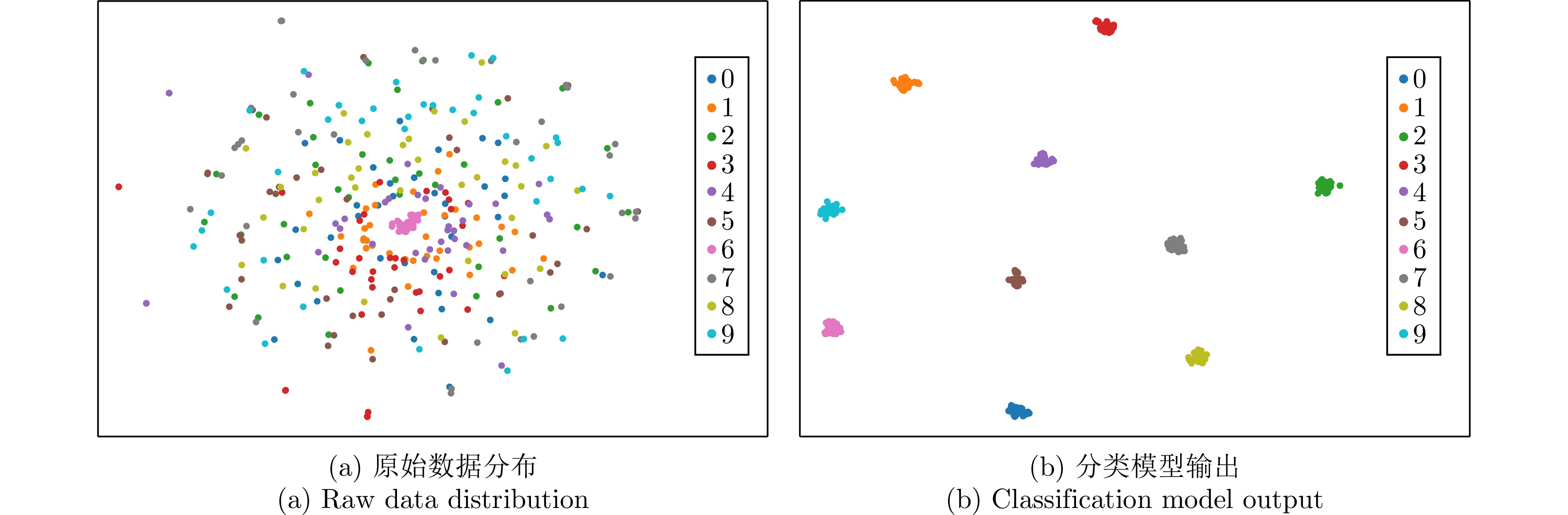
特征类型 类间距离 类内距离 分离度 轮廓系数 原始特征 8.62 35.84 0.24 −0.19 学习特征 16.73 1.60 10.48 0.86
下载: 导出CSV
表 4 消融实验准确率对比(%)
Table 4 Accuracy comparison in ablation experiment (%)
模型 准确率 A0 61.37 A1-T 80.43 A1-W 78.92 A2 88.19 A3-T2W 92.24 A3-W2T 91.62 A3-BI 93.60 A4 95.51 A5 96.80
下载: 导出CSV
表 5 对比实验结果
Table 5 Comparative experiment results
模型 参数量 训练时间(s) −10 dB −8 dB −4 dB 0 dB 4 dB 1D-CNN 117722 43.51 61.37% 70.23% 78.72% 82.11% 83.80% ResNet 111402 52.07 72.48% 80.66% 91.35% 93.92% 94.85% Dconformer 706371 213.00 79.94% 87.21% 97.88% 98.84% 99.06% MSD_CNN 303837 90.82 86.37% 90.32% 98.44% 99.03% 99.17% DDAE-CAHD Net 1104890 234.93 96.80% 98.75% 99.58% 100.00% 100.00%
下载: 导出CSV
表 6 故障样本信息
Table 6 Fault sample information
类别 状态描述 故障位置 损伤组合 损伤程度 样本数 数据长度 1 健康 — — — 500 2000 2 疲劳: 点蚀 外圈 单一损伤 1 500 2000 3 塑性变形: 压痕 外圈 单一损伤 1 500 2000 4 塑性变形: 压痕 内圈/外圈 多重损伤 2 500 2000 5 疲劳: 点蚀 内圈 单一损伤 3 500 2000 6 疲劳: 点蚀 内圈 单一损伤 1 500 2000
下载: 导出CSV
表 7 对比实验结果 (%)
Table 7 Comparative experiment results (%)
模型 −10 dB −8 dB −4 dB 0 dB 4 dB 1D-CNN 61.29 69.80 82.27 89.75 89.99 ResNet 69.58 76.92 87.09 92.01 92.19 Dconformer 77.37 80.81 88.93 94.79 95.00 MSD_CNN 81.77 85.25 92.71 97.59 97.64 DDAE-CAHD Net 93.96 95.06 98.57 99.31 99.40
下载: 导出CSV
-
[1] Xin G, Zhong Q T, Jin Y Q, Li Z, Chen Y F, Li Y F, et al. Autonomous bearing fault diagnosis based on fault-induced envelope spectrum and moving peaks-over-threshold approach. IEEE Transactions on Instrumentation and Measurement, 2024, 73: Article No. 3516712 doi: 10.1109/tim.2024.3379074 [2] Soomro A A, Muhammad M B, Mokhtar A A, Saad M H M, Lashari N, Hussain M, et al. Insights into modern machine learning approaches for bearing fault classification: A systematic literature review. Results in Engineering, 2024, 23: Article No. 102700 doi: 10.1016/j.rineng.2024.102700 [3] Ma Z P, Fu L, Dun G, Tan D P, Xu F, Zhang L B. A robust domain distribution alignment discriminative network driven by physical samples for rotor-bearing fault diagnosis. Knowledge-Based Systems, 2024, 300: Article No. 112216 doi: 10.1016/j.knosys.2024.112216 [4] Sanjrani A N, Huang H Z, Shah S A, Hussain F, Punhal M, Narejo A, et al. High-speed train wheel set bearing analysis: Practical approach to maintenance between end of life and useful life extension assessment. Results in Engineering, 2025, 25: Article No. 103696 doi: 10.1016/j.rineng.2024.103696 [5] Ayman A, Onsy A, Attallah O, Brooks H, Morsi I. Feature learning for bearing prognostics: A comprehensive review of machine/deep learning methods, challenges, and opportunities. Measurement, 2025, 245: Article No. 116589 doi: 10.1016/j.measurement.2024.116589 [6] Li X, Ma Z Q, Yuan Z H, Mu T M, Du G X, Liang Y, et al. A review on convolutional neural network in rolling bearing fault diagnosis. Measurement Science and Technology, 2024, 35(7): Article No. 072002 [7] Chen X H, Yang R, Xue Y H, Huang M J, Ferrero R, Wang Z D. Deep transfer learning for bearing fault diagnosis: A systematic review since 2016. IEEE Transactions on Instrumentation and Measurement, 2023, 72: Article No. 3508221 [8] 杨蕊, 李宏坤, 贺长波, 王奉涛. 利用最优小波尺度循环谱的滚动轴承早期故障特征提取. 机械工程学报, 2018, 54(17): 208−217 doi: 10.3901/JME.2018.17.208Yang Rui, Li Hong-Kun, He Chang-Bo, Wang Feng-Tao. Rolling element bearing incipient fault feature extraction based on optimal wavelet scales cyclic spectrum. Journal of Mechanical Engineering, 2018, 54(17): 208−217 doi: 10.3901/JME.2018.17.208 [9] Wang F T, Deng G, Liu C X, Su W S, Han Q K, Li H K. A deep feature extraction method for bearing fault diagnosis based on empirical mode decomposition and kernel function. Advances in Mechanical Engineering, 2018, 10(9): 1−12 doi: 10.1177/1687814018798251 [10] Zhang W B, Zhou J Z. Fault diagnosis for rolling element bearings based on feature space reconstruction and multiscale permutation entropy. Entropy, 2019, 21(5): Article No. 519 doi: 10.3390/e21050519 [11] Cheng Y, Wang Z W, Chen B Y, Zhang W H, Huang G H. An improved complementary ensemble empirical mode decomposition with adaptive noise and its application to rolling element bearing fault diagnosis. ISA Transactions, 2019, 91: 218−234 doi: 10.1016/j.isatra.2019.01.038 [12] 刘建昌, 权贺, 于霞, 何侃, 李镇华. 基于参数优化VMD和样本熵的滚动轴承故障诊断. 自动化学报, 2022, 48(3): 808−819 doi: 10.16383/j.aas.c190345Liu Jian-Chang, Quan He, Yu Xia, He Kan, Li Zhen-Hua. Rolling bearing fault diagnosis based on parameter optimization VMD and sample entropy. Acta Automatica Sinica, 2022, 48(3): 808−819 doi: 10.16383/j.aas.c190345 [13] Dong S J, He K, Tang B P. The fault diagnosis method of rolling bearing under variable working conditions based on deep transfer learning. Journal of the Brazilian Society of Mechanical Sciences and Engineering, 2020, 42(11): Article No. 585 doi: 10.1007/s40430-020-02661-3 [14] Zhang X L, Han P, Xu L, Zhang F, Wang Y P, Gao L. Research on bearing fault diagnosis of wind turbine gearbox based on 1DCNN-PSO-SVM. IEEE Access, 2020, 8: 192248−192258 doi: 10.1109/ACCESS.2020.3032719 [15] 胡爱军, 张军华, 刘随贤, 许莎. 滚动轴承多工况故障的特征自动选择核极限学习机智能识别方法. 振动与冲击, 2020, 39(23): 182−189 doi: 10.13465/j.cnki.jvs.2020.23.027Hu Ai-Jun, Zhang Jun-Hua, Liu Sui-Xian, Xu Sha. Intelligent identification method using kernel extreme learning machine for rolling bearing multi-working condition multi-feature automatic selection. Journal of Vibration and Shock, 2020, 39(23): 182−189 doi: 10.13465/j.cnki.jvs.2020.23.027 [16] Jin T T, Cheng Q, Chen H, Wang S Y, Guo J Y, Chen C H. Fault diagnosis of rotating machines based on EEMD-MPE and GA-BP. The International Journal of Advanced Manufacturing Technology, 2023, 124(11): 3911−3922 doi: 10.1007/s00170-021-08159-z [17] He C, Wu T, Gu R W, Jin Z Y, Ma R J, Qu H Y. Rolling bearing fault diagnosis based on composite multiscale permutation entropy and reverse cognitive fruit fly optimization algorithm——Extreme learning machine. Measurement, 2021, 173: Article No. 108636 doi: 10.1016/j.measurement.2020.108636 [18] 王进花, 胡佳伟, 曹洁, 黄涛. 基于自适应变分模态分解和集成极限学习机的滚动轴承多故障诊断. 吉林大学学报(工学版), 2022, 52(2): 318−328 doi: 10.13229/j.cnki.jdxbgxb20200856Wang Jin-Hua, Hu Jia-Wei, Cao Jie, Huang Tao. Multi-fault diagnosis of rolling bearing based on adaptive variational modal decomposition and integrated extreme learning machine. Journal of Jilin University (Engineering and Technology Edition), 2022, 52(2): 318−328 doi: 10.13229/j.cnki.jdxbgxb20200856 [19] Wang H, Liu Z L, Peng D D, Qin Y. Understanding and learning discriminant features based on multiattention 1DCNN for wheelset bearing fault diagnosis. IEEE Transactions on Industrial Informatics, 2020, 16(9): 5735−5745 doi: 10.1109/TII.2019.2955540 [20] 邵海东, 李伟, 刘翊, 杨斌. 时变转速下基于双阈值注意力生成对抗网络和小样本的转子−轴承系统故障诊断. 机械工程学报, 2023, 59(12): 215−224 doi: 10.3901/JME.2023.12.215Shao Hai-Dong, Li Wei, Liu Yi, Yang Bin. Fault diagnosis of rotor-bearing system under time-varying speeds by using dual-threshold attention-embedded GAN and small samples. Journal of Mechanical Engineering, 2023, 59(12): 215−224 doi: 10.3901/JME.2023.12.215 [21] Rehman A U, Jiao W D, Jiang Y H, Wei J N, Sohaib M, Sun J F, et al. Deep learning in industrial machinery: A critical review of bearing fault classification methods. Applied Soft Computing, 2025, 171: Article No. 112785 doi: 10.1016/j.asoc.2025.112785 [22] Peng D D, Liu Z L, Wang H, Qin Y, Jia L M. A novel deeper one-dimensional CNN with residual learning for fault diagnosis of wheelset bearings in high-speed trains. IEEE Access, 2019, 7: 10278−10293 doi: 10.1109/ACCESS.2018.2888842 [23] Du W L, Hu P J, Wang H C, Gong X Y, Wang S Y. Fault diagnosis of rotating machinery based on 1D-2D joint convolution neural network. IEEE Transactions on Industrial Electronics, 2023, 70(5): 5277−5285 doi: 10.1109/TIE.2022.3181354 [24] Shao Z H, Li W Q, Xiang H, Yang S X, Weng Z Q. Fault diagnosis method and application based on multi-scale neural network and data enhancement for strong noise. Journal of Vibration Engineering & Technologies, 2024, 12(1): 295−308 doi: 10.1007/s42417-022-00844-x [25] Chang M, Yao D C, Yang J W. Intelligent fault diagnosis of rolling bearings using efficient and lightweight ResNet networks based on an attention mechanism. IEEE Sensors Journal, 2023, 23(9): 9136−9145 doi: 10.1109/JSEN.2023.3251654 [26] Yu X, Wang Y J, Liang Z T, Shao H D, Yu K, Yu W L. An adaptive domain adaptation method for rolling bearings'fault diagnosis fusing deep convolution and self-attention networks. IEEE Transactions on Instrumentation and Measurement, 2023, 72: Article No. 3509814 doi: 10.1109/tim.2023.3246494 [27] Lu Y X, Zhu D C, Zhao D W, Zhu D, Sun D, Gao Q W. A novel bearing fault diagnosis algorithm based on adaptive weighted multiview learning. IEEE Transactions on Instrumentation and Measurement, 2023, 72: Article No. 3521813 doi: 10.1109/tim.2023.3291000 [28] Zhang X H, Wang H, Wang C Z, Liu M, Xu G W. Time-segment-wise feature fusion Transformer for multi-modal fault diagnosis. Engineering Applications of Artificial Intelligence, 2024, 138: Article No. 109358 doi: 10.1016/j.engappai.2024.109358 [29] Sun D Y, Li Y B, Liu Z, Jia S X, Noman K. Physics-inspired multimodal machine learning for adaptive correlation fusion based rotating machinery fault diagnosis. Information Fusion, 2024, 108: Article No. 102394 doi: 10.1016/j.inffus.2024.102394 [30] You K S, Wang P Z, Huang P, Gu Y K. A sound-vibration physical-information fusion constraint-guided deep learning method for rolling bearing fault diagnosis. Reliability Engineering & System Safety, 2025, 253: Article No. 110556 doi: 10.1016/j.ress.2024.110556 [31] 陈是扦, 彭志科, 周鹏. 信号分解及其在机械故障诊断中的应用研究综述. 机械工程学报, 2020, 56(17): 91−107 doi: 10.3901/JME.2020.17.091Chen Shi-Qian, Peng Zhi-Ke, Zhou Peng. Review of signal decomposition theory and its applications in machine fault diagnosis. Journal of Mechanical Engineering, 2020, 56(17): 91−107 doi: 10.3901/JME.2020.17.091 [32] Hochreiter S, Schmidhuber J. Long short-term memory. Neural Computation, 1997, 9(8): 1735−1780 doi: 10.1162/neco.1997.9.8.1735 [33] Ding Y F, Jia M P, Miao Q H, Cao Y D. A novel time-frequency Transformer based on self-attention mechanism and its application in fault diagnosis of rolling bearings. Mechanical Systems and Signal Processing, 2022, 168: Article No. 108616 doi: 10.1016/j.ymssp.2021.108616 [34] Li S, Ji J C, Xu Y D, Feng K, Zhang K, Feng J C, et al. Dconformer: A denoising convolutional Transformer with joint learning strategy for intelligent diagnosis of bearing faults. Mechanical Systems and Signal Processing, 2024, 210: Article No. 111142 doi: 10.1016/j.ymssp.2024.111142 [35] Li X, Zhang W, Ding Q. A robust intelligent fault diagnosis method for rolling element bearings based on deep distance metric learning. Neurocomputing, 2018, 310: 77−95 doi: 10.1016/j.neucom.2018.05.021 -

 下载:
下载:

计量
- 文章访问数: 457
- HTML全文浏览量: 306
- PDF下载量: 150
- 被引次数: 0
