


-
摘要: 矿浆品位等关键指标难以通过传感器在线直接测量, 研究利用易获取的过程运行数据与泡沫图像间接估计矿浆品位的软测量方法具有重要工程意义. 针对传统泡沫图像表征方法表征能力不足且泛化性差的问题, 提出专家经验引导的泡沫图像表征学习方法. 该方法由分布特征隔离网络与经验引导表征学习两部分构成: 前者将泡沫图像映射至尺寸、颜色、纹理等具有明确工艺解释意义的视觉属性子空间, 以及用于补充隐性判别信息的数据特征子空间, 实现结构化的视觉属性表征; 后者通过构造模拟人工视觉判断过程的对比学习机制, 引导模型在各子空间中学习与专家经验一致的判别特征, 建立视觉属性子空间与专家知识之间的显式对应关系. 基于中国某铅锌浮选厂的工业数据实验结果表明, 所提方法在锌、铅、铁底流品位软测量中的决定系数较近期提出的软测量模型DEFIE分别提升3.97%、1.97%和2.40%.Abstract: Key indicators, such as slurry grade, are difficult to measure directly online using sensors. Soft sensing approaches that indirectly estimate slurry grade by integrating easily obtainable process operation data with froth images are of considerable engineering importance. To address the limitations of insufficient representation and poor generalization of conventional froth image representation methods, this paper proposes an expert experience informed froth image representation learning method. It consists of distributed feature isolation network and experience informed representation learning. The former projects froth images into visual attribute subspaces with explicit kinetic meanings, including size, color, and texture, together with a data feature subspace that complements implicit discriminative information, thereby achieving structured visual attribute representations; The latter constructs a contrastive learning mechanism that mimics the human visual judgment process, which guides the model to learn discriminative features in each subspace that are consistent with expert experience, thus establishing explicit correspondence between visual attribute subspaces and expert knowledge. Experimental results based on industrial data from a lead-zinc flotation plant in China demonstrate that, compared to the latest proposed soft sensing DEFIE model, the proposed method improves the coefficient of determination for Zn, Pb, and Fe in tailing grade soft sensing by 3.97%, 1.97%, and 2.40%, respectively.
-
Key words:
- froth flotation /
- soft sensing /
- representation learning /
- knowledge embedding
-
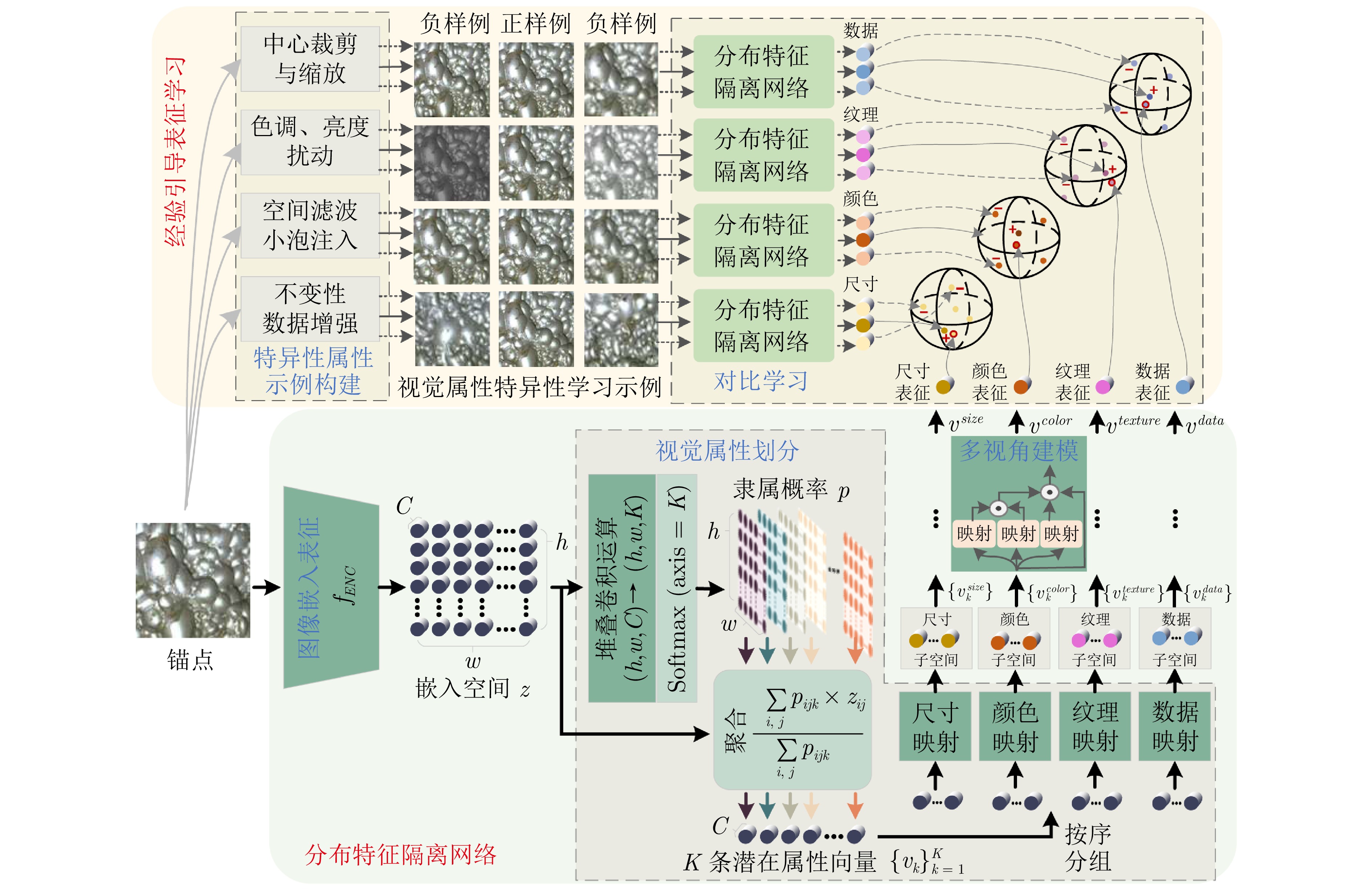
图 1 基于专家经验引导的泡沫图像表征学习框架, 包括分布特征隔离网络与经验引导表征学习机制
Fig. 1 Framework of EI-FIRL, which consists of a distributed feature isolation network and experience informed representation learning mechanism
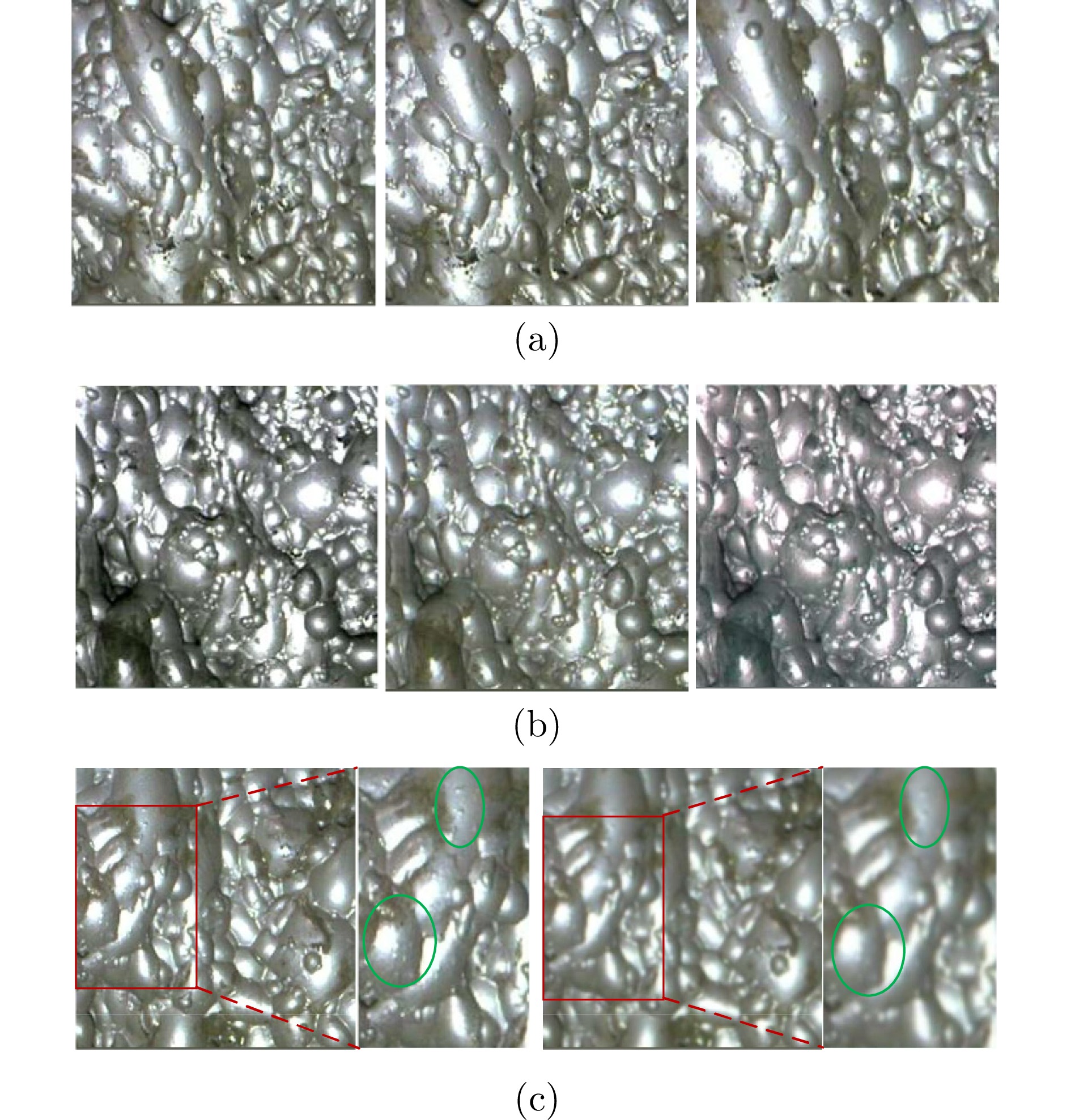
图 2 经验引导表征学习示例 ((a) ~ (c)分别对应尺寸、颜色、纹理特异性学习示例)
Fig. 2 Instances for experience informed representation learning ((a) ~ (c) are the specificity learning instances corresponding to size, color, and texture, respectively)
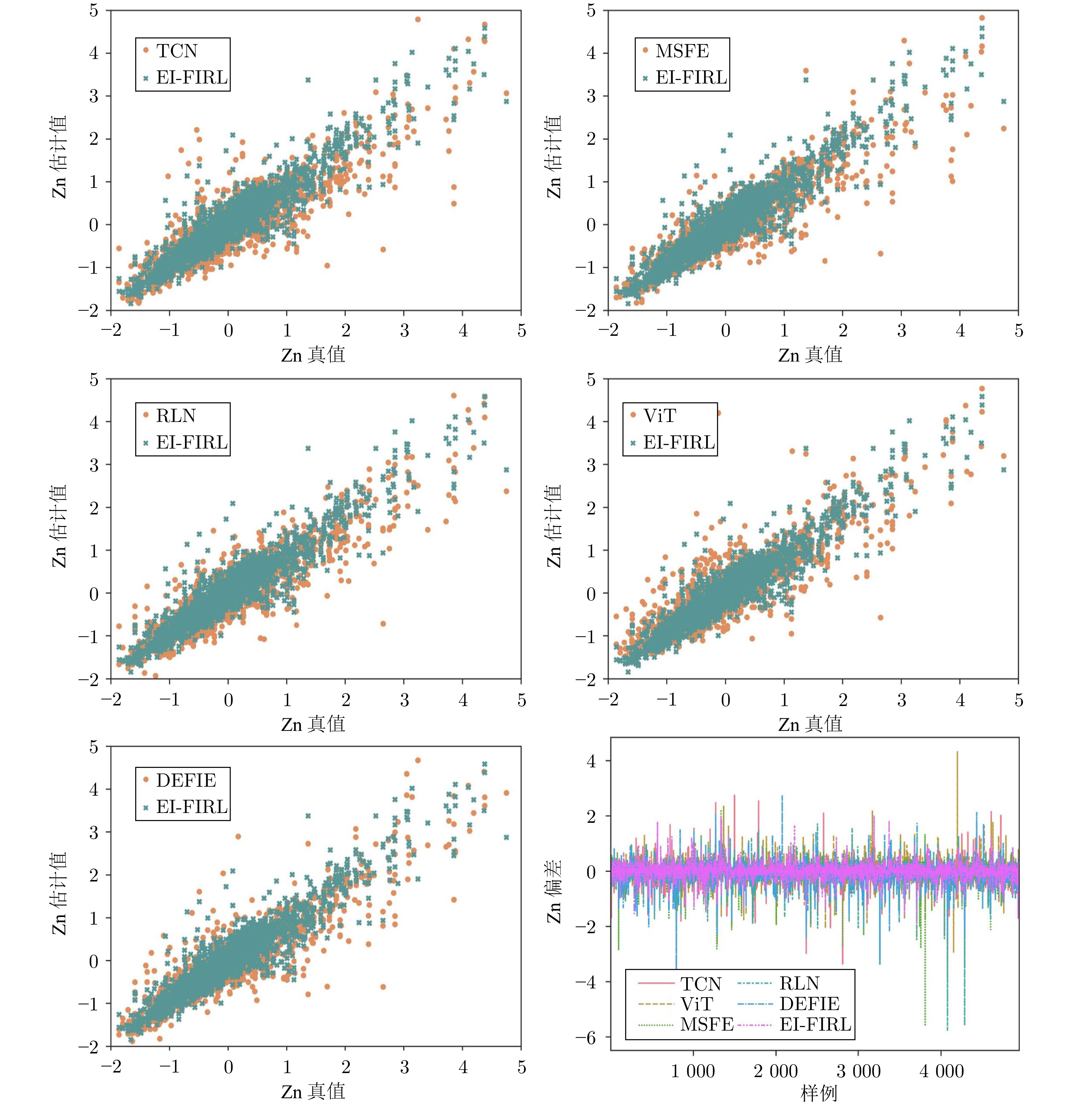
图 4 浮选监测模型对比实验结果散点图及残差图
Fig. 4 Comparison experiment results of flotation monitoring models shown by scatter plots and residual plots
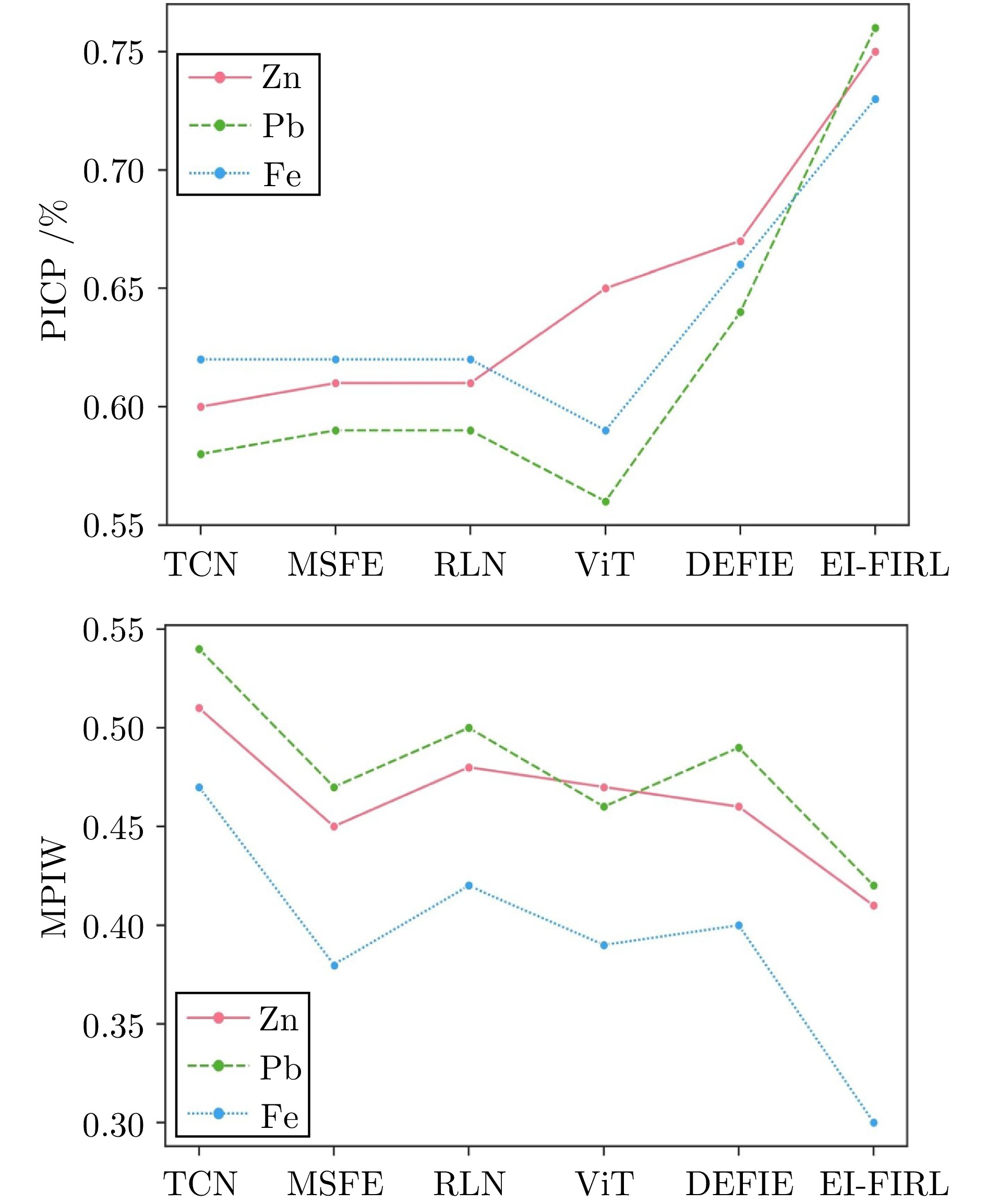
图 5 浮选监测模型预测不确定性度量
Fig. 5 Prediction uncertainty evaluation of flotation monitoring models
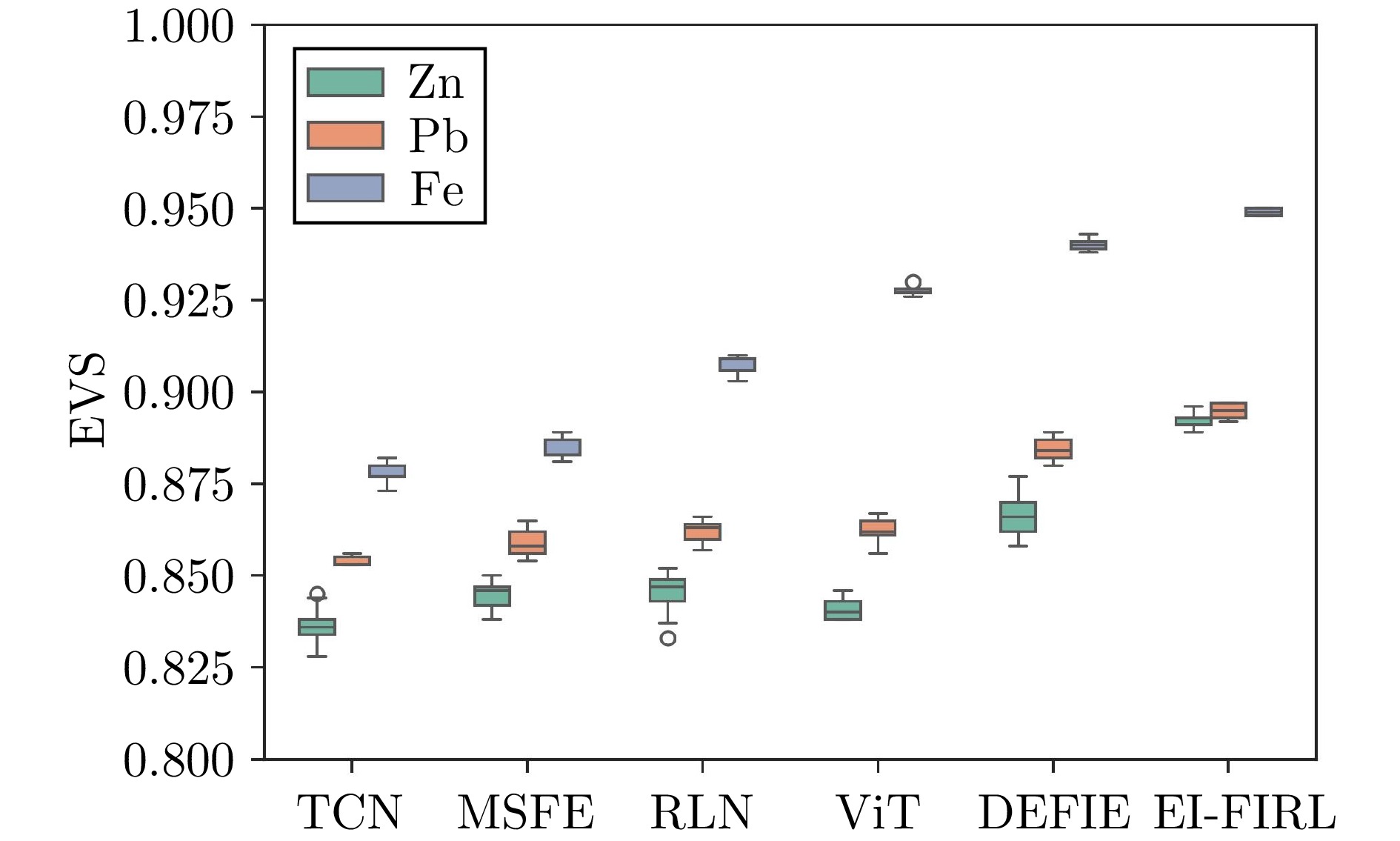
图 6 浮选监测模型可解释方差得分度量
Fig. 6 Explained variance score evaluation of flotation monitoring models
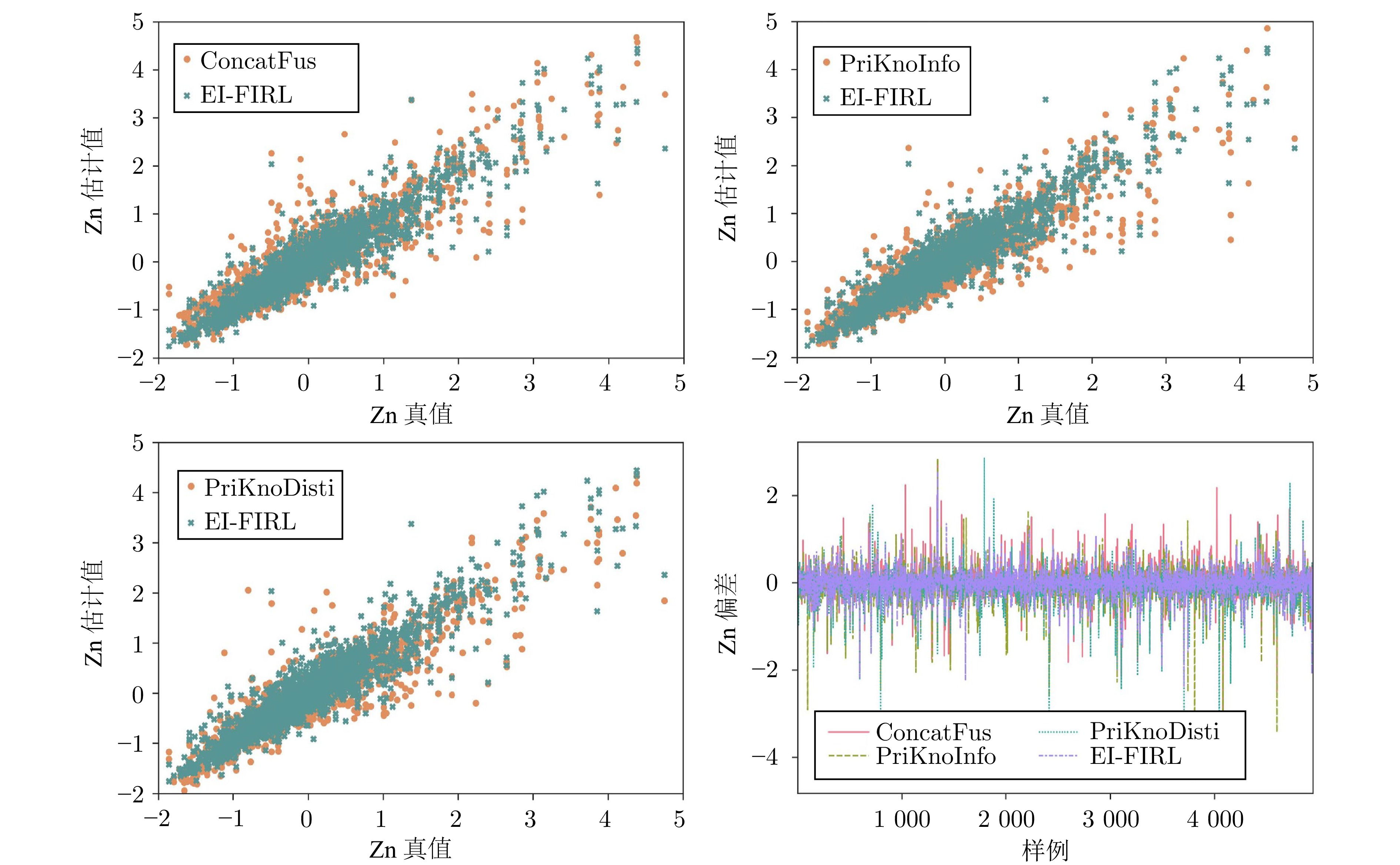
图 7 知识嵌入模型对比实验结果散点图及残差图
Fig. 7 Comparison experiment results of knowledge embedding models shown by scatter plots and residual plots
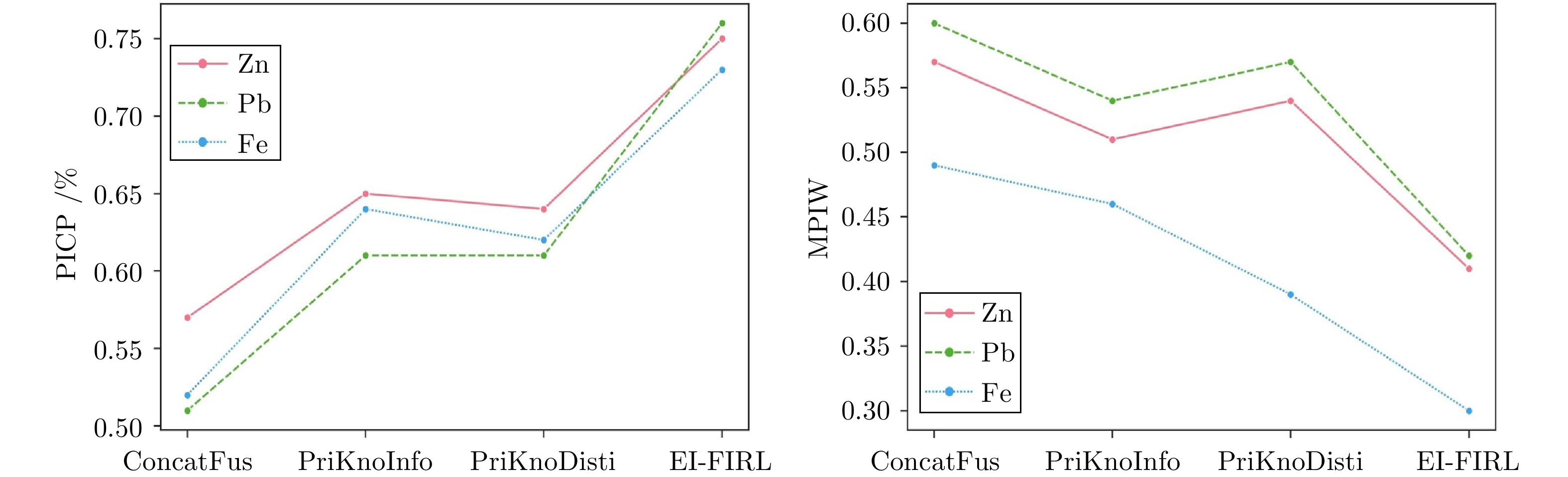
图 8 知识嵌入模型预测不确定性度量
Fig. 8 Prediction uncertainty evaluation of knowledge embedding models
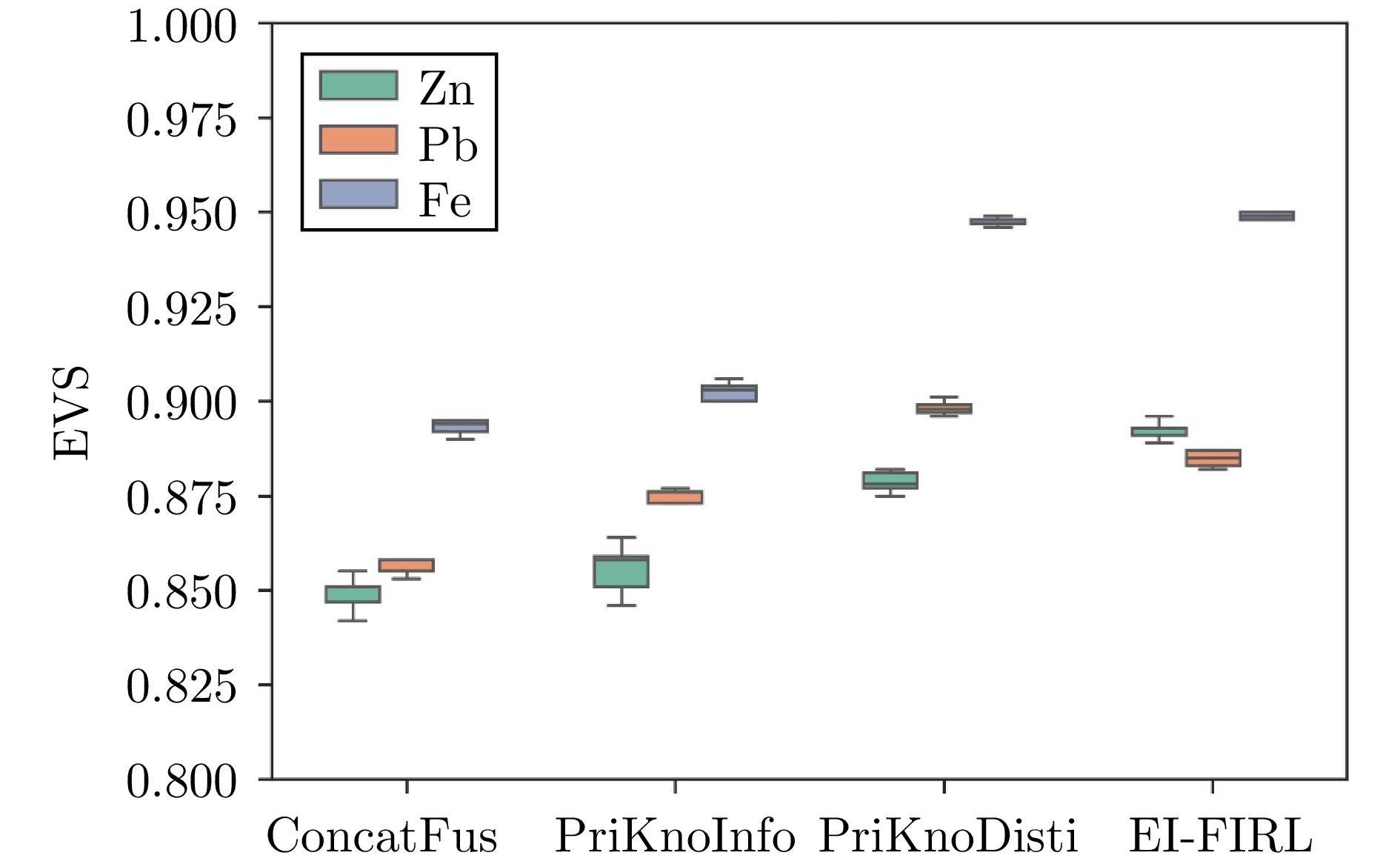
图 9 知识嵌入模型可解释方差得分度量
Fig. 9 Explained variance score evaluation of knowledge embedding models
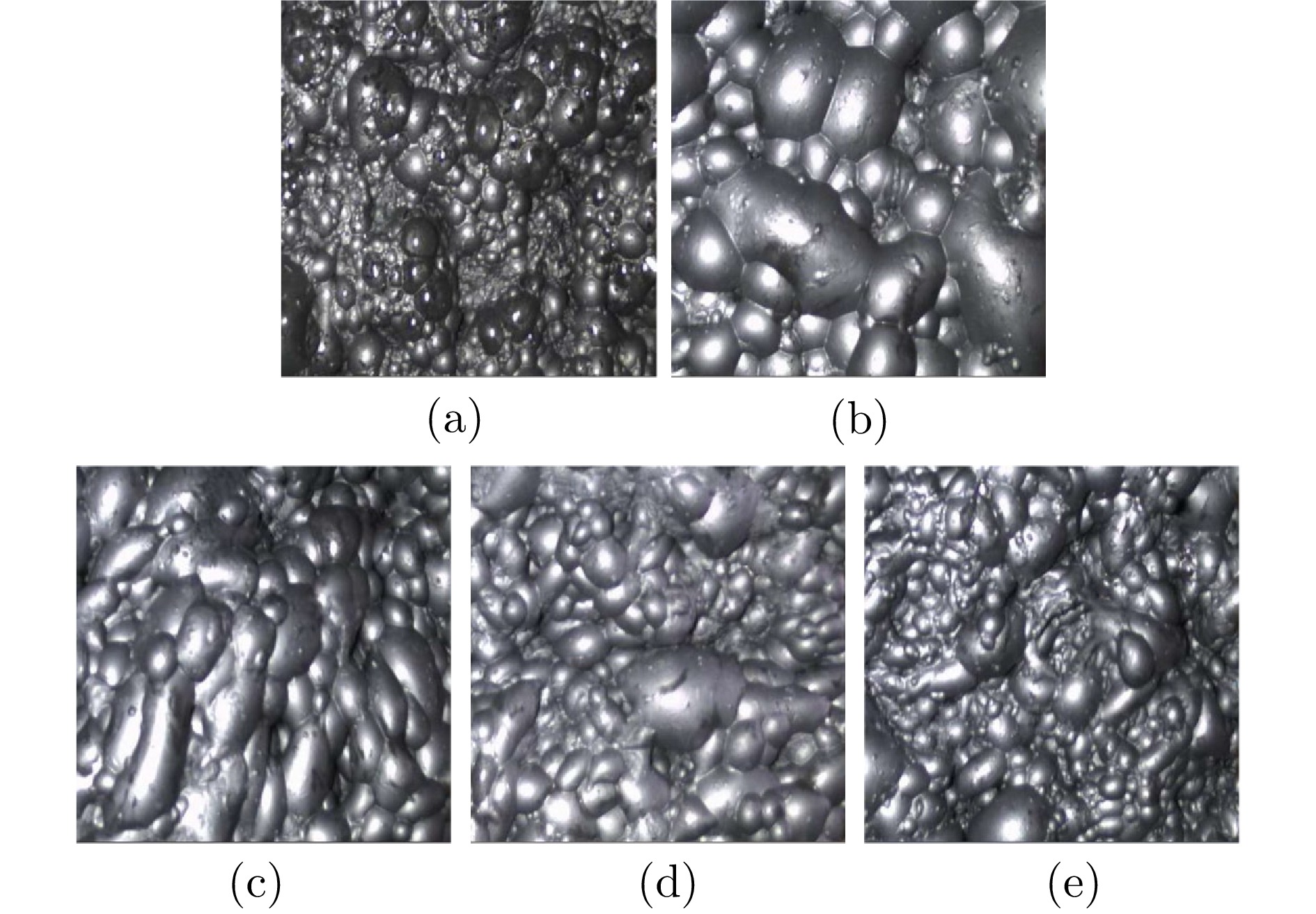
图 10 锑浮选五类典型工况图像示例 ((a) ~ (e)对应低品位、偏低品位、适中品位、偏高品位、高品位工况)
Fig. 10 Illustrative images of five typical working conditions in antimony flotation ((a) ~ (e) correspond to low-grade, slightly low-grade, medium-grade, slightly high-grade, and high-grade conditions, respectively)
表 1 浮选监测模型对比量化实验结果
Table 1 Quantitative comparison experiment results of flotation monitoring models
方法 成分 参数(M) MACs (G) 指标 MAE RMSE R2 TCN[37] Zn 20.2 3.5 0.2876 0.4394 0.8103 Pb 0.2856 0.3969 0.8401 Fe 0.2421 0.3706 0.8621 MSFE[22] Zn 24.5 5.8 0.2415 0.4117 0.8335 Pb 0.2704 0.3773 0.8555 Fe 0.2365 0.3586 0.8709 RLN[38] Zn 24.0 7.7 0.2535 0.4029 0.8366 Pb 0.2686 0.3702 0.8609 Fe 0.2149 0.3052 0.9065 ViT[39] Zn 86.8 17.6 0.2716 0.4233 0.8240 Pb 0.2756 0.3728 0.8589 Fe 0.1991 0.2694 0.9202 DEFIE[4] Zn 27.8 8.3 0.2349 0.3909 0.8499 Pb 0.2489 0.3552 0.8720 Fe 0.1842 0.2721 0.9257 EI-FIRL Zn 35.9 14.8 0.2156 0.3488 0.8836 Pb 0.2394 0.3338 0.8892 Fe 0.1658 0.2281 0.9479  下载: 导出CSV
表 2 知识嵌入模型对比量化实验结果
Table 2 Quantitative comparison experiment results of knowledge embedding models
方法 成分 指标 MAE RMSE R2 ConcatFus[24] Zn 0.2638 0.3934 0.8507 Pb 0.2893 0.3881 0.8477 Fe 0.2287 0.3281 0.8922 PriKnoInfo[30] Zn 0.2442 0.3830 0.8585 Pb 0.2595 0.3540 0.8733 Fe 0.2156 0.3146 0.9009 PriKnoDisti[13] Zn 0.2291 0.3772 0.8643 Pb 0.2406 0.3310 0.8826 Fe 0.2007 0.2530 0.9366 EI-FIRL Zn 0.2156 0.3488 0.8836 Pb 0.2394 0.3338 0.8892 Fe 0.1658 0.2281 0.9479
下载: 导出CSV
表 3 消融实验量化结果
Table 3 Quantitative results of ablation experiments
设置 成分 指标 MAE RMSE R2 变体1 Zn 0.2264 0.3679 0.8684 Pb 0.2445 0.3369 0.8839 Fe 0.1985 0.2640 0.9388 变体2 Zn 0.2499 0.3917 0.8520 Pb 0.2606 0.3666 0.8641 Fe 0.1988 0.2685 0.9334 变体3 Zn 0.2245 0.3600 0.8720 Pb 0.2412 0.3345 0.8842 Fe 0.1903 0.2477 0.9400 变体4 Zn 0.2234 0.3561 0.8776 Pb 0.2387 0.3336 0.8875 Fe 0.1731 0.2404 0.9421 变体5 Zn 0.2198 0.3627 0.8731 Pb 0.2445 0.3369 0.8839 Fe 0.1875 0.2473 0.9401 EI-FIRL Zn 0.2156 0.3488 0.8836 Pb 0.2394 0.3338 0.8892 Fe 0.1658 0.2281 0.9479
下载: 导出CSV
表 4 锑浮选工况分类验证实验(%)
Table 4 Experimental validation of antimony flotation working condition classification (%)
方法 指标 Accuracy Precision Recall F1 TCN[37] 81.26 81.73 81.50 81.31 MSFE[22] 83.07 83.46 83.41 83.09 RLN[38] 84.07 84.40 84.30 84.05 ViT[39] 82.18 82.53 82.38 82.15 DEFIE[4] 85.31 85.28 85.75 85.17 ConcatFus[24] 85.18 85.22 85.57 85.11 PriKnoInfo[30] 85.40 85.75 85.67 85.45 PriKnoDisti[13] 86.14 86.28 86.65 86.12 EI-FIRL 89.41 89.71 89.48 89.39
下载: 导出CSV
-
[1] Zhang J, Tang Z H, Xie Y F, Chen Q, Ai M X, Gui W H. Timed key-value memory network for flotation reagent control. Control Engineering Practice, 2020, 98: Article No. 104360 doi: 10.1016/j.conengprac.2020.104360 [2] Ai M X, Xie Y F, Tang Z H, Wu J D, Li P, Zhang J. Self-supervised dynamic and static feature representation learning method for flotation monitoring. Powder Technology, 2024, 442: Article No. 119866 doi: 10.1016/j.powtec.2024.119866 [3] 刘金平, 何捷舟, 唐朝晖, 谢永芳, 马天雨. 基于WCGAN的矿物浮选泡沫图像光照不变颜色提取. 自动化学报, 2022, 48(9): 2301−2315Liu Jin-Ping, He Jie-Zhou, Tang Zhao-Hui, Xie Yong-Fang, Ma Tian-Yu. WCGAN-based illumination-invariant color measuring of mineral flotation froth images. Acta Automatica Sinica, 2022, 48(9): 2301−2315 [4] Zhang J, Ai M X, Tang Z H, Xie Y F, Wu J D, Ma J. Data-efficient soft sensing learning for flotation process monitoring. IEEE Transactions on Instrumentation and Measurement, 2025, 74: Article No. 5037810 doi: 10.1109/tim.2025.3580794 [5] Zhang J, Tang Z H, Xie Y F, Ai M X, Gui W H. Convolutional memory network-based flotation performance monitoring. Minerals Engineering, 2020, 151: Article No. 106332 doi: 10.1016/j.mineng.2020.106332 [6] Zhang J, Tang Z H, Ai M X, Gui W H. Nonlinear modeling of the relationship between reagent dosage and flotation froth surface image by Hammerstein-Wiener model. Minerals Engineering, 2018, 120: 19−28 doi: 10.1016/j.mineng.2018.01.018 [7] 崔琳琳, 沈冰冰, 葛志强. 基于混合变分自编码器回归模型的软测量建模方法. 自动化学报, 2022, 48(2): 398−407 doi: 10.16383/j.aas.c210035Cui Lin-Lin, Shen Bing-Bing, Ge Zhi-Qiang. A mixture variational autoencoder regression model for soft sensor application. Acta Automatica Sinica, 2022, 48(2): 398−407 doi: 10.16383/j.aas.c210035 [8] Zhang J, Ai M X, Tang Z H, Xie Y F, Ma J, Wu J D. A sentinel-based adaptive hybrid soft sensing method for industrial process monitoring. IEEE Transactions on Instrumentation and Measurement, 2025, 74: Article No. 5025813 doi: 10.1109/tim.2025.3554879 [9] Ai M X, Zhang J, Li P, Wu J D, Tang Z H, Xie Y F. Semi-supervised contrastive learning for flotation process monitoring with uncertainty-aware prototype optimization. Engineering Applications of Artificial Intelligence, 2025, 145: Article No. 110222 doi: 10.1016/j.engappai.2025.110222 [10] Aldrich C, Avelar E, Liu X. Recent advances in flotation froth image analysis. Minerals Engineering, 2022, 188: Article No. 107823 doi: 10.1016/j.mineng.2022.107823 [11] Zhang J, Tang Z H, Xie Y F, Ai M X, Zhang G Y, Gui W H. Data-driven adaptive modeling method for industrial processes and its application in flotation reagent control. ISA Transactions, 2021, 108: 305−316 doi: 10.1016/j.isatra.2020.08.024 [12] Zhang J, Tang Z H, Xie Y F, Ai M X, Gui W H. Generative adversarial network-based image-level optimal setpoint calculation for flotation reagents control. Expert Systems With Applications, 2022, 197: Article No. 116790 doi: 10.1016/j.eswa.2022.116790 [13] Ai M X, Xie Y F, Ding S X, Tang Z H, Gui W H. Domain knowledge distillation and supervised contrastive learning for industrial process monitoring. IEEE Transactions on Industrial Electronics, 2023, 70(9): 9452−9462 doi: 10.1109/TIE.2022.3206696 [14] Gao X L, Tang Z H, Xie Y F, Zhang H, Gui W H. A layered working condition perception integrating handcrafted with deep features for froth flotation. Minerals Engineering, 2021, 170: Article No. 107059 doi: 10.1016/j.mineng.2021.107059 [15] Sadr-Kazemi N, Cilliers J J. An image processing algorithm for measurement of flotation froth bubble size and shape distributions. Minerals Engineering, 1997, 10(10): 1075−1083 doi: 10.1016/S0892-6875(97)00094-0 [16] Zhang J, Tang Z H, Liu J P, Tan Z, Xu P F. Recognition of flotation working conditions through froth image statistical modeling for performance monitoring. Minerals Engineering, 2016, 86: 116−129 doi: 10.1016/j.mineng.2015.12.008 [17] Zhang J, Tang Z H, Xie Y F, Ai M X, Gui W H. Visual perception-based fault diagnosis in froth flotation using statistical approaches. Tsinghua Science and Technology, 2021, 26(2): 172−184 doi: 10.26599/TST.2019.9010071 [18] Liu J P, He J Z, Xie Y F, Gui W H, Tang Z H, Ma T Y. Illumination-invariant flotation froth color measuring via Wasserstein distance-based CycleGAN with structure-preserving constraint. IEEE Transactions on Cybernetics, 2021, 51(2): 839−852 doi: 10.1109/TCYB.2020.2977537 [19] Gharehchobogh B K, Kuzekanani Z D, Sobhi J, Khiavi A M. Flotation froth image segmentation using mask R-CNN. Minerals Engineering, 2023, 192: Article No. 107959 doi: 10.1016/j.mineng.2022.107959 [20] Fan Y H, Lv Z Q, Wang W D, Tian R, Zhang K H, Wang M C, et al. A density map regression method and its application in the coal flotation froth image analysis. Measurement, 2022, 205: Article No. 112212 doi: 10.1016/j.measurement.2022.112212 [21] Zarie M, Jahedsaravani A, Massinaei M. Flotation froth image classification using convolutional neural networks. Minerals Engineering, 2020, 155: Article No. 106443 doi: 10.1016/j.mineng.2020.106443 [22] Tang Z H, Zhang J, Xie Y F, Ding S X, Ai M X. Semisupervised contrastive memory network for industrial process working condition monitoring. IEEE Transactions on Instrumentation and Measurement, 2023, 72: Article No. 5025110 doi: 10.1109/tim.2023.3311070 [23] von Rueden L, Mayer S, Beckh K, Georgiev B, Giesselbach S, Heese R. Informed machine learning——A taxonomy and survey of integrating prior knowledge into learning systems. IEEE Transactions on Knowledge and Data Engineering, 2023, 35(1): 614−633 doi: 10.1109/tkde.2021.3079836 [24] Li Y X, Xie S C, Wang J C, Zhang J, Yan H Y. Sparse sample train axle bearing fault diagnosis: A semi-supervised model based on prior knowledge embedding. IEEE Transactions on Instrumentation and Measurement, 2023, 72: Article No. 3531911 doi: 10.1109/tim.2023.3318686 [25] Deng X, Feng S H, Lv G Y, Wang T, Lang C Y. Beyond word embeddings: Heterogeneous prior knowledge driven multi-label image classification. IEEE Transactions on Multimedia, 2023, 25: 4013−4025 doi: 10.1109/TMM.2022.3171095 [26] Chen Z W, Xu J M, Peng T, Yang C H. Graph convolutional network-based method for fault diagnosis using a hybrid of measurement and prior knowledge. IEEE Transactions on Cybernetics, 2022, 52(9): 9157−9169 doi: 10.1109/TCYB.2021.3059002 [27] Lu D, Wang F L, Liu Y, Wang S, Li K. Process operating performance assessment for plant-wide froth flotation via distributed multigraph deep embedding graph clustering network. IEEE Transactions on Instrumentation and Measurement, 2024, 73: Article No. 2515510 doi: 10.1109/tim.2024.3386201 [28] Sun B, Yang W, He M F, Wang X L. An integrated multi-mode model of froth flotation cell based on fusion of flotation kinetics and froth image features. Minerals Engineering, 2021, 172: Article No. 107169 doi: 10.1016/j.mineng.2021.107169 [29] Qiao W, Liu X L, Huang J P, Wu G X. A prior knowledge embedding contrastive attention learning network for variable working conditions bearing fault diagnosis with small samples. IEEE Sensors Journal, 2024, 24(23): 39967−39980 doi: 10.1109/JSEN.2024.3477456 [30] Lu F Y, Tong Q B, Jiang X D, Du X, Xu J J, Huo J Y. Prior knowledge embedding convolutional autoencoder: A single-source domain generalized fault diagnosis framework under small samples. Computers in Industry, 2025, 164: Article No. 104169 doi: 10.1016/j.compind.2024.104169 [31] Zhang T C, Chen J L, Ye Z S, Liu W T, Tang J Y. Prior knowledge-informed multi-task dynamic learning for few-shot machinery fault diagnosis. Expert Systems With Applications, 2025, 271: Article No. 126439 doi: 10.1016/j.eswa.2025.126439 [32] Zhang T C, Chen J L, He S L, Zhou Z T. Prior knowledge-augmented self-supervised feature learning for few-shot intelligent fault diagnosis of machines. IEEE Transactions on Industrial Ele-ctronics, 2022, 69(10): 10573−10584 doi: 10.1109/TIE.2022.3140403 [33] Chen S Z, Zhang S Y, Feng D C, Taciroglu E. Embedding prior knowledge into data-driven structural performance prediction to extrapolate from training domains. Journal of Engineering Mec-hanics, 2023, 149(12): Article No. 04023099 doi: 10.1061/jenmdt.emeng-7062 [34] Hong Y X, Lin K, Xu J, Chang B H, Du D. Expert knowledge-guided deep neural network based on context-aware hierarchy for foils joining quality monitoring. Advanced Engineering Informatics, 2026, 69: Article No. 104001 doi: 10.1016/j.aei.2025.104001 [35] Jiang Z H, Guo Y H, Pan D, Gui W H, Maldague X. Polymorphic measurement method of FeO content of sinter based on heterogeneous features of infrared thermal images. IEEE Sensors Journal, 2021, 21(10): 12036−12047 doi: 10.1109/JSEN.2021.3065942 [36] 潘冬, 许川, 龚芃旭, 蒋朝辉, 桂卫华. 基于红外与可见光视觉的高炉铁口铁水温度场在线检测. 自动化学报, 2025, 51(2): 343−355 doi: 10.16383/j.aas.c240378Pan Dong, Xu Chuan, Gong Peng-Xu, Jiang Zhao-Hui, Gui Wei-Hua. Online measurement of molten iron temperature field at blast furnace taphole based on infrared and visible vision. Acta Automatica Sinica, 2025, 51(2): 343−355 doi: 10.16383/j.aas.c240378 [37] Wang X, Zhou J W, Wang Q K, Liu D X, Lian J M. An unsupervised method for extracting semantic features of flotation fro-th images. Minerals Engineering, 2022, 176: Article No. 107344 doi: 10.1016/j.mineng.2021.107344 [38] Ma B Y, Du Y Y, Zhou X J, Yang C H. A novel adaptive optimization method for deep learning with application to froth floatation monitoring. Applied Intelligence, 2023, 53(10): 11820−11832 doi: 10.1007/s10489-022-04083-1 [39] Peng C, Liu Y K, Ouyang Y Y, Tang Z H, Luo L, Gui W H. Grade prediction of froth flotation based on multistep fusion transformer model. IEEE Transactions on Industrial Informatics, 2024, 20(4): 6030−6040 doi: 10.1109/TII.2023.3342458 [40] Ai M X, Xie Y F, Xie S W, Li F B, Gui W H. Data-driven-based adaptive fuzzy neural network control for the antimony flotation plant. Journal of the Franklin Institute, 2019, 356(12): 5944−5960 doi: 10.1016/j.jfranklin.2019.04.032 -

 下载:
下载:

计量
- 文章访问数: 781
- HTML全文浏览量: 463
- PDF下载量: 132
- 被引次数: 0
