


Data-driven Multivariable Adaptive Predictive Control of Municipal Solid Waste Incineration Process
-
摘要: 针对城市固废焚烧(MSWI)过程炉膛温度、烟气含氧量等关键工艺参数难以精准控制的问题, 提出一种数据驱动的多变量自适应预测控制方法. 首先, 通过引入操作变量约束和设计加权障碍函数, 构造无约束形式的目标函数以降低优化求解的复杂度; 其次, 提出一种稀疏在线牛顿算法, 通过稀疏分解海森矩阵, 实现控制律的高效求解; 同时, 设计针对多变量控制的加权系数动态分配策略, 能够根据实际运行状态自适应调整炉膛温度和烟气含氧量的权重, 进一步提升控制性能; 此外, 对所提控制方法的可行性和稳定性进行分析, 以确保其在实际应用中的可靠性; 最后, 采用MSWI厂实际运行数据验证了所提控制方法的可行性和有效性.
-
关键词:
- 城市固废焚烧 /
- 多变量自适应预测控制 /
- 稀疏在线牛顿法 /
- 加权障碍函数 /
- 加权系数动态分配策略
Abstract: To address the issue of difficulty in precisely controlling key process parameters such as furnace temperature and flue gas oxygen content in the municipal solid waste incineration process, this paper proposes a data-driven multivariable adaptive predictive control method. Firstly, by introducing operational variable constraints and designing a weighted barrier function, an unconstrained form of the objective function is constructed to reduce the complexity of the optimization solution. Secondly, a sparsified online Newton algorithm is proposed, which achieves efficient solution of the control law through sparse decomposition of the Hessian matrix. Meanwhile, a dynamic weighting coefficient allocation strategy for multivariable control is designed, which can adaptively adjust the weights of furnace temperature and flue gas oxygen content according to the actual operating state, further enhancing the control performance. Additionally, the feasibility and stability of the proposed control method are analyzed to ensure its reliability in practical applications. Finally, the feasibility and effectiveness of the proposed control method are verified using actual operation data from a municipal solid waste incineration plant. -
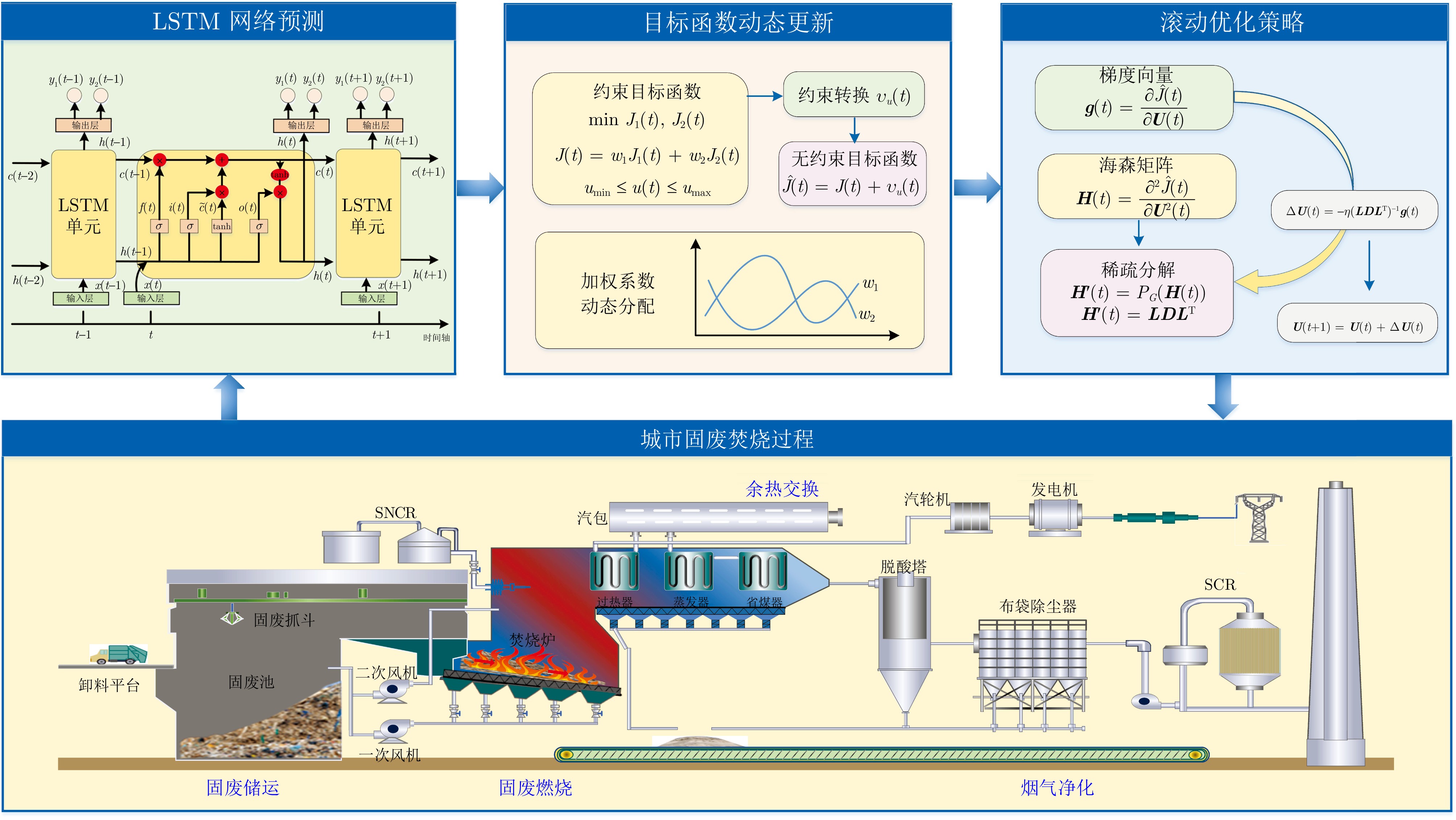
图 1 MSWI过程多变量自适应模型预测控制方法框架
Fig. 1 Framework of multivariable adaptive model predictive control method for MSWI process
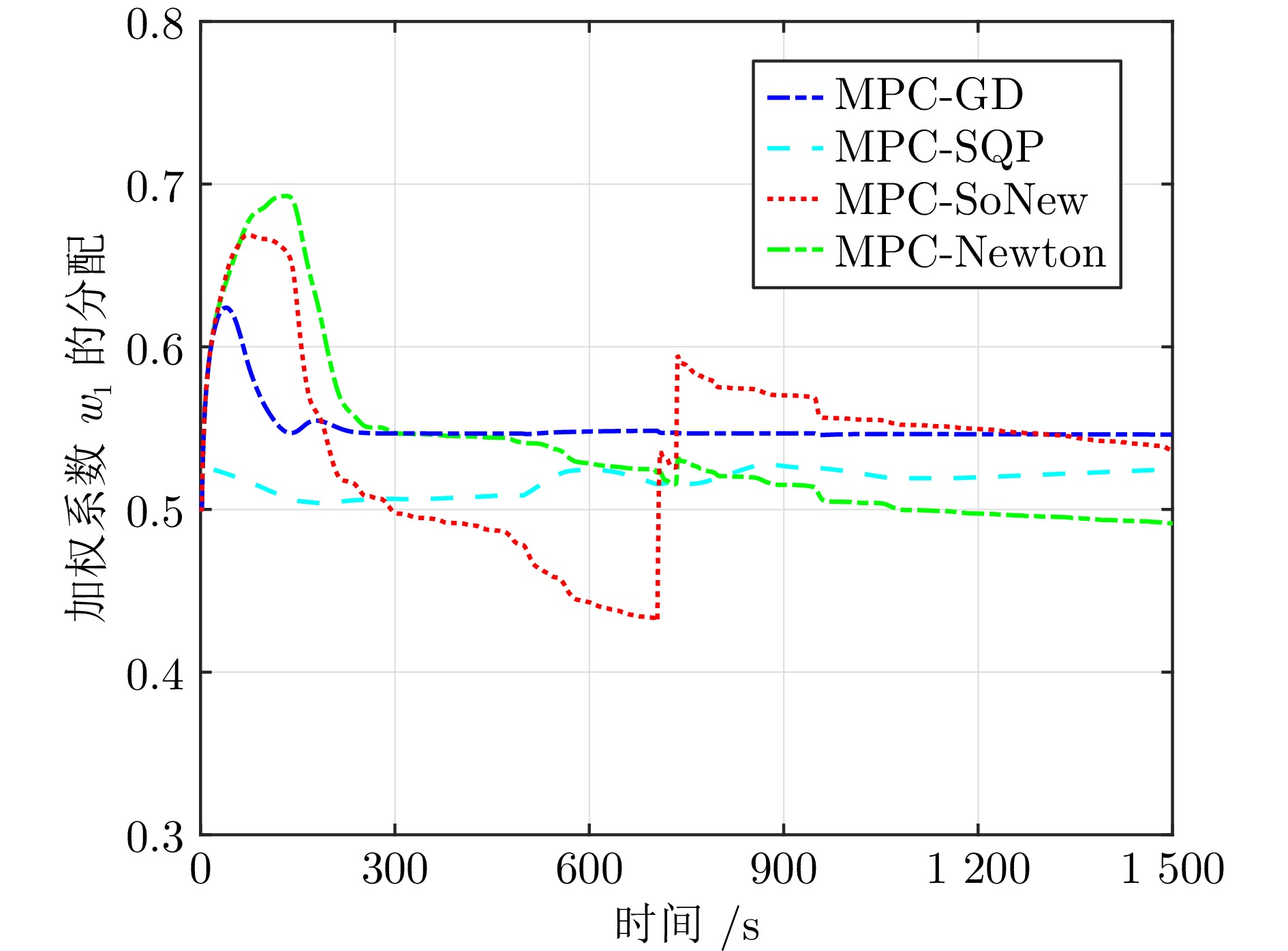
图 9 被控变量的加权系数$w_1$的分配
Fig. 9 The allocation of the weighting coefficient $w_1$ of the controlled variable
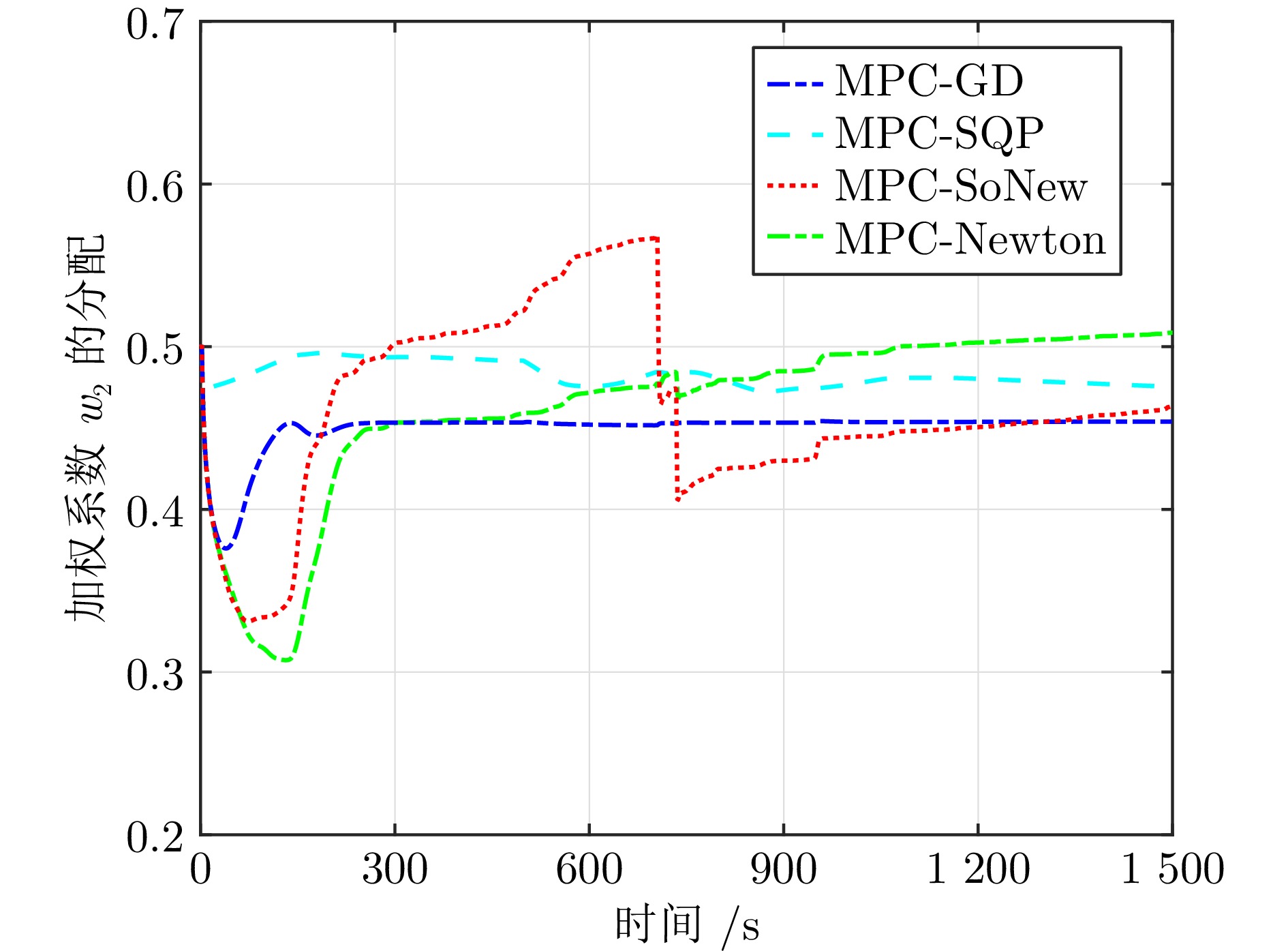
图 10 被控变量的加权系数$w_2$的分配
Fig. 10 The allocation of the weighting coefficient $w_2$ of the controlled variable
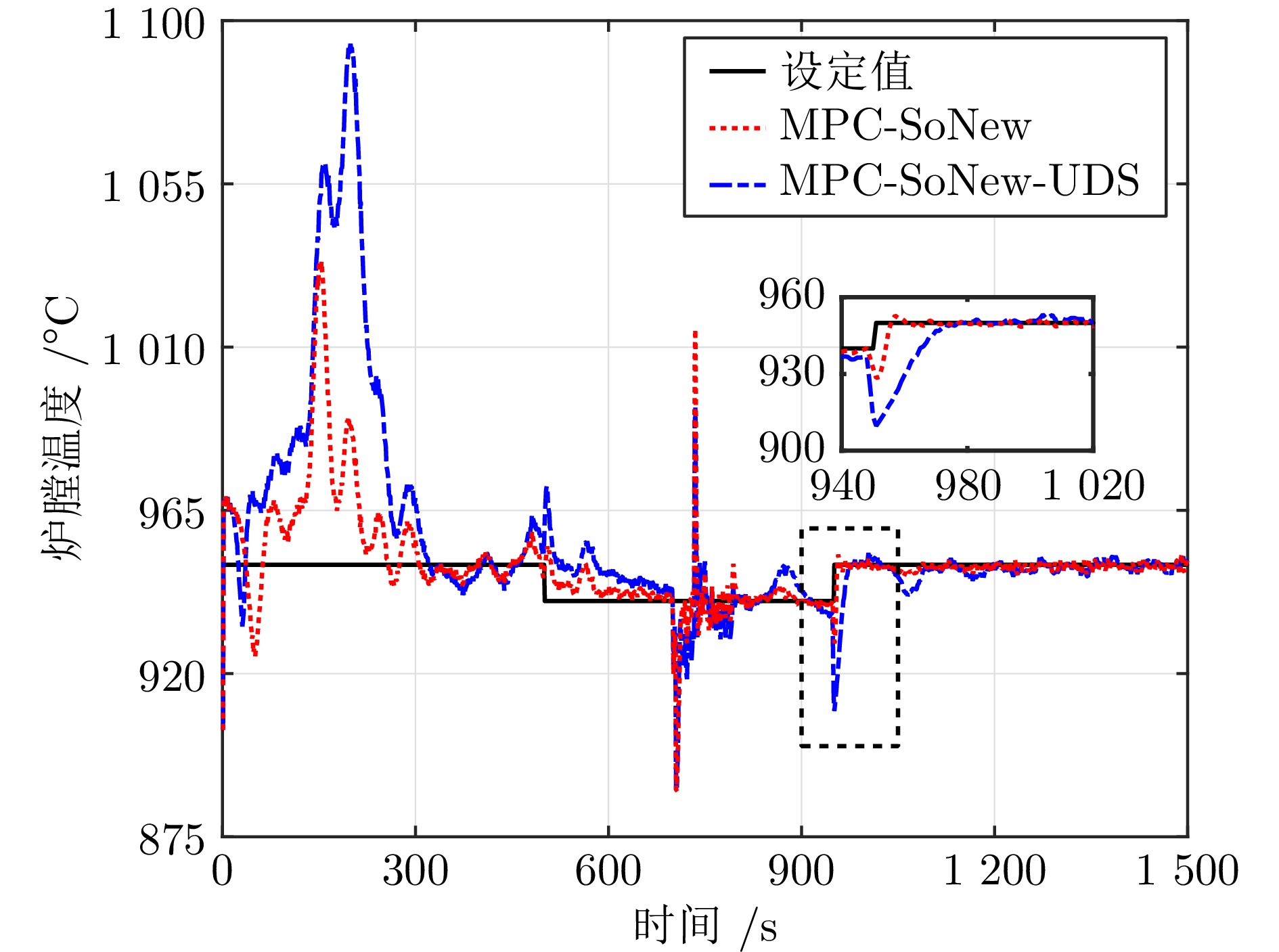
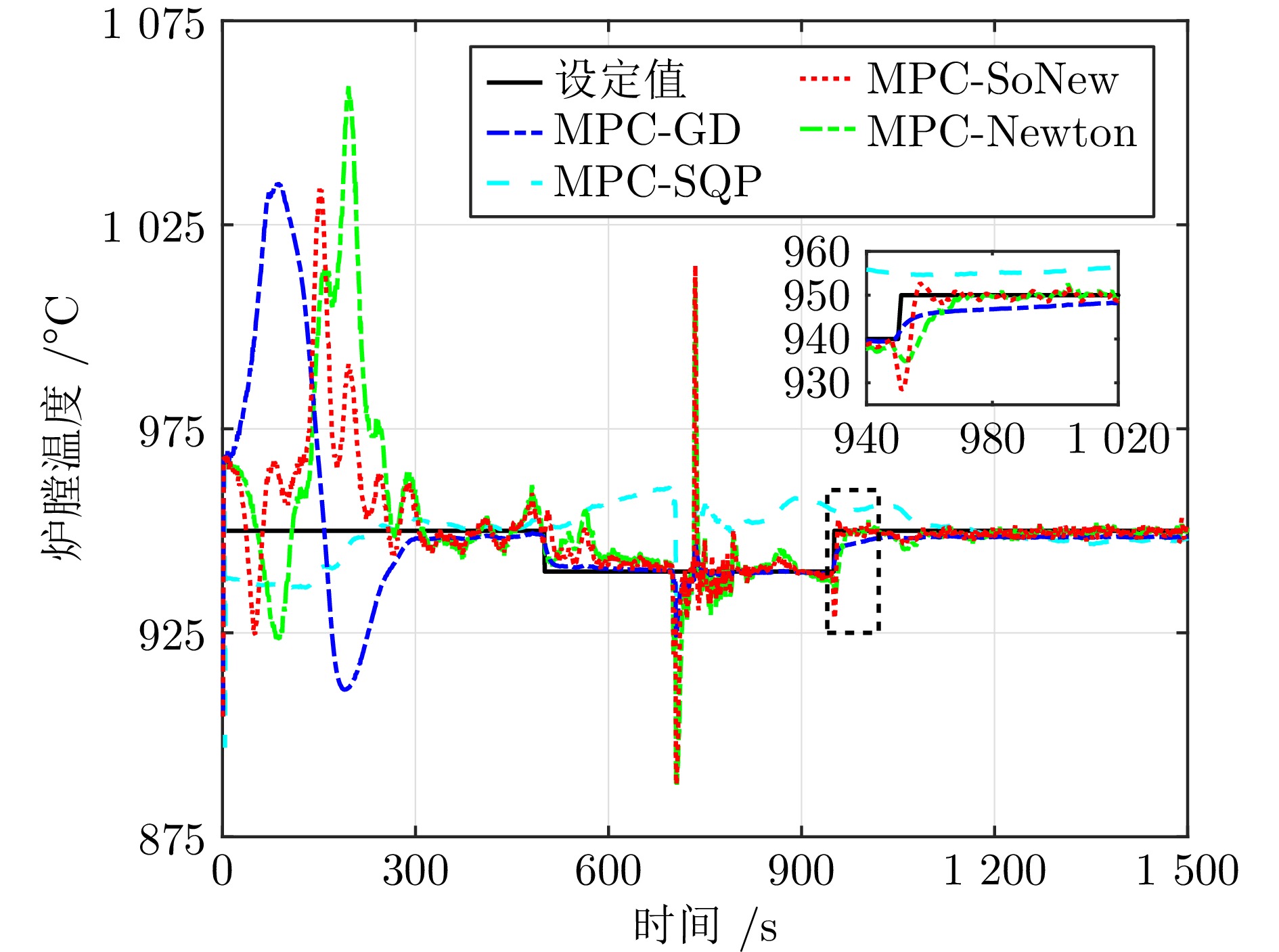
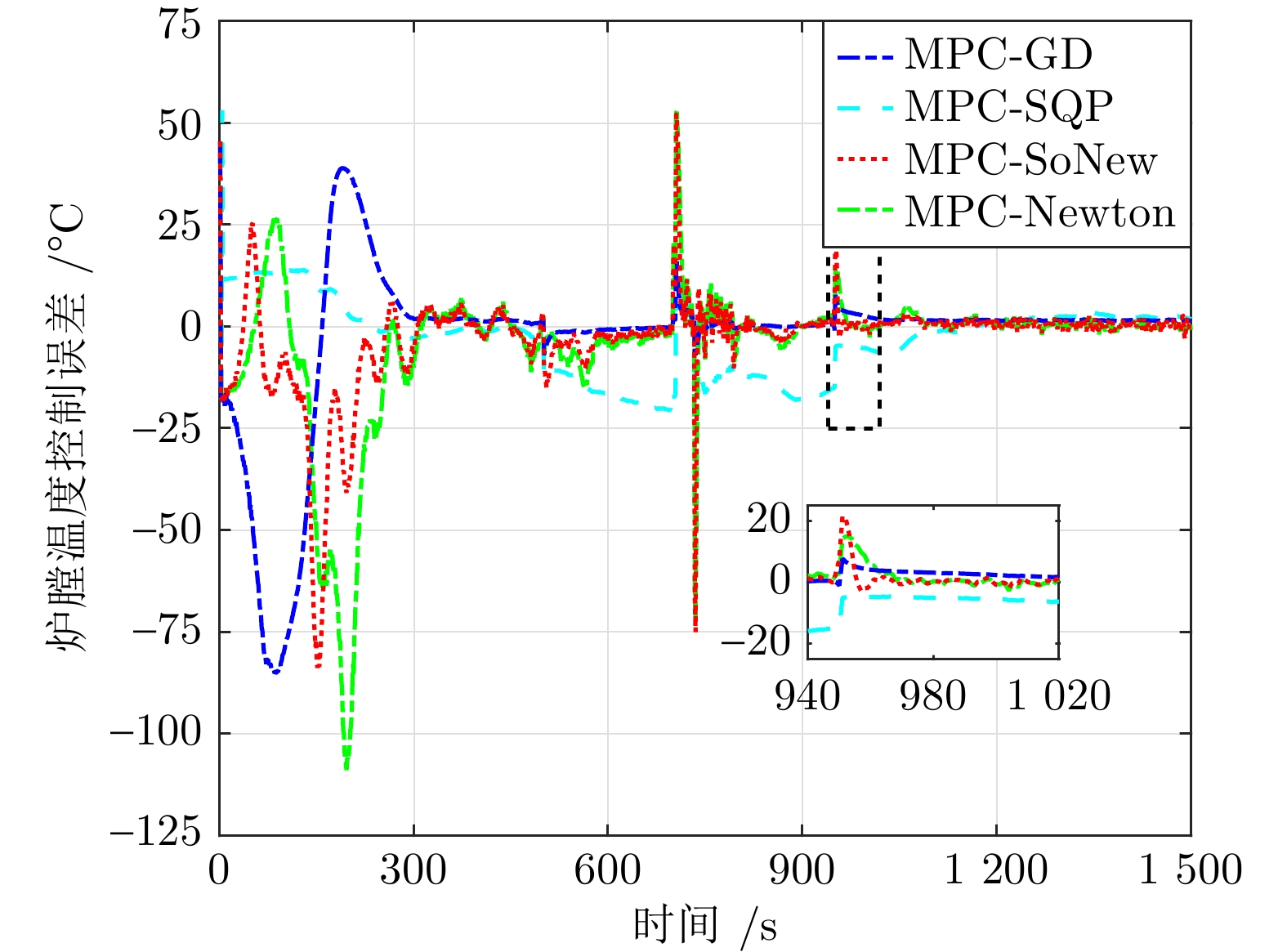
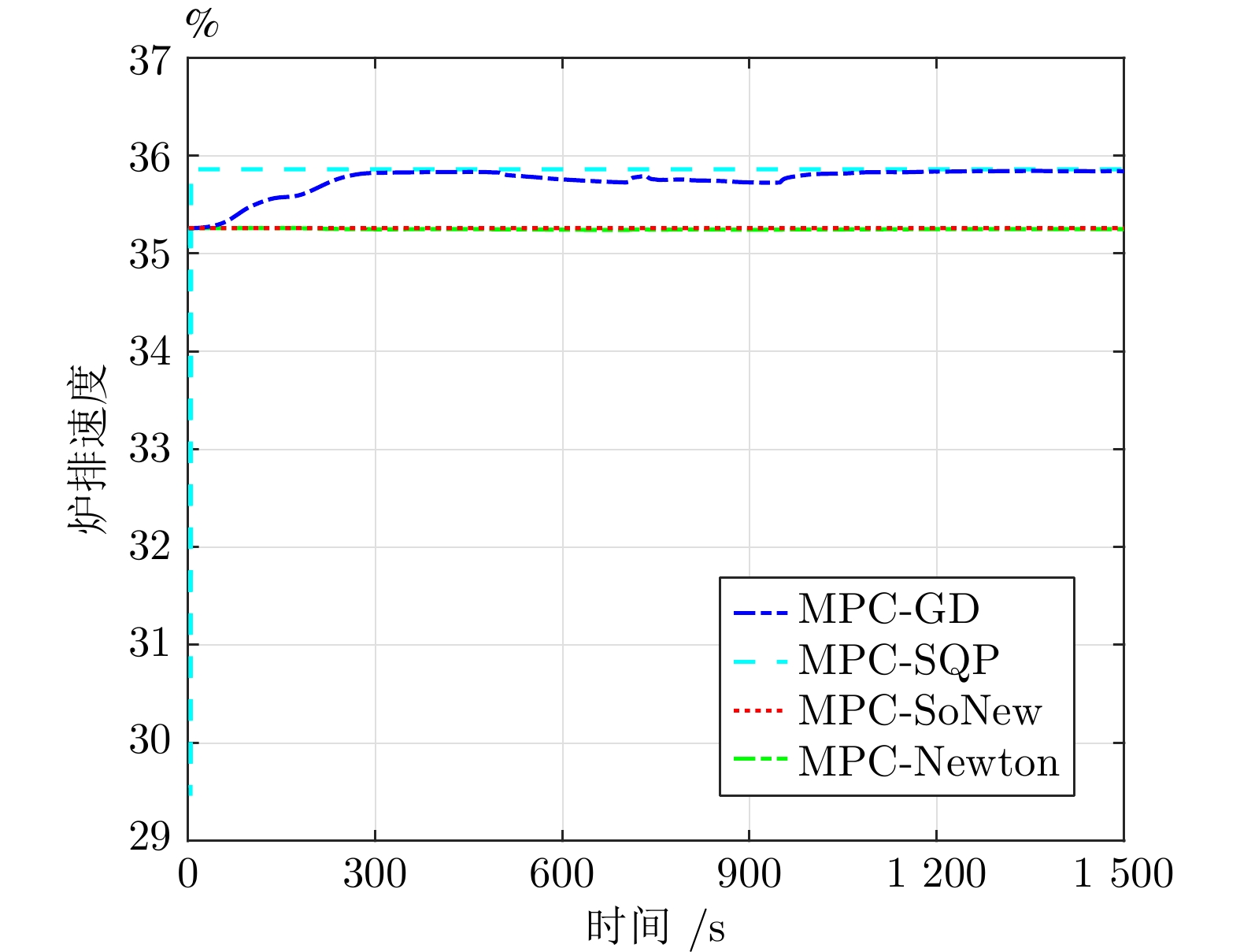
图 11 不同滚动优化策略炉膛温度跟踪曲线
Fig. 11 Tracking curves of furnace temperature with different rolling optimization strategies
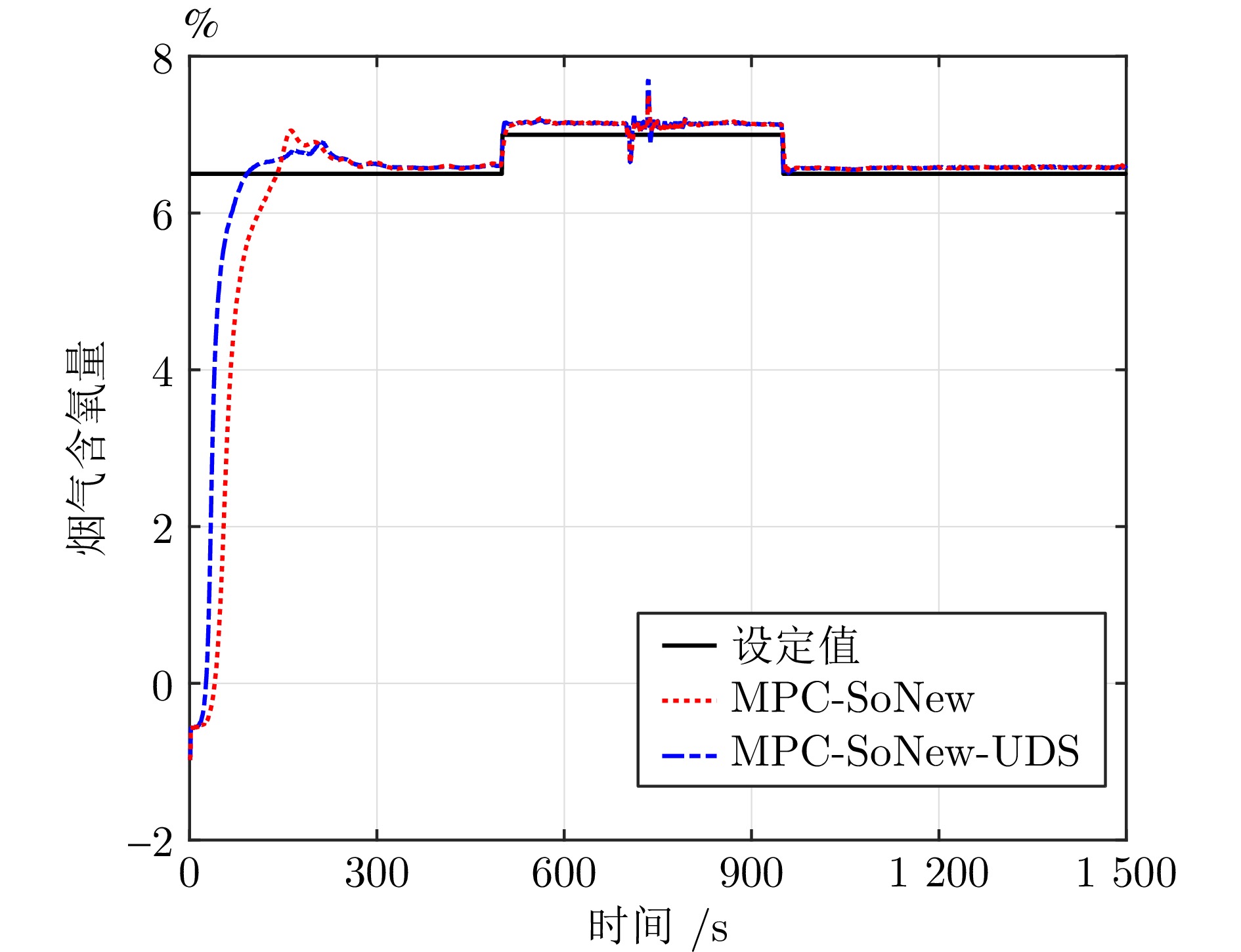
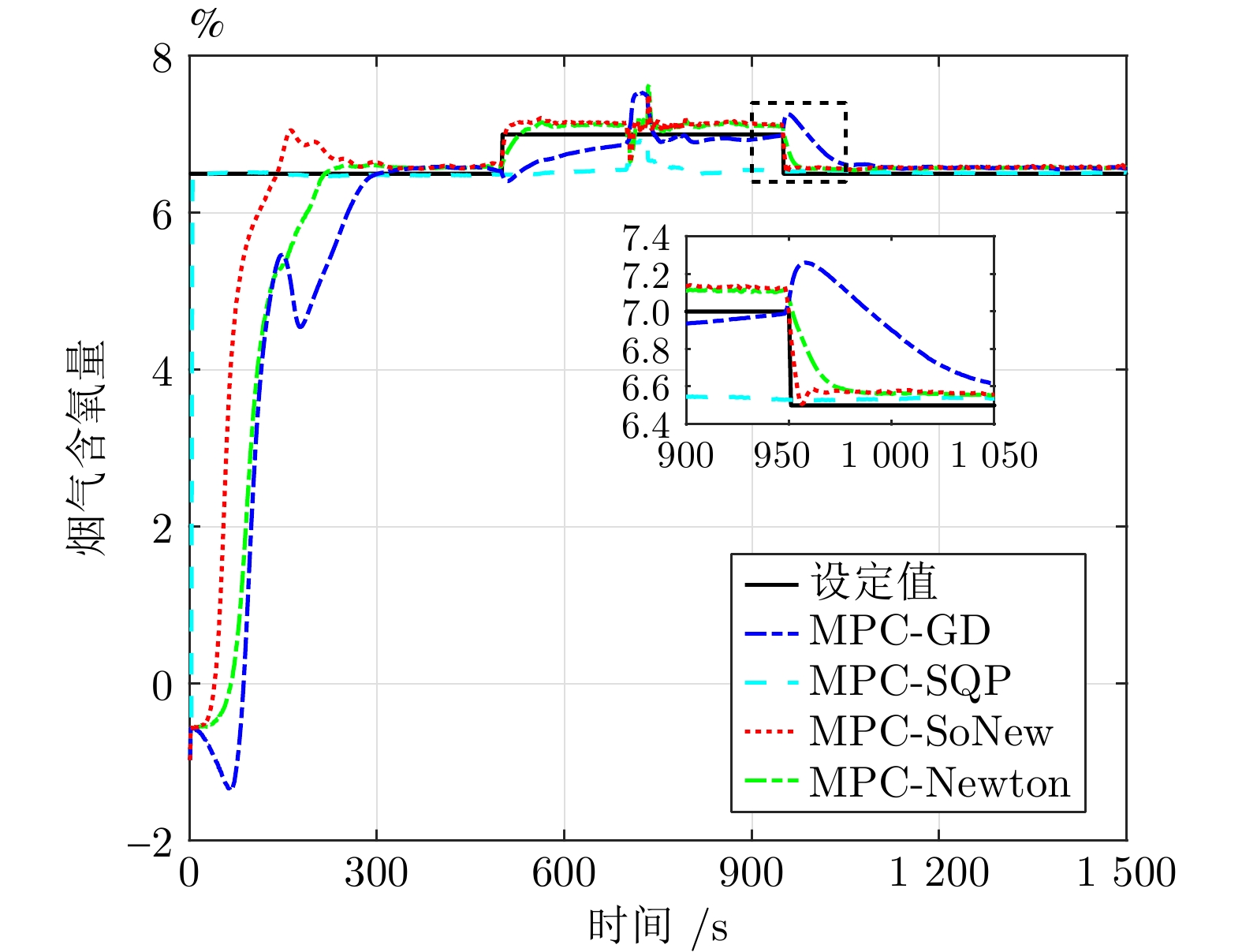
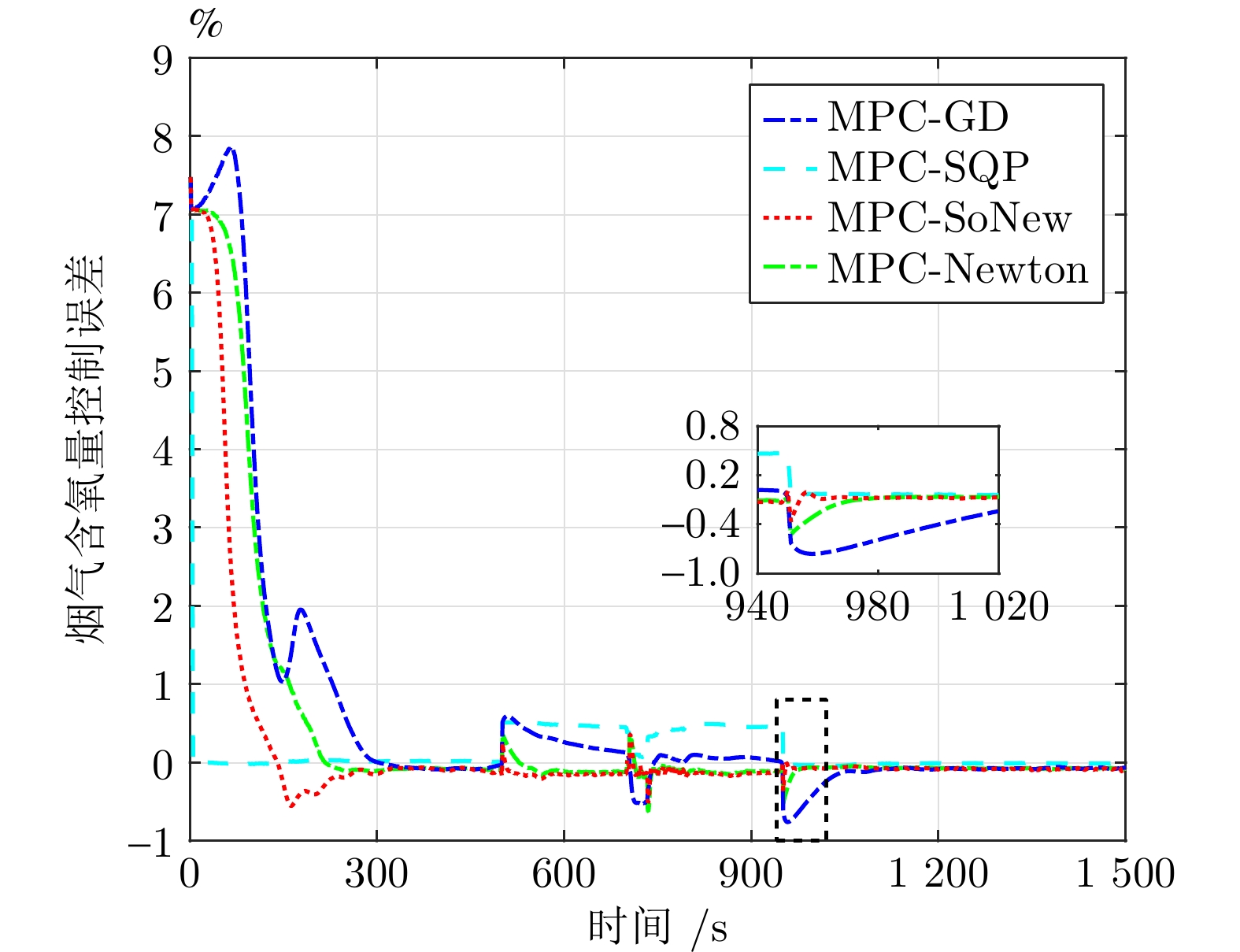
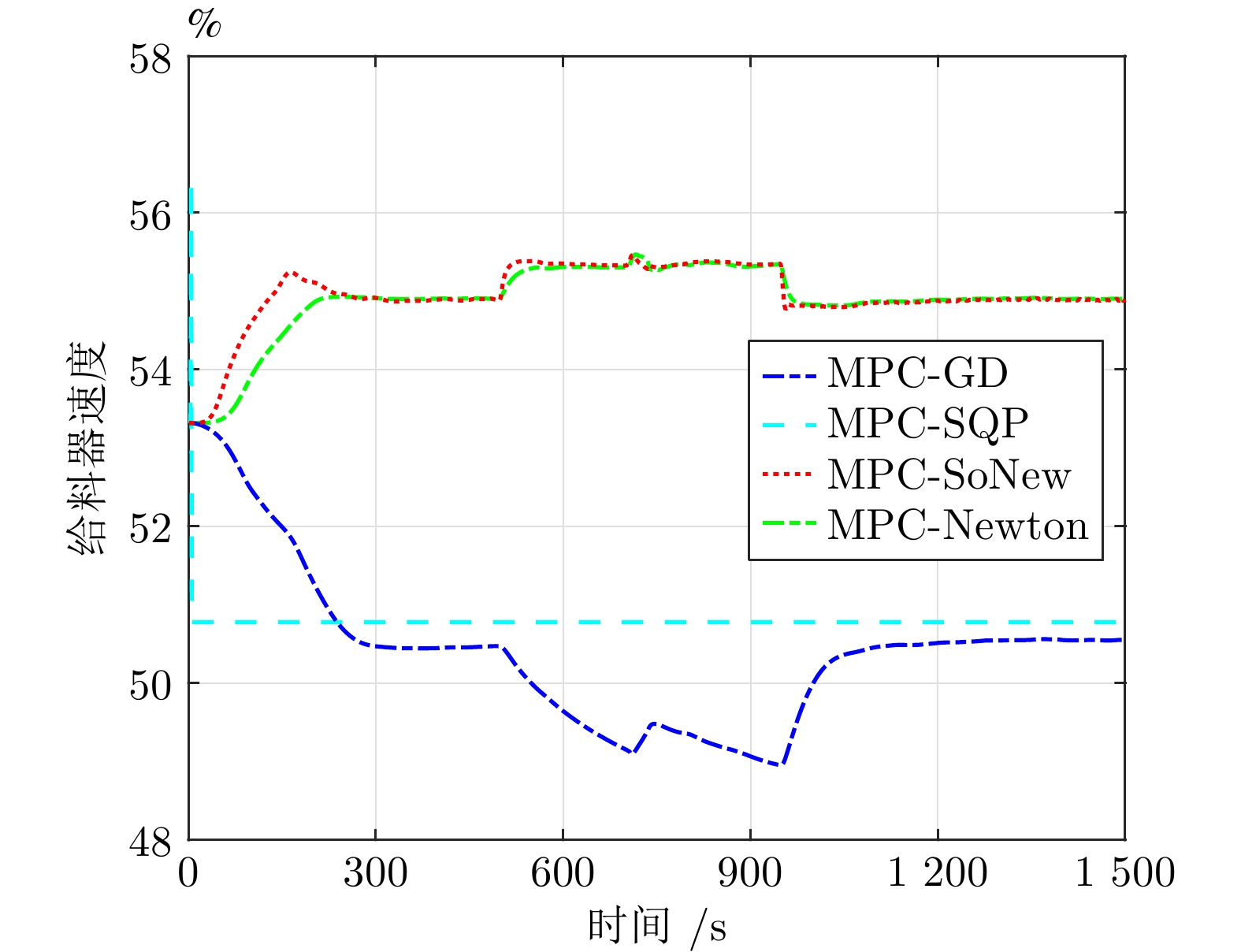
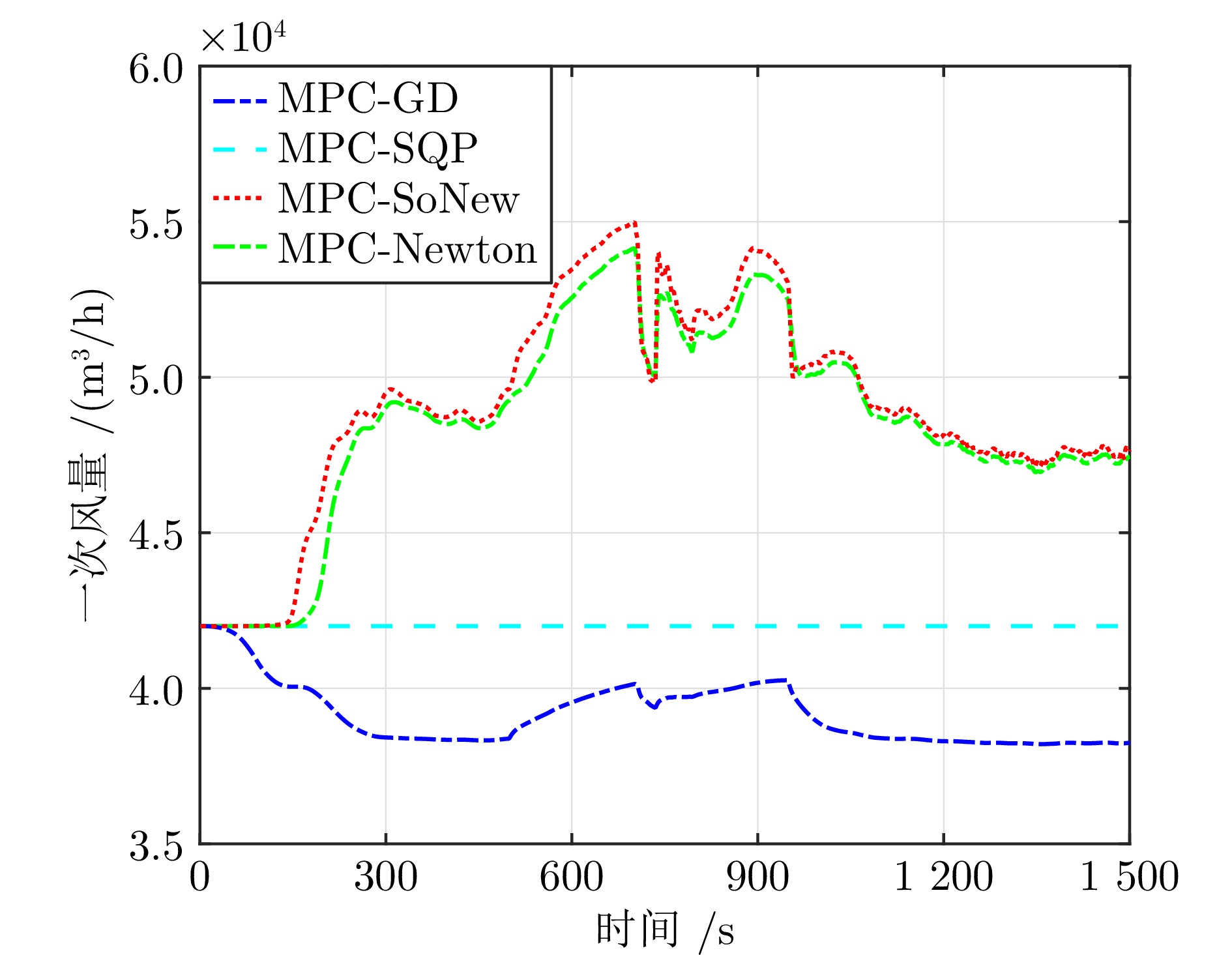
图 12 不同滚动优化策略下烟气含氧量跟踪曲线
Fig. 12 Tracking curves of flue gas oxygen content with different rolling optimization strategies
表 1 不同控制算法的比较结果
Table 1 Comparison results of different control algorithms
方法 炉膛温度 烟气含氧量 ISE IAE ITAE $ \overline{t}_r $ (s) $ \overline{t}_c $ (s) ISE IAE ITAE $ \overline{t}_r $ (s) $ \overline{t}_c $ (s) MPC-SQP 139820.0 10740.0 6800300.0 64.3 135.7 255.8 240.1 155250.0 182.0 77.0 MPC-GD 586080.0 12495.0 2844300.0 89.0 57.0 5633.3 1134.4 222270.0 242.3 241.7 MPC-Newton 501370.0 11919.0 3955900.0 58.7 21.3 4367.5 882.9 146610.0 72.0 93.7 MPC-SoNew 237080.0 8452.8 2850400.0 25.7 19.7 2637.1 622.3 131570.0 22.7 50.7  下载: 导出CSV
-
[1] Gómez-Sanabria A, Kiesewetter G, Klimont Z, Schoepp W, Haberl H. Potential for future reductions of global GHG and air pollutants from circular waste management systems. Nature Communications, 2022, 13(1): Article No. 106 doi: 10.1038/s41467-021-27624-7 [2] Liu B, Wang P, Zhou J, Guo Y, Ma S J, Chen W Q, et al. Refocusing on effectiveness over expansion in urban waste-energy-carbon development in China. Nature Energy, 2025, 10(2): 215−225 doi: 10.1038/s41560-024-01683-8 [3] 乔俊飞, 蒙西, 汤云涛. 双碳目标下城市固废焚烧过程智能优化控制研究进展及展望. 中国科学基金, 2024, 38(4): 593−602 doi: 10.16262/j.cnki.1000-8217.20240605.001Qiao Jun-Fei, Meng Xi, Tang Yun-Tao. Perspectives on intelligent optimized control of municipal solid waste incineration process under dual-carbon target. Science Foundation in China, 2024, 38(4): 593−602 doi: 10.16262/j.cnki.1000-8217.20240605.001 [4] Sun J, Meng X, Qiao J F. Data-driven optimal control for municipal solid waste incineration process. IEEE Transactions on Industrial Informatics, 2023, 19(12): 11444−11454 doi: 10.1109/TII.2023.3246467 [5] Falconi F, Guillard H, Capitanescu S, Raïssi T. Control strategy for the combustion optimization for waste-to-energy incineration plant. IFAC-PapersOnLine, 2020, 53(2): 13167−13172 doi: 10.1016/j.ifacol.2020.12.125 [6] 田昊, 汤健, 夏恒, 王天峥, 余文, 乔俊飞. 基于IT2FBLS强化学习PID的MSWI过程炉膛温度控制. 自动化学报, 2025, 51(7): 1626−1641 doi: 10.16383/j.aas.c240074Tian Hao, Tang Jian, Xia Heng, Wang Tian-Zheng, Yu Wen, Qiao Jun-Fei. Furnace temperature control using IT2FBLS-based reinforcement learning PID for MSWI process. Acta Automatica Sinica, 2025, 51(7): 1626−1641 doi: 10.16383/j.aas.c240074 [7] 何海军, 蒙西, 汤健, 乔俊飞. 基于ET-RBF-PID的城市固废焚烧过程炉膛温度控制方法. 控制理论与应用, 2022, 39(12): 2262−2273He Hai-Jun, Meng Xi, Tang Jian, Qiao Jun-Fei. ET-RBF-PID-based control method for furnace temperature of municipal waste incineration process. Control Theory and Applications, 2022, 39(12): 2262−2273 [8] Ding H, Tang J, Qiao J F. MIMO modeling and multi-loop control based on neural network for municipal solid waste incineration. Control Engineering Practice, 2022, 127: Article No. 105280 doi: 10.1016/j.conengprac.2022.105280 [9] Yang W, Tang J, Tian H, Yu W, Qiao J F. Flue gas oxygen content control based on interval type-2 fuzzy broad learning system and PID for MSWI process. IEEE Transactions on Automation Science and Engineering, 2025, 22: 15473−15487 doi: 10.1109/TASE.2025.3563863 [10] Chen W C, Chang N B, Chen J C. GA-based fuzzy neural controller design for municipal incinerators. Fuzzy Sets and Systems, 2002, 129(3): 343−369 doi: 10.1016/S0165-0114(01)00205-6 [11] Shen K, Lu J, Li Z, Liu G. An adaptive fuzzy approach for the incineration temperature control process. Fuel, 2005, 84(9): 1144−1150 doi: 10.1016/j.fuel.2004.06.042 [12] Leskens M, Kessei L B M V, Bosgra O H. Model predictive control as a tool for improving the process operation of MSW combustion plants. Waste Management, 2005, 25(8): 788−798 doi: 10.1016/j.wasman.2005.03.005 [13] Kortela J, Jämsä-Jounela S L. Modeling and model predictive control of the BioPower combined heat and power (CHP) plant. International Journal of Electrical Power and Energy Systems, 2015, 65: 453−462 doi: 10.1016/j.ijepes.2014.10.043 [14] Sarkar P, Kortela J, Boriouchkine A, Zattoni E, Jämsä-Jounela S L. Data-reconciliation based fault-tolerant model predictive control for a biomass boiler. Energies, 2017, 10(2): Article No. 194 doi: 10.3390/en10020194 [15] Huang X Y, Wang J C, Zhang L W, Wang B H. Data-driven modeling and fuzzy multiple-model predictive control of oxygen content in coal-fired power plant. Transactions of the Institute of Measurement and Control, 2017, 39(11): 1631−1642 doi: 10.1177/0142331216644498 [16] Böhler L, Krail J, Görtler G, Kozek M. Fuzzy model predictive control for small-scale biomass combustion furnaces. Applied Energy, 2020, 276: Article No. 115339 doi: 10.1016/j.apenergy.2020.115339 [17] Zlatkovikj M, Li H, Zaccaria V, Aslanidou I. Development of feed-forward model predictive control for applications in biomass bubbling fluidized bed boilers. Journal of Process Control, 2022, 115: 167−180 doi: 10.1016/j.jprocont.2022.05.005 [18] Qiao J F, Sun J, Meng X. Event-triggered adaptive model predictive control of oxygen content for municipal solid waste incineration process. IEEE Transactions on Automation Science and Engineering, 2022, 21(1): 463−474 [19] 孙剑, 蒙西, 乔俊飞. 城市固废焚烧过程烟气含氧量自适应预测控制. 自动化学报, 2023, 49(11): 2338−2349 doi: 10.16383/j.aas.c210935Sun Jian, Meng Xi, Qiao Jun-Fei. Adaptive predictive control of oxygen content in flue gas for municipal solid waste incineration process. Acta Automatica Sinica, 2023, 49(11): 2338−2349 doi: 10.16383/j.aas.c210935 [20] Yan A, Gu T. Model prediction and optimal control of gas oxygen content for a municipal solid waste incineration process. Instrumentation, 2024(1): 101−111 doi: 10.1109/ccdc58219.2023.10327435 [21] 胡开成, 严爱军, 王殿辉. 城市固废焚烧过程炉温非线性模型预测控制. 控制理论与应用, 2024, 41(11): 2023−2032 doi: 10.7641/CTA.2023.20397Hu Kai-Cheng, Yan Ai-Jun, Wang Dian-Hui. Nonlinear model predictive control of furnace temperature for a municipal solid waste incineration process. Control Theory and Applications, 2024, 41(11): 2023−2032 doi: 10.7641/CTA.2023.20397 [22] Wang B, Tang J, Tian H, Yu W, Qiao J. Improved interval type-II fuzzy broad MPC method for furnace temperature of municipal solid waste incineration process. IEEE Transactions on Fuzzy Systems, 2025, 33(10): 3420−3432 doi: 10.1109/TFUZZ.2025.3590654 [23] Stanisławski R, Junga R, Nitsche M. Reduction of the CO emission from wood pellet small-scale boiler using model-based control. Energy, 2022, 243: Article No. 123009 doi: 10.1016/j.energy.2021.123009 [24] Böhler L, Fallmann M, Görtler G, Krail J, Schittl F, Kozek M. Emission limited model predictive control of a small-scale biomass furnace. Applied Energy, 2021, 285: Article No. 116414 doi: 10.1016/j.apenergy.2020.116414 [25] Wang B, Tang J, Wang W, Rong J. Interval type-II fuzzy broad model predictive control based on the static and dynamic hybrid event-triggering mechanism and adaptive compensation for furnace temperature in the MSWI process. Applied Sciences, 2025, 15(19): Article No. 10329 doi: 10.3390/app151910329 [26] Han H G, Wang Y, Sun H Y, Liu Z, Qiao J F. Data-driven tube based robust predictive control for constrained wastewater treatment process. IEEE Transactions on Cybernetics, 2024, 54(11): 6742−6754 doi: 10.1109/TCYB.2024.3434499 [27] Han H G, Zhang Y, Sun H Y, Liu Z, Qiao J F. Data-knowledge-driven multiobjective adaptive optimal control for wastewater treatment processes under multiple operating conditions. IEEE Transactions on Cybernetics, 2025, 55(3): 1056−1069 doi: 10.1109/TCYB.2025.3531514 [28] Qiu Z, Zhang L, Zhang H, Liang H, Li Y. A plunger lifting optimization control method based on APSO-MPC for edge computing applications. Scientific Reports, 2025, 15(1): Article No. 4356 doi: 10.1038/s41598-025-87726-w [29] 孙剑, 蒙西, 乔俊飞. 数据驱动的城市固废焚烧过程烟气含氧量预测控制. 控制理论与应用, 2024, 41(3): 484−495 doi: 10.7641/CTA.2023.20622Sun Jian, Meng Xi, Qiao Jun-Fei. Data-driven predictive control of oxygen content in flue gas for municipal solid waste incineration process. Control Theory and Applications, 2024, 41(3): 484−495 doi: 10.7641/CTA.2023.20622 [30] 黄鹏, 王亚午, 吴俊东, 苏春翌, 福岛E.文彦. 基于神经网络ODE和非线性MPC的DEA建模与控制. 自动化学报, 2025, 51(1): 186−196 doi: 10.16383/j.aas.c240223Huang Peng, Wang Ya-Wu, Wu Jun-Dong, Su Chun-Yi, Fukushima Edwardo-Fumihiko. Modeling and control of dielectric elastomer actuator based on neural ordinary differential equation and nonlinear model predictive control. Acta Automatica Sinica, 2025, 51(1): 186−196 doi: 10.16383/j.aas.c240223 [31] Min X, Baldi S, Shi Y, Yu W. Safe control of multi-agent systems via low-complexity control barrier functions. IEEE Transactions on Automatic Control, 2025, 70(10): 6831−6845 doi: 10.1109/TAC.2025.3566652 [32] Deng H, Ohtsuka T. A parallel Newton-type method for nonlinear model predictive control. Automatica, 2019, 109: Article No. 108560 doi: 10.1016/j.automatica.2019.108560 [33] Liu Y, Feng T, Rasouli S, Wong M. ST-DAGCN: A spatiotemporal dual adaptive graph convolutional network model for traffic prediction. Neurocomputing, 2024, 601: Article No. 128175 doi: 10.1016/j.neucom.2024.128175 [34] Ding W, Xi Y, Li Y. A novel strict color image authentication scheme based on dual-complex LU decomposition. Computational and Applied Mathematics, 2024, 43(4): Article No. 195 doi: 10.1007/s40314-024-02665-y [35] Convens B, Liao-McPherson D, Merckaert K, Vanderborght B, Nicotra M. A terminal state feasibility governor for real-time nonlinear model predictive control over arbitrary horizons. IEEE Transactions on Control Systems Technology, 2024, 32(4): 1341−1356 doi: 10.1109/TCST.2024.3365996 [36] Pin G, Parisini T. Networked predictive control of uncertain constrained nonlinear systems: Recursive feasibility and input-to-state stability analysis. IEEE Transactions on Automatic Control, 2010, 56(1): 72−87 doi: 10.1109/acc.2009.5160704 [37] Wang X F, Jiang J, Chen W H. High-level decision making in a hierarchical control framework: Integrating HMDP and MPC for autonomous systems. IEEE Transactions on Cybernetics, 2025, 55(4): 1903−1916 doi: 10.1109/TCYB.2025.3535159 [38] Shi X, Cao J, Huang W. Distributed parametric consensus optimization with an application to model predictive consensus problem. IEEE Transactions on Cybernetics, 2017, 48(7): 2024−2035 [39] Diehl M, Amrit R, Rawlings J B. A Lyapunov function for economic optimizing model predictive control. IEEE Transactions on Automatic Control, 2010, 56(3): 703−707 [40] Yao D, Li H, Shi Y. Adaptive event-triggered sliding-mode control for consensus tracking of nonlinear multiagent systems with unknown perturbations. IEEE Transactions on Cybernetics, 2022, 53(4): 2672−2684 [41] Sun H Y, Wang J J, Gao H H, Han H G. Robust fault tolerant control based on adaptive dynamic programming with experience replay for wastewater treatment processes. IEEE Transactions on Fuzzy Systems, 2025, 33(9): 3307−3317 doi: 10.1109/TFUZZ.2025.3590003 [42] Zeilinger M N, Jones C N, Morari M. Real-time suboptimal model predictive control using a combination of explicit MPC and online optimization. IEEE Transactions on Automatic Control, 2011, 56(7): 1524−1534 doi: 10.1109/TAC.2011.2108450 [43] Minh H Q. Infinite-dimensional distances and divergences between positive definite operators, Gaussian measures, and Gaussian processes. Information Geometry, 2025, 8(S1): 21−48 -

 下载:
下载:

计量
- 文章访问数: 189
- HTML全文浏览量: 93
- PDF下载量: 14
- 被引次数: 0
