


Advances in Biological Flapping-wing Aerodynamic Mechanisms via Flow Field Visualization Techniques
-
摘要: 扑翼飞行是生物高效利用流体能量的典型范式, 解析其非定常气动机理高度依赖流场可视化技术的革新. 本文系统梳理基于流场可视化技术的生物扑翼气动机理研究进展, 着重探讨实验技术创新与机理认知深化的互动关系. 通过对比多种流场可视化技术的生物实验适配性, 明确其在捕捉瞬态涡结构和量化三维流场特征方面的效能差异. 重点分析活体生物流场可视化实验的设计要素, 涵盖流场构建、示踪粒子选择及生物行为操纵策略. 此外, 重点归纳昆虫、鸟类与蝙蝠三类典型生物的已有流场可视化成果, 如前缘涡延迟脱落、尾流捕获等普适性非定常气动机理. 对比说明不同生物类群在柔性翼变形调控、涡流−运动耦合等策略上的进化差异. 最后针对性梳理当前研究存在的问题, 并展望结合先进人工智能技术的机理解析及仿生扑翼飞行器工程转化等未来发展方向.Abstract: Flapping-wing flight represents a classic paradigm of how organisms efficiently utilize fluid energy. Analyzing its unsteady aerodynamic mechanisms is highly dependent on innovations in flow field visualization techniques. This paper systematically reviews the research progress in the biological flapping-wing aerodynamic mechanisms using flow field visualization techniques, focusing on the interactive relationship between experimental technical innovations and deepened understanding of the underlying mechanisms. By comparing the adaptability of various flow field visualization techniques in biological experiments, the paper clarifies differences in their effectiveness in capturing transient vortex structures and quantifying three-dimensional flow field characteristics. It focuses on the key design elements of in-vivo biological flow field visualization experiments, covering flow field construction, tracer particle selection, and biological behavior manipulation strategies. Additionally, this paper summarizes existing flow field visualization achievements in three typical biological groups: Insects, birds, and bats. These studies reveal universal unsteady aerodynamic mechanisms such as delayed leading-edge vortex shedding and wake capture. It also compares and illustrates the evolutionary differences in strategies such as flexible wing deformation regulation and vortex-motion coupling among different biological taxa. Finally, this paper specifically identifies challenges inherent in existing researches and outlines future development directions, including the mechanism analysis combined with advanced artificial intelligence techniques and the engineering transformation of bionic flapping-wing aerial vehicle.
-
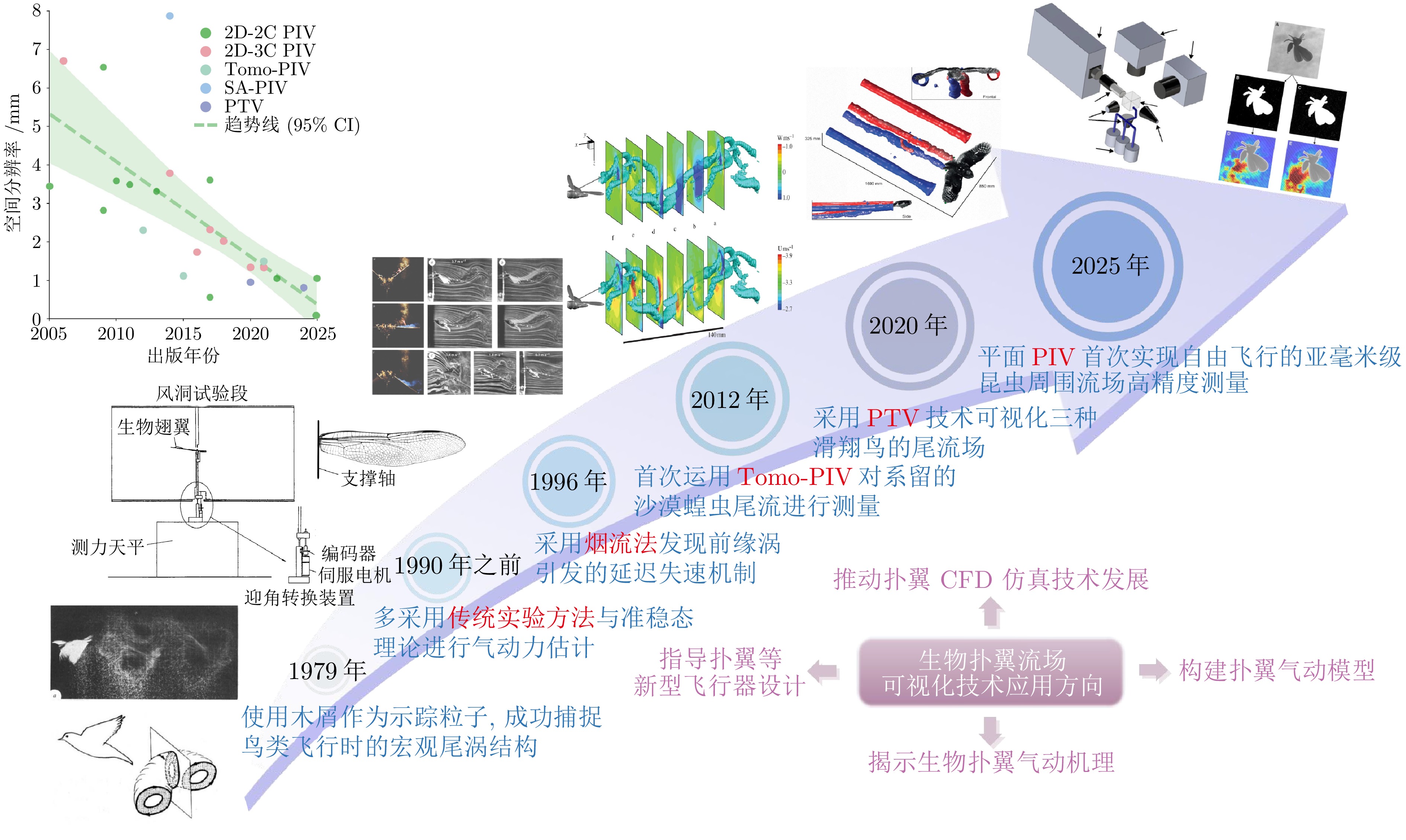
图 1 生物扑翼流场可视化研究发展图
Fig. 1 Development diagram of flow field visualization research for biological flapping-wings
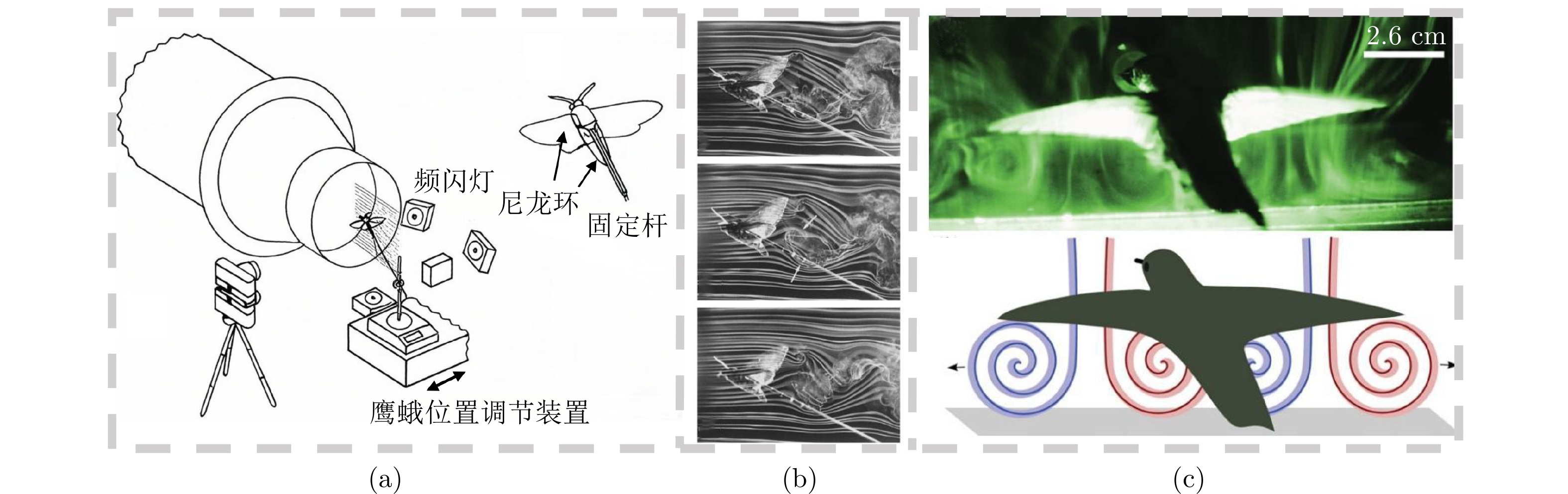
图 2 烟流可视化((a) Willmott等[33]对系留烟草天蛾进行烟流实验的示意图, 经许可转载自文献[33], ©The Royal Society, 1997; (b) Willmott等[33]得到的系留烟草天蛾不同径向位置下扑翼流场的动态拓扑演化结果, 经许可转载自文献[33], ©The Royal Society, 1997; (c) Kim等[36]对安娜蜂鸟进行烟流可视化实验, 经许可转载自文献[36], ©The Royal Society, 2014)
Fig. 2 Smoke flow visualization ((a) Schematic diagram of the smoke flow experiment on tethered Manduca sexta conducted by Willmott et al.[33], reproduced with permission from reference [33], ©The Royal Society, 1997; (b) Dynamic topological evolution results of the flow field around a tethered Manduca sexta wing obtained by Willmott et al.[33] at different radial positions, reproduced with permission from reference [33], ©The Royal Society, 1997; (c) Smoke flow visualization experiment on Calypte anna conducted by Kim et al.[36], reproduced with permission from reference [36], ©The Royal Society, 2014)
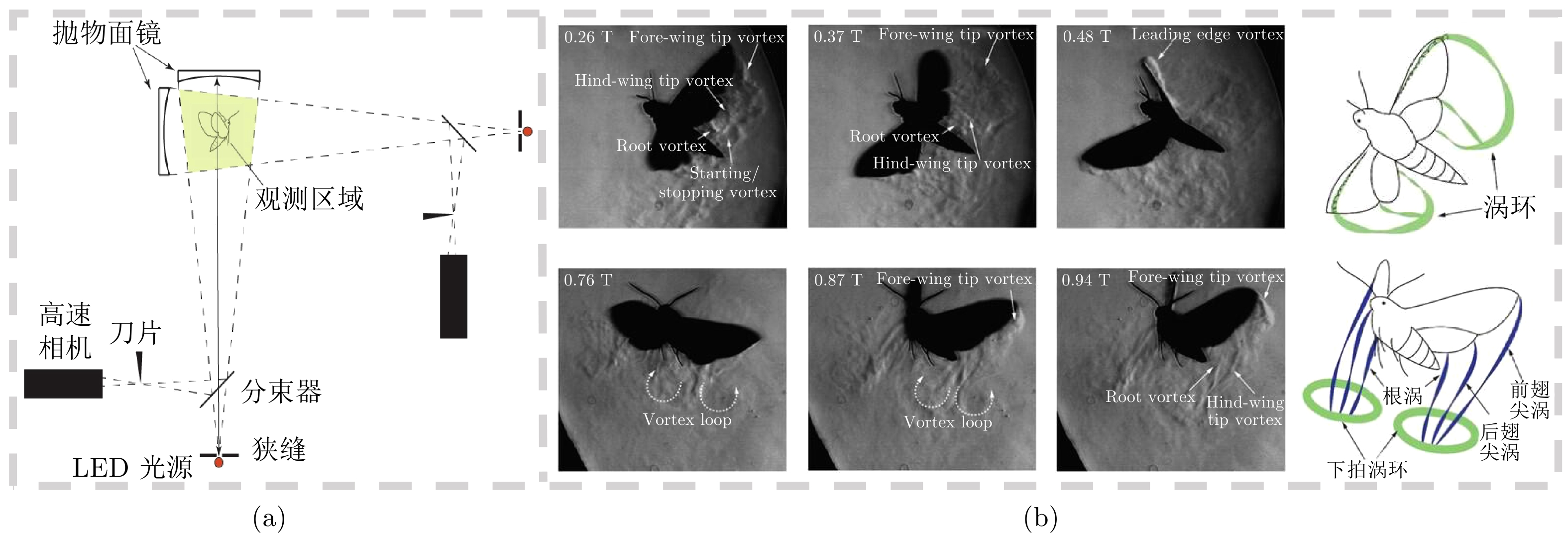
图 3 纹影法, 经许可转载自文献[40], ©The Royal Society, 2018 ((a) 多视角纹影法实验示意图; (b) 使用多视角纹影法对自由飞行天蛾周围流场演变的可视化结果)
Fig. 3 Schlieren imaging, reproduced with permission from reference [40], ©The Royal Society, 2018 ((a) Schematic diagram of the multi-view schlieren imaging experiment; (b) Visualization results of flow field evolution around a freely flying hawkmoth using multi-view schlieren imaging)

图 4 流场定量重构技术((a) Johansson等[52]采用立体PIV对黑顶林莺的尾流场进行可视化实验的示意图, 经许可转载自文献[52], ©COMPANY OF BIOLOGISTS LTD, 2009; (b) Johansson等[52]利用多平面数据的时间映射进行黑顶林莺尾流场三维重建的结果, 经许可转载自文献[52], ©COMPANY OF BIOLOGISTS LTD, 2009; (c) Johansson等[52]得到的黑顶林莺不同扑翼阶段测量平面内的三维速度场结果, 经许可转载自文献[52], ©COMPANY OF BIOLOGISTS LTD, 2009; (d) Henningsson等[22]采用大体积Tomo-PIV可视化沙漠蝗虫尾流场的实验示意图, 经许可转载自文献[22], ©The Royal Society, 2015; (e) Henningsson等[22]利用Tomo-PIV获得的沙漠蝗虫空间瞬时尾流场, 经许可转载自文献[22], ©The Royal Society, 2015)
Fig. 4 Flow field quantitative reconstruction techniques ((a) Schematic diagram of the stereoscopic PIV experiment conducted by Johansson et al.[52] to visualize the wake flow field of a blackcap warbler, reproduced with permission from reference [52], ©COMPANY OF BIOLOGISTS LTD, 2009; (b) Three-dimensional reconstruction of the blackcap warbler's wake flow field by Johansson et al.[52] using temporal mapping of multi-plane data, reproduced with permission from reference [52], ©COMPANY OF BIOLOGISTS LTD, 2009; (c) Three-dimensional velocity field results obtained by Johansson et al.[52] in the measurement plane during different flapping-wing phases of the blackcap warbler, reproduced with permission from reference [52], ©COMPANY OF BIOLOGISTS LTD, 2009; (d) Schematic diagram of the large-volume Tomo-PIV experiment performed by Henningsson et al.[22] to visualize the wake flow field of a desert locust, reproduced with permission from reference [22], ©The Royal Society, 2015; (e) Spatially instantaneous wake flow field of the desert locust obtained by Henningsson et al.[22] using Tomo-PIV, reproduced with permission from reference [22], ©The Royal Society, 2015)
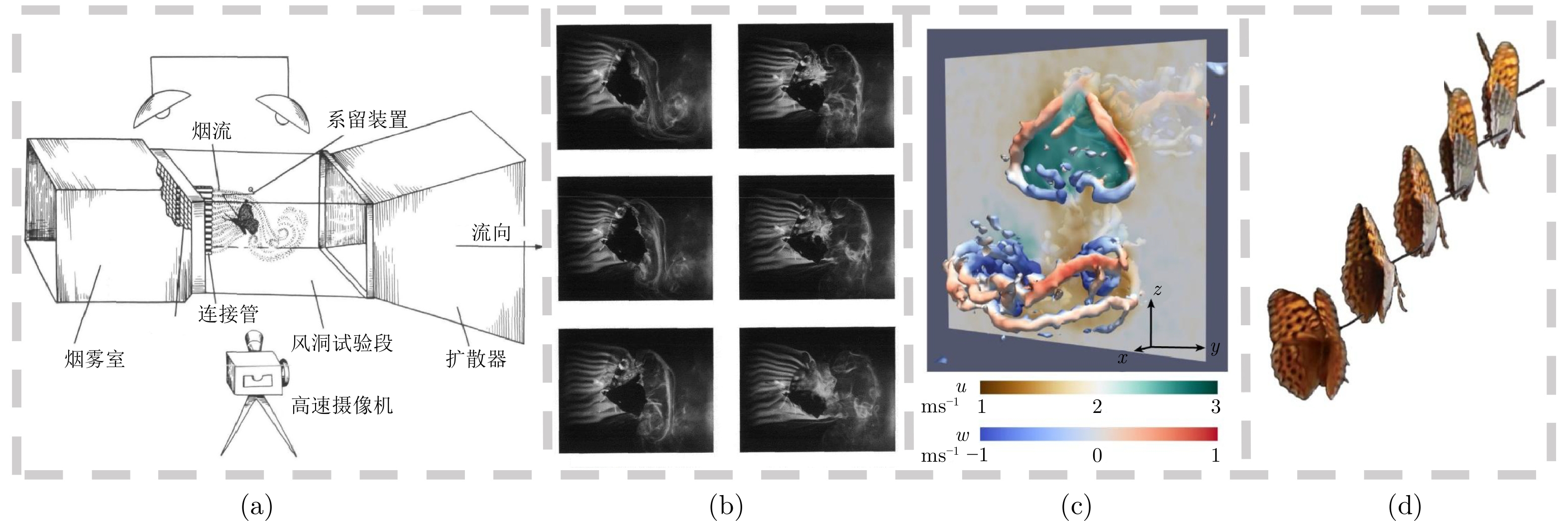
图 5 蝴蝶飞行流场可视化((a) Brodsky[75]对在风洞中系留飞行的孔雀蝶进行烟流可视化实验的示意图, 经许可转载自文献[75], ©COMPANY OF BIOLOGISTS LTD, 1991; (b) Brodsky[75]获得的单个扑动周期内不同时刻的流场可视化实验结果, 经许可转载自文献[75], ©COMPANY OF BIOLOGISTS LTD, 1991; (c) Johansson等[77]获得的银纹豹蛱蝶上拍尾流可视化结果, 经许可转载自文献[77], ©The Royal Society, 2021; (d) Johansson等[77]拍摄的自由飞行的银纹豹蛱蝶在上拍后期的图像序列, 经许可转载自文献[77], ©The Royal Society, 2021)
Fig. 5 Visualization of butterfly flight flow field ((a) Schematic diagram of the smoke flow visualization experiment on tethered peacock butterflies flying in a wind tunnel conducted by Brodsky[75], reproduced with permission from reference [75], ©COMPANY OF BIOLOGISTS LTD, 1991; (b) Experimental results of flow field visualization at different moments within a single flapping cycle obtained by Brodsky[75], reproduced with permission from reference [75], ©COMPANY OF BIOLOGISTS LTD, 1991; (c) Upstroke wake visualization results of Argynnis paphia obtained by Johansson et al.[77], reproduced with permission from reference [77], ©The Royal Society, 2021; (d) Image sequence of a freely flying Argynnis paphia during the late upstroke phase captured by Johansson et al.[77], reproduced with permission from reference [77], ©The Royal Society, 2021)
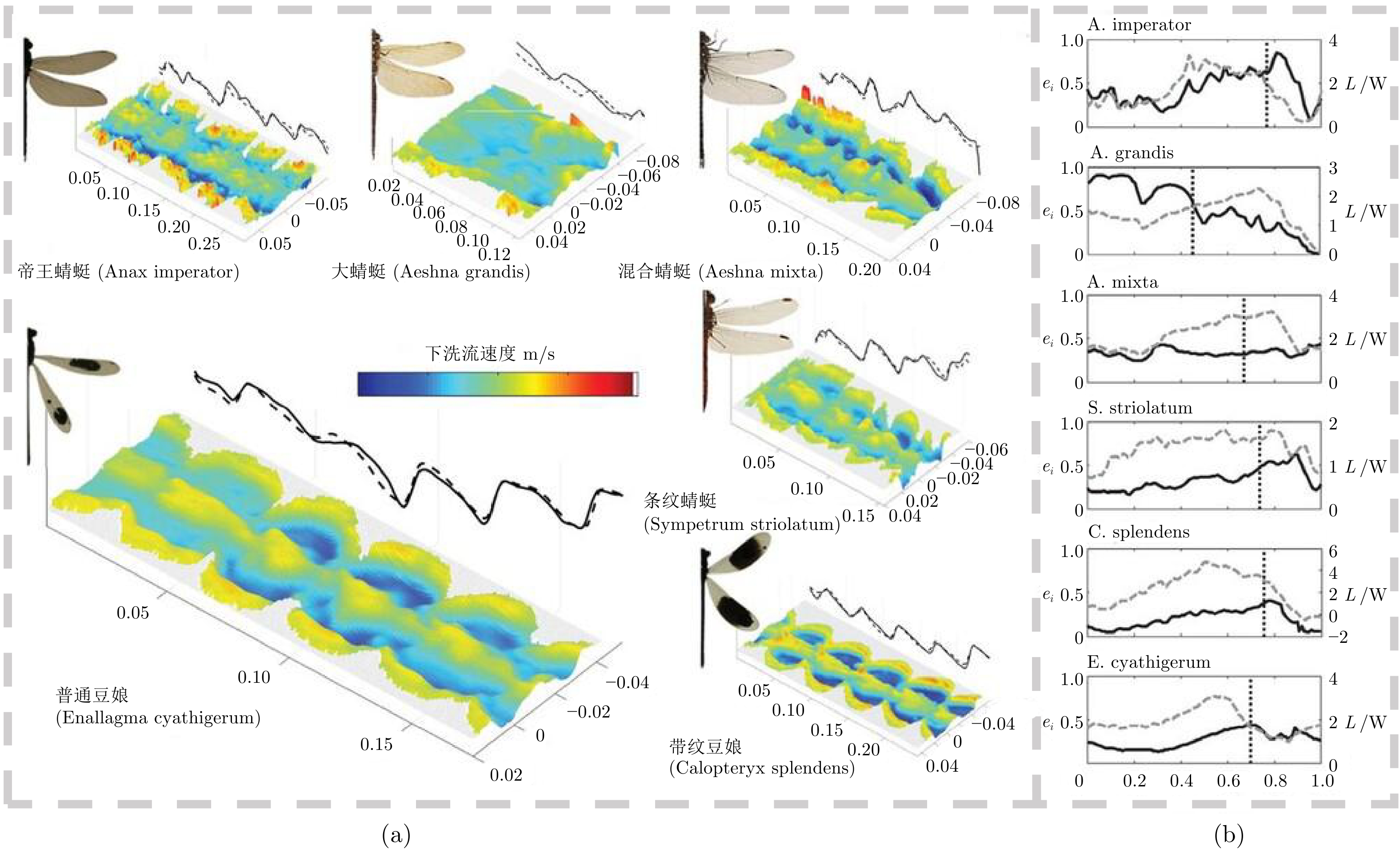
图 6 Bomphrey等[82]对多种蜻蜓和豆娘进行立体PIV实验, 经许可转载自文献[82], ©The Royal Society, 2016 ((a)六种实验对象的时间分辨尾流流场; (b)根据PIV结果得到的展向效率(黑色)与重量支撑(灰色)的时间序列)
Fig. 6 Stereoscopic PIV experiments on various dragonflies and damselflies conducted by Bomphrey et al.[82], reproduced with permission from reference [82], ©The Royal Society, 2016 ((a) Time-resolved wake flow fields of six experimental species; (b) Time series of span efficiency (black) and weight support (grey) derived from PIV results)

图 7 结合活体飞行观测的高频扑翼昆虫流场可视化研究流程((a) Bomphrey等[85]针对库蚊的生物活体PIV实验与CFD仿真交叉验证研究流程; (b) Poelma等[86]和Fry等[87]基于动态缩放扑翼模型对果蝇悬停飞行进行流场可视化的研究流程)
Fig. 7 Research process for flow field visualization of high-frequency flapping-wing insects incorporating in vivo flight observation ((a) Cross-validation research process between biological vivo PIV experiments and CFD simulations on Culex mosquitoes conducted by Bomphrey et al.[85]; (b) Research process of flow field visualization on the hovering flight of fruit flies conducted by Poelma et al.[86] and Fry et al.[87] based on a dynamically scaled flapping-wing model)

图 8 鸟类流场可视化实验((a) Henningsson等[45]重建雨燕在单个扑动周期内沿不同翼展位置的涡旋尾流, 经许可转载自文献[45], ©COMPANY OF BIOLOGISTS LTD, 2008; (b) Usherwood等[65]采用PTV对鸟类飞行时尾部的气动功能进行研究, 经许可转载自文献[65], ©COMPANY OF BIOLOGISTS LTD, 2020; (c) Kim等[36]采用平面PIV对悬停安娜蜂鸟的地面效应进行分析, 经许可转载自文献[36], ©The Royal Society, 2014)
Fig. 8 Flow field visualization experiments on birds ((a) Henningsson et al.[45] reconstructed the vortex wake of swifts across different wing span locations during a single flapping cycle, reproduced with permission from reference [45], ©COMPANY OF BIOLOGISTS LTD, 2008; (b) Usherwood et al.[65] used PTV to study the aerodynamic function of the tail during avian flight, reproduced with permission from reference [65], ©COMPANY OF BIOLOGISTS LTD, 2020; (c) Ground effect analysis during hovering of Calypte anna using planar PIV by Kim et al.[36], reproduced with permission from reference [36], ©The Royal Society, 2014)

图 9 蝙蝠飞行流场可视化((a) Hedenström等[104]利用立体PIV获得的索氏长舌蝠在不同飞行速度下产生的涡旋尾流可视化结果, 经许可转载自文献[104], ©AAAS, 2007; (b) Hubel等[106]对比穴居鼠耳蝠和巴西犬吻蝠在低速和高速下的尾流重建结果, 经许可转载自文献[106], ©The Royal Society, 2016)
Fig. 9 Visualization of bat flight flow fields ((a) Hedenström et al.[104] used stereoscopic PIV to visualize the vortex wake generated by Glossophaga soricina across different flight speeds, reproduced with permission from reference [104], ©AAAS, 2007; (b) Hubel et al.[106] compared the wake reconstruction results of Myotis velifer and Tadarida brasiliensis at low and high speeds, reproduced with permission from reference [106], ©The Royal Society, 2016)
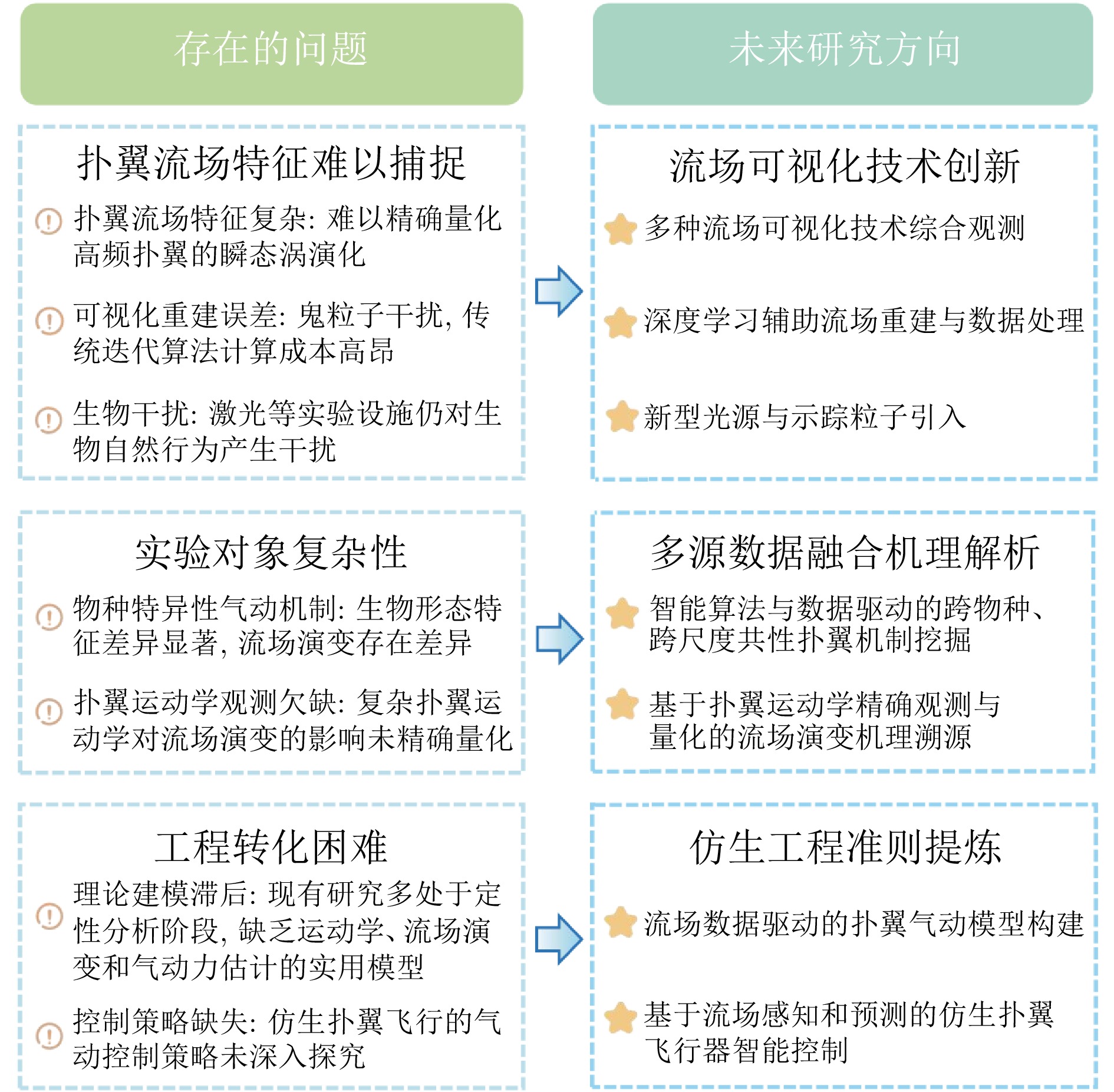
图 10 基于流场可视化技术的生物扑翼气动机理研究现有问题分析与未来研究方向展望
Fig. 10 Analysis of current problems and prospect of future research directions in biological flapping-wing aerodynamic mechanisms based on flow field visualization techniques
表 1 常用的生物扑翼流场可视化技术综合对比
Table 1 Comprehensive comparison for commonly used biological flapping-wing flow field visualization techniques
技术名称 空间分辨率(mm) 时间分辨率(ms) 常用生物翼展(mm) 测量维度 光源 示踪粒子 烟流法 1 ~ 2 20 ~ 70 定性分析 卤素灯等光源 烟雾 纹影成像法 0.1 ~ 1 10 ~ 50 定性分析 LED光 无需示踪粒子 平面PIV 0.03 ~ 10 0.025 ~ 7 1.7 ~ 600 2D-2C 平面脉冲激光 中密度低粒径油雾 立体PIV 0.03 ~ 10 0.025 ~ 7 1.7 ~ 600 2D-3C 平面脉冲激光 中高密度低粒径油雾 Tomo-PIV 1 ~ 2.5 1 ~ 200 60 ~ 120 3D-3C 立体脉冲激光 低密度低粒径油雾 SA-PIV 8 ~ 11 1 ~ 4 60 ~ 300 3D-3C 立体脉冲激光 高密度空心聚合物微球 PTV 0.1 ~ 1 0.2 ~ 1.5 10 ~ 800 3D-3C 立体脉冲激光 极低密度氦气肥皂泡 注: 表中数据均为现有研究的典型值.  下载: 导出CSV
-
[1] 贺威, 丁施强, 孙长银. 扑翼飞行器的建模与控制研究进展. 自动化学报, 2017, 43(5): 685−696 doi: 10.16383/j.aas.2017.c160581He Wei, Ding Shi-Qiang, Sun Chang-Yin. Research progress on modeling and control of flapping-wing air vehicles. Acta Automatica Sinica, 2017, 43(5): 685−696 doi: 10.16383/j.aas.2017.c160581 [2] Harvey C, Baliga V B, Wong J C M, Altshuler D L, Inman D J. Birds can transition between stable and unstable states via wing morphing. Nature, 2022, 603(7902): 648−653 doi: 10.1038/s41586-022-04477-8 [3] Richardson P L, Wakefield E D, Phillips R A. Flight speed and performance of the wandering albatross with respect to wind. Movement Ecology, 2018, 6(1): Article No. 3 doi: 10.1186/s40462-018-0121-9 [4] Liu H, Wang S Z, Liu T S. Vortices and forces in biological flight: Insects, birds, and bats. Annual Review of Fluid Mechanics, 2024, 56: 147−170 doi: 10.1146/annurev-fluid-120821-032304 [5] 向锦武, 孙毅, 申童, 李道春. 扑翼空气动力学研究进展与应用. 工程力学, 2019, 36(4): 8−23 doi: 10.6052/j.issn.1000-4750.2018.03.0175Xiang Jin-Wu, Sun Yi, Shen Tong, Li Dao-Chun. Research progress and application of flapping wing aerodynamics. Engineering Mechanics, 2019, 36(4): 8−23 doi: 10.6052/j.issn.1000-4750.2018.03.0175 [6] Vogel S. Flight in Drosophila: III. Aerodynamic characteristics of fly wings and wing models. Journal of Experimental Biology, 1967, 46(3): 431−443 doi: 10.1242/jeb.46.3.431 [7] Wakeling J M, Ellington C P. Dragonfly flight: I. Gliding flight and steady-state aerodynamic forces. Journal of Experimental Biology, 1997, 200(3): 543−556 doi: 10.1242/jeb.200.3.543 [8] Ellington C P. The aerodynamics of hovering insect flight. I. The quasi-steady analysis. Philosophical Transactions of the Royal Society B: Biological Sciences, 1984, 305(1122): 1−15 [9] Ellington C P. The aerodynamics of hovering insect flight. VI. Lift and power requirements. Philosophical Transactions of the Royal Society B: Biological Sciences, 1984, 305(1122): 145−181 [10] Ellington C P, van den Berg C, Willmott A P, Thomas A L R. Leading-edge vortices in insect flight. Nature, 1996, 384(6610): 626−630 doi: 10.1038/384626a0 [11] Xia X, Mohseni K. A theory on leading-edge vortex stabilization by spanwise flow. Journal of Fluid Mechanics, 2023, 970: Article No. R1 [12] Colognesi V, Ronsse R, Chatelain P. Numerical assessment of wake-based estimation of instantaneous lift in flapping flight of large birds. PLoS One, 2023, 18(5): Article No. e0284714 doi: 10.1371/journal.pone.0284714 [13] Wu J H, Wang K, Chen L. Leading-edge vortex enhancement of a flexible flapping wing with the clap-and-fling mechanism. Physics of Fluids, 2025, 37(1): Article No. 011917 [14] Li C Y, Dong H B, Cheng B. Tip vortices formation and evolution of rotating wings at low Reynolds numbers. Physics of Fluids, 2020, 32(2): Article No. 021905 [15] Liu H, Aono H. Size effects on insect hovering aerodynamics: An integrated computational study. Bioinspiration & Biomimetics, 2009, 4(1): Article No. 015002 [16] Yang L J, Joseph V J, Lo Y L, Tang W T, Esakki B, Kompala S, et al. Aerodynamic evaluation of flapping wings with leading-edge twisting. Biomimetics, 2023, 8(2): Article No. 134 doi: 10.3390/biomimetics8020134 [17] Yang L J, Kao A F, Hsu C K. Wing stiffness on light flapping micro aerial vehicles. Journal of Aircraft, 2012, 49(2): 423−431 doi: 10.2514/1.C031320 [18] Yang L J, Waikhom R, Wang W C, Jabaraj Joseph V, Esakki B, Kumar Unnam N, et al. Check-valve design in enhancing aerodynamic performance of flapping wings. Applied Sciences, 2021, 11(8): Article No. 3416 doi: 10.3390/app11083416 [19] van Oudheusden B W. PIV-based pressure measurement. Measurement Science and Technology, 2013, 24(3): Article No. 032001 [20] Yamamoto F, Ishikawa M. A review of the recent PIV studies——From the basics to the hybridization with CFD. Journal of Flow Control, Measurement & Visualization, 2022, 10(4): 117−147 [21] Bomphrey R J, Lawson N J, Harding N J, Taylor G K, Thomas A L R. The aerodynamics of Manduca sexta: Digital particle image velocimetry analysis of the leading-edge vortex. Journal of Experimental Biology, 2005, 208(6): 1079−1094 doi: 10.1242/jeb.01471 [22] Henningsson P, Michaelis D, Nakata T, Schanz D, Geisler R, Schröder A, et al. The complex aerodynamic footprint of desert locusts revealed by large-volume tomographic particle image velocimetry. Journal of the Royal Society Interface, 2015, 12(108): Article No. 20150119 doi: 10.1098/rsif.2015.0119 [23] Hedenström A, Johansson L C. Bat flight: Aerodynamics, kinematics and flight morphology. Journal of Experimental Biology, 2015, 218(5): 653−663 doi: 10.1242/jeb.031203 [24] Johansson L C, Håkansson J, Jakobsen L, Hedenström A. Ear-body lift and a novel thrust generating mechanism revealed by the complex wake of brown long-eared bats (Plecotus auritus). Scientific Reports, 2016, 6: Article No. 24886 doi: 10.1038/srep24886 [25] Williams E J, Murray-Bruce J, Murphy D W. An inverse problems approach to micro-PIV for measuring flow around freely flying tiny insects. Journal of Experimental Biology, 2025, 228(8): Article No. jeb249417 doi: 10.1242/jeb.249417 [26] Scharnowski S, Kähler C J. Particle image velocimetry-classical operating rules from today's perspective. Optics and Lasers in Engineering, 2020, 135: Article No. 106185 doi: 10.1016/j.optlaseng.2020.106185 [27] Abdulwahab M R, Ali Y H, Habeeb F J, Borhana A A, Abdelrhman A M, Al-Obaidi S M A. A review in particle image velocimetry techniques (developments and applications). Journal of Advanced Research in Fluid Mechanics and Thermal Sciences, 2020, 65(2): 213−229 [28] Thomas A L R, Taylor G K, Srygley R B, Nudds R L, Bomphrey R J. Dragonfly flight: Free-flight and tethered flow visualizations reveal a diverse array of unsteady lift-generating mechanisms, controlled primarily via angle of attack. Journal of Experimental Biology, 2004, 207(24): 4299−4323 doi: 10.1242/jeb.01262 [29] Lee B, Oh S, Choi H, Park H. Effect of body angle on the aerodynamics of a rhinoceros beetle: Smoke-wire visualization in a wind tunnel. Journal of Mechanical Science and Technology, 2020, 34(1): 209−218 doi: 10.1007/s12206-019-1222-0 [30] Srygley R B, Thomas A L R. Unconventional lift-generating mechanisms in free-flying butterflies. Nature, 2002, 420(6916): 660−664 doi: 10.1038/nature01223 [31] van Truong T, Le T Q, Tran H T, Park H C, Yoon K J, Byun D. Flow visualization of rhinoceros beetle (Trypoxylus dichotomus) in free flight. Journal of Bionic Engineering, 2012, 9(3): 304−314 doi: 10.1016/S1672-6529(11)60127-3 [32] Bomphrey R J. Insects in flight: Direct visualization and flow measurements. Bioinspiration & Biomimetics, 2006, 1(4): S1−S9 [33] Willmott A P, Ellington C P, Thomas A L R. Flow visualization and unsteady aerodynamics in the flight of the hawkmoth, Manduca sexta. Philosophical Transactions of the Royal Society B: Biological Sciences, 1997, 352(1351): 303−316 doi: 10.1098/rstb.1997.0022 [34] Pournazeri S, Segre P S, Princevac M, Altshuler D L. Hummingbirds generate bilateral vortex loops during hovering: Evidence from flow visualization. Experiments in Fluids, 2013, 54(1): Article No. 1439 doi: 10.1007/s00348-012-1439-5 [35] Matthews M, Sponberg S. Hawkmoth flight in the unsteady wakes of flowers. Journal of Experimental Biology, 2018, 221(22): Article No. jeb179259 [36] Kim E J, Wolf M, Ortega-Jimenez V M, Cheng S H, Dudley R. Hovering performance of Anna's hummingbirds (Calypte anna) in ground effect. Journal of the Royal Society Interface, 2014, 11(98): Article No. 20140505 doi: 10.1098/rsif.2014.0505 [37] Liu X H, Hefler C, Fu J J, Shyy W, Qiu H H. Implications of wing pitching and wing shape on the aerodynamics of a dragonfly. Journal of Fluids and Structures, 2021, 101: Article No. 103208 doi: 10.1016/j.jfluidstructs.2020.103208 [38] Liu Y, Li B, Zhou D L. Hovering hawkmoths exploit unsteady circulation to produce aerodynamic force. Biology Letters, 2025, 21(1): Article No. 20240619 doi: 10.1098/rsbl.2024.0619 [39] Pawar A A, Ranjan K S, Roy A, Saha S. High-speed schlieren imaging as a tool for identifying vortices in dragonfly flight. In: Proceedings of the Conference on Fluid Mechanics and Fluid Power. Singapore: Springer, 2024. 275−282 [40] Liu Y, Roll J, van Kooten S, Deng X Y. Schlieren photography on freely flying hawkmoth. Biology Letters, 2018, 14(5): Article No. 20180198 doi: 10.1098/rsbl.2018.0198 [41] Liu Y, Lozano A D, Hedrick T L, Li C Y. Comparison of experimental and numerical studies on the flow structures of hovering hawkmoths. Journal of Fluids and Structures, 2021, 107: Article No. 103405 doi: 10.1016/j.jfluidstructs.2021.103405 [42] Liu Y, Lozano A D. Investigate the wake flow on houseflies with particle-tracking-velocimetry and schlieren photography. Journal of Bionic Engineering, 2023, 20(2): 656−667 doi: 10.1007/s42235-022-00277-y [43] Zeng Z X, Ye Y J, Jiang H P, Jiang J J, Wang Z T, Yuan S J, et al. Visualization of vortices generated by flapping wing device by schlieren method. Journal of Physics: Conference Series, 2021, 1985(1): Article No. 012023 [44] Maxworthy T. Experiments on the Weis-Fogh mechanism of lift generation by insects in hovering flight. Part 1. Dynamics of the ‘fling’. Journal of Fluid Mechanics, 1979, 93(1): 47−63 doi: 10.1017/S0022112079001774 [45] Henningsson P, Spedding G R, Hedenström A. Vortex wake and flight kinematics of a swift in cruising flight in a wind tunnel. Journal of Experimental Biology, 2008, 211(5): 717−730 doi: 10.1242/jeb.012146 [46] Johansson L C, Engel S, Kelber A, Klein Heerenbrink M, Hedenström A. Multiple leading edge vortices of unexpected strength in freely flying hawkmoth. Scientific Reports, 2013, 3: Article No. 3264 doi: 10.1038/srep03264 [47] Hefler C, Noda R, Qiu H H, Shyy W. Aerodynamic performance of a free-flying dragonfly——A span-resolved investigation. Physics of Fluids, 2020, 32(4): Article No. 041903 [48] Henningsson P, Jakobsen L, Hedenström A. Aerodynamics of manoeuvring flight in brown long-eared bats (Plecotus auritus). Journal of the Royal Society Interface, 2018, 15(148): Article No. 20180441 doi: 10.1098/rsif.2018.0441 [49] Langley K R, Hardester E, Thomson S L, Truscott T T. Three-dimensional flow measurements on flapping wings using synthetic aperture PIV. Experiments in Fluids, 2014, 55(10): Article No. 1831 doi: 10.1007/s00348-014-1831-4 [50] Warfvinge K, Johansson L C, Hedenström A. Hovering flight in hummingbird hawkmoths: Kinematics, wake dynamics and aerodynamic power. Journal of Experimental Biology, 2021, 224(10): Article No. jeb230920 doi: 10.1242/jeb.230920 [51] Gao Q, Wang H P, Shen G X. Review on development of volumetric particle image velocimetry. Chinese Science Bulletin, 2013, 58(36): 4541−4556 doi: 10.1007/s11434-013-6081-y [52] Johansson L C, Hedenström A. The vortex wake of blackcaps (Sylvia atricapilla L.) measured using high-speed digital particle image velocimetry (DPIV). Journal of Experimental Biology, 2009, 212(20): 3365−3376 doi: 10.1242/jeb.034454 [53] Spedding G R, Hedenström A. PIV-based investigations of animal flight. Experiments in Fluids, 2009, 46(5): 749−763 doi: 10.1007/s00348-008-0597-y [54] Zou P Y, Lai Y H, Yang J T. Effects of phase lag on the hovering flight of damselfly and dragonfly. Physical Review E, 2019, 100(6): Article No. 063102 [55] Song J L, Chen C Y, Cheney J A, Usherwood J R, Bomphrey R J. Investigation of models to estimate flight performance of gliding birds from wakes. Physics of Fluids, 2024, 36(9): Article No. 091912 [56] Manar F, Medina A, Jones A R. Tip vortex structure and aerodynamic loading on rotating wings in confined spaces. Experiments in Fluids, 2014, 55(9): Article No. 1815 doi: 10.1007/s00348-014-1815-4 [57] Fuchiwaki M, Kuroki T, Tanaka K, Tababa T. Dynamic behavior of the vortex ring formed on a butterfly wing. Experiments in Fluids, 2013, 54(1): Article No. 1450 doi: 10.1007/s00348-012-1450-x [58] Bomphrey R J, Henningsson P, Michaelis D, Hollis D. Tomographic particle image velocimetry of desert locust wakes: Instantaneous volumes combine to reveal hidden vortex elements and rapid wake deformation. Journal of the Royal Society Interface, 2012, 9(77): 3378−3386 doi: 10.1098/rsif.2012.0418 [59] Spedding G R, Rosén M, Hedenström A. A family of vortex wakes generated by a thrush nightingale in free flight in a wind tunnel over its entire natural range of flight speeds. Journal of Experimental Biology, 2003, 206(14): 2313−2344 doi: 10.1242/jeb.00423 [60] Spedding G R, Rayner J M V, Pennycuick C J. Momentum and energy in the wake of a pigeon (Columba livia) in slow flight. Journal of Experimental Biology, 1984, 111(1): 81−102 doi: 10.1242/jeb.111.1.81 [61] Bomphrey R J, Taylor G K, Thomas A L R. Smoke visualization of free-flying bumblebees indicates independent leading-edge vortices on each wing pair. Experiments in Fluids, 2009, 46(5): 811–821 [62] Fang Y H, Tang C H, Lin Y J, Yeh S I, Yang J T. The lift effects of chordwise wing deformation and body angle on low-speed flying butterflies. Biomimetics, 2023, 8(3): Article No. 287 doi: 10.3390/biomimetics8030287 [63] Gurka R, Krishnan K, Ben-Gida H, Kirchhefer A J, Kopp G A, Guglielmo C G. Flow pattern similarities in the near wake of three bird species suggest a common role for unsteady aerodynamic effects in lift generation. Interface Focus, 2017, 7(1): Article No. 20160090 doi: 10.1098/rsfs.2016.0090 [64] Hedenström A, van Griethuijsen L, Rosén M, Spedding G R. Vortex wakes of birds: Recent developments using digital particle image velocimetry in a wind tunnel. Animal Biology, 2006, 56(4): 535−549 doi: 10.1163/157075606778967856 [65] Usherwood J R, Cheney J A, Song J L, Windsor S P, Stevenson J P J, Dierksheide U, et al. High aerodynamic lift from the tail reduces drag in gliding raptors. Journal of Experimental Biology, 2020, 223(3): Article No. jeb214809 doi: 10.1242/jeb.214809 [66] Warfvinge K, KleinHeerenbrink M, Hedenström A. The power-speed relationship is U-shaped in two free-flying hawkmoths (Manduca sexta). Journal of the Royal Society Interface, 2017, 14(134): Article No. 20170372 doi: 10.1098/rsif.2017.0372 [67] Hao J J, Wu J H, Guo J D, Zhang Y L. Droneflies combine passive and active wing pitch modulation under unilateral wing damage. Physical Review E, 2025, 111(6): Article No. 064414 [68] Hefler C, Qiu H H, Shyy W. Aerodynamic characteristics along the wing span of a dragonfly Pantala flavescens. Journal of Experimental Biology, 2018, 221(19): Article No. jeb171199 [69] Ravi S, Crall J D, Fisher A, Combes S A. Rolling with the flow: Bumblebees flying in unsteady wakes. Journal of Experimental Biology, 2013, 216(22): 4299−4309 [70] Heinrich B. Thoracic temperature stabilization by blood circulation in a free-flying moth. Science, 1970, 168(3931): 580−582 doi: 10.1126/science.168.3931.580 [71] Spedding G R. The wake of a jackdaw (Corvus monedula) in slow flight. Journal of Experimental Biology, 1986, 125(1): 287−307 doi: 10.1242/jeb.125.1.287 [72] Spedding G R. The wake of a kestrel (Falco tinnunculus) in flapping flight. Journal of Experimental Biology, 1987, 127(1): 59−78 doi: 10.1242/jeb.127.1.59 [73] Chin D D, Lentink D. Flapping wing aerodynamics: From insects to vertebrates. Journal of Experimental Biology, 2016, 219(7): 920−932 doi: 10.1242/jeb.042317 [74] 孙茂. 昆虫飞行的空气动力学. 力学进展, 2015, 45(1): Article No. 201501 doi: 10.6052/1000-0992-14-065Sun Mao. Aerodynamics of insect flight. Advances in Mechanics, 2015, 45(1): Article No. 201501 doi: 10.6052/1000-0992-14-065 [75] Brodsky A K. Vortex formation in the tethered flight of the peacock butterfly Inachis IO L. (Lepidoptera, Nymphalidae) and some aspects of insect flight evolution. Journal of Experimental Biology, 1991, 161(1): 77−95 doi: 10.1242/jeb.161.1.77 [76] Ehlers H, Konrath R, Wokoeck R, Radespiel R. Three-dimensional flow field investigations of flapping wing aerodynamics. AIAA Journal, 2016, 54(11): 3434−3449 doi: 10.2514/1.J054488 [77] Johansson L C, Henningsson P. Butterflies fly using efficient propulsive clap mechanism owing to flexible wings. Journal of the Royal Society Interface, 2021, 18(174): Article No. 20200854 doi: 10.1098/rsif.2020.0854 [78] Salami E, Ward T A, Montazer E, Ghazali N N N. A review of aerodynamic studies on dragonfly flight. Proceedings of the Institution of Mechanical Engineers, Part C: Journal of Mechanical Engineering Science, 2019, 233(18): 6519−6537 doi: 10.1177/0954406219861133 [79] Hu Z, Deng X Y. Aerodynamic interaction between forewing and hindwing of a hovering dragonfly. Acta Mechanica Sinica, 2014, 30(6): 787−799 doi: 10.1007/s10409-014-0118-6 [80] Usherwood J R, Lehmann F O. Phasing of dragonfly wings can improve aerodynamic efficiency by removing swirl. Journal of the Royal Society Interface, 2008, 5(28): 1303−1307 doi: 10.1098/rsif.2008.0124 [81] Somps C, Luttges M. Dragonfly flight: Novel uses of unsteady separated flows. Science, 1985, 228(4705): 1326−1329 doi: 10.1126/science.228.4705.1326 [82] Bomphrey R J, Nakata T, Henningsson P, Lin H T. Flight of the dragonflies and damselflies. Philosophical Transactions of the Royal Society B: Biological Sciences, 2016, 371(1704): Article No. 20150389 doi: 10.1098/rstb.2015.0389 [83] Jaroslawski T, Jevnikar S, Siddiqui K, Savory E. An experimental investigation on the aerodynamics of the Pseudaletia Unipuncta moth subjected to varying upstream flow conditions. Experimental Thermal and Fluid Science, 2022, 139: Article No. 110734 doi: 10.1016/j.expthermflusci.2022.110734 [84] Lehmann F O, Wang H, Engels T. Vortex trapping recaptures energy in flying fruit flies. Scientific Reports, 2021, 11(1): Article No. 6992 doi: 10.1038/s41598-021-86359-z [85] Bomphrey R J, Nakata T, Phillips N, Walker S M. Smart wing rotation and trailing-edge vortices enable high frequency mosquito flight. Nature, 2017, 544(7648): 92−95 doi: 10.1038/nature21727 [86] Poelma C, Dickson W B, Dickinson M H. Time-resolved reconstruction of the full velocity field around a dynamically-scaled flapping wing. Experiments in Fluids, 2006, 41(2): 213−225 doi: 10.1007/s00348-006-0172-3 [87] Fry S N, Sayaman R, Dickinson M H. The aerodynamics of hovering flight in Drosophila. Journal of Experimental Biology, 2005, 208(12): 2303−2318 doi: 10.1242/jeb.01612 [88] Chang E, Matloff L Y, Stowers A K, Lentink D. Soft biohybrid morphing wings with feathers underactuated by wrist and finger motion. Science Robotics, 2020, 5(38): Article No. eaay1246 doi: 10.1126/scirobotics.aay1246 [89] Kokshaysky N V. Tracing the wake of a flying bird. Nature, 1979, 279(5709): 146−148 doi: 10.1038/279146a0 [90] Johansson L C, Wolf M, Hedenström A. A quantitative comparison of bird and bat wakes. Journal of the Royal Society Interface, 2010, 7(42): 61−66 doi: 10.1098/rsif.2008.0541 [91] Henningsson P, Muijres F T, Hedenström A. Time-resolved vortex wake of a common swift flying over a range of flight speeds. Journal of the Royal Society Interface, 2011, 8(59): 807−816 doi: 10.1098/rsif.2010.0533 [92] Gutierrez E, Quinn D B, Chin D D, Lentink D. Lift calculations based on accepted wake models for animal flight are inconsistent and sensitive to vortex dynamics. Bioinspiration & Biomimetics, 2016, 12(1): Article No. 016004 [93] Gennaretti M, Giansante R. Kutta-Joukowski theorem for unsteady linear aerodynamics. AIAA Journal, 2022, 60(10): 5779−5790 doi: 10.2514/1.J061894 [94] Muijres F T, Johansson L C, Winter Y, Hedenström A. Comparative aerodynamic performance of flapping flight in two bat species using time-resolved wake visualization. Journal of the Royal Society Interface, 2011, 8(63): 1418−1428 doi: 10.1098/rsif.2011.0015 [95] Shkarayev S, Silin D. Applications of actuator disk theory to membrane flapping wings. AIAA Journal, 2010, 48(10): 2227−2234 doi: 10.2514/1.J050139 [96] Muijres F T, Johansson L C, Hedenström A. Leading edge vortex in a slow-flying passerine. Biology Letters, 2012, 8(4): 554−557 doi: 10.1098/rsbl.2012.0130 [97] Warrick D R, Tobalske B W, Powers D R. Lift production in the hovering hummingbird. Proceedings of the Royal Society B: Biological Sciences, 2009, 276(1674): 3747−3752 doi: 10.1098/rspb.2009.1003 [98] Altshuler D L, Princevac M, Pan H S, Lozano J. Wake patterns of the wings and tail of hovering hummingbirds. Experiments in Fluids, 2009, 46(5): 835–846 [99] Cheney J A, Konow N, Bearnot A, Swartz S M. A wrinkle in flight: The role of elastin fibres in the mechanical behaviour of bat wing membranes. Journal of the Royal Society Interface, 2015, 12(106): Article No. 20141286 doi: 10.1098/rsif.2014.1286 [100] 余永亮. 蝙蝠飞行的空气动力学研究进展. 空气动力学学报, 2018, 36(1): 129−134 doi: 10.7638/kqdlxxb-2017.0207Yu Yong-Liang. Progress in aerodynamics of bat flight. Acta Aerodynamica Sinica, 2018, 36(1): 129−134 doi: 10.7638/kqdlxxb-2017.0207 [101] von Busse R, Waldman R M, Swartz S M, Voigt C C, Breuer K S. The aerodynamic cost of flight in the short-tailed fruit bat (Carollia perspicillata): Comparing theory with measurement. Journal of the Royal Society Interface, 2014, 11(95): Article No. 20140147 doi: 10.1098/rsif.2014.0147 [102] Riskin D K, Bergou A, Breuer K S, Swartz S M. Upstroke wing flexion and the inertial cost of bat flight. Proceedings of the Royal Society B: Biological Sciences, 2012, 279(1740): 2945−2950 doi: 10.1098/rspb.2012.0346 [103] Swartz S M, Konow N. Advances in the study of bat flight: The wing and the wind. Canadian Journal of Zoology, 2015, 93(12): 977−990 doi: 10.1139/cjz-2015-0117 [104] Hedenström A, Johansson L C, Wolf M, von Busse R, Winter Y, Spedding G R. Bat flight generates complex aerodynamic tracks. Science, 2007, 316(5826): 894−897 doi: 10.1126/science.1142281 [105] Muijres F T, Spedding G R, Winter Y, Hedenström A. Actuator disk model and span efficiency of flapping flight in bats based on time-resolved PIV measurements. Experiments in Fluids, 2011, 51(2): 511−525 doi: 10.1007/s00348-011-1067-5 [106] Hubel T Y, Hristov N I, Swartz S M, Breuer K S. Wake structure and kinematics in two insectivorous bats. Philosophical Transactions of the Royal Society B: Biological Sciences, 2016, 371(1704): Article No. 20150385 doi: 10.1098/rstb.2015.0385 [107] Wolf M, Johansson L C, von Busse R, Winter Y, Hedenström A. Kinematics of flight and the relationship to the vortex wake of a Pallas' long tongued bat (Glossophaga soricina). Journal of Experimental Biology, 2010, 213(12): 2142−2153 doi: 10.1242/jeb.029777 [108] Melis J M, Siwanowicz I, Dickinson M H. Machine learning reveals the control mechanics of an insect wing hinge. Nature, 2024, 628(8009): 795−803 doi: 10.1038/s41586-024-07293-4 [109] Rafee Nekoo S, Rashad R, de Wagter C, Fuller S B, de Croon G, Stramigioli S, et al. A review on flapping-wing robots: Recent progress and challenges. The International Journal of Robotics Research, 2025, 44(14): 2305−2339 doi: 10.1177/02783649251343638 [110] Fan X Z, Gehrke A, Breuer K. Wing twist and folding work in synergy to propel flapping wing animals and robots. In: Proceedings of the IEEE/RSJ International Conference on Intelligent Robots and Systems (IROS). Abu Dhabi, United Arab Emirates: IEEE, 2024. 13915−13921 [111] Krug D, Holzner M, Lüthi B, Wolf M, Tsinober A, Kinzelbach W. A combined scanning PTV/LIF technique to simultaneously measure the full velocity gradient tensor and the 3D density field. Measurement Science and Technology, 2014, 25(6): Article No. 065301 [112] Zhang Z, Wang J, Zhao H J, Mu Z P, Chen L. Applicability of deep learning optical flow estimation for PIV methods. Flow Measurement and Instrumentation, 2023, 93: Article No. 102398 doi: 10.1016/j.flowmeasinst.2023.102398 [113] Deetjen M E, Biewener A A, Lentink D. High-speed surface reconstruction of a flying bird using structured light. Journal of Experimental Biology, 2017, 220(11): 1956−1961 [114] Fu F, Li Y, Wang H T, Li B, Sato H. The function of pitching in Beetle's flight revealed by insect-wearable backpack. Biosensors and Bioelectronics, 2022, 198: Article No. 113818 doi: 10.1016/j.bios.2021.113818 [115] Corban B, Bauerheim M, Jardin T. Discovering optimal flapping wing kinematics using active deep learning. Journal of Fluid Mechanics, 2023, 974: Article No. A54 doi: 10.1017/jfm.2023.832 [116] Ajanic E, Paolini A, Coster C, Floreano D, Johansson C. Robotic avian wing explains aerodynamic advantages of wing folding and stroke tilting in flapping flight. Advanced Intelligent Systems, 2023, 5(2): Article No. 2200148 doi: 10.1002/aisy.202200148 [117] Zimmerman J F, Drennan D J, Ikeda J, Jin Q R, Ardoña H A M, Kim S L, et al. Bioinspired design of a tissue-engineered ray with machine learning. Science Robotics, 2025, 10(99): Article No. eadr6472 doi: 10.1126/scirobotics.adr6472 -

 下载:
下载:

计量
- 文章访问数: 1807
- HTML全文浏览量: 800
- PDF下载量: 425
- 被引次数: 0
